
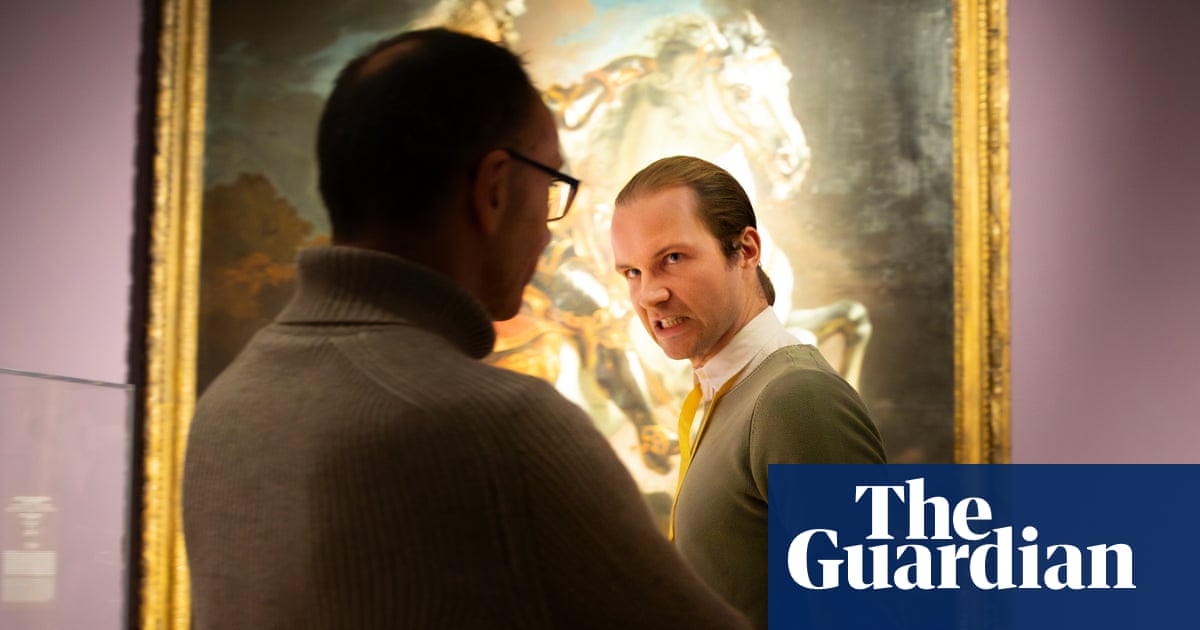
A Museum Tour Turned Hilarious Critique: When a Visitor Takes Charge
Imagine walking through an art museum and rather of quiet contemplation, you’re met with a running commentary…from a fellow visitor, passionately dissecting every curatorial choice. That’s precisely what unfolded recently at the museum Ludwig in Cologne, Germany, transforming a typical gallery experience into a viral sensation.
The unconventional tour was led by artist Hannes Langelinck,who,armed with a bell and a sharp tongue,didn’t hold back on his opinions. His performance wasn’t pre-approved; he simply started giving his own, highly critical tour, and people joined in.
A Refreshing Rebellion Against Museum Authority
Langelinck’s approach challenged the traditional power dynamic between museums and their audiences. Typically, institutions dictate what’s considered valuable and how it’s presented. He flipped that script, voicing what many museum-goers might be thinking: perhaps the curation isn’t as insightful as it appears.
He didn’t shy away from strong statements. For example, he famously declared a display of chairs resembled a furniture store. He dismissed the juxtaposition of a 19th-century plague painting with early motion studies as a superficial attempt too generate social media buzz.
This bold critique resonated with attendees. It offered a refreshing viewpoint,acknowledging the subjective nature of art and the potential for museums to prioritize aesthetics over genuine meaning.
From Commentary to Performance Art
The tour quickly escalated beyond simple criticism.Langelinck’s frustration culminated in him vigorously ringing a bell within a plaster belltower created by artist inge Mahn in 1971. This act transformed the event into a compelling piece of performance art itself.
Museum director Yilmaz Dziewior observed the unfolding spectacle with a mixture of amusement and acceptance. He recognized the value in Langelinck’s disruption, acknowledging the inherent power imbalance within the museum habitat.
Dziewior explained that museums often assert their authority in deciding what’s “worth seeing,” while visitors are expected to passively comply. langelinck’s tour, in contrast, empowered the audience by validating their own potential skepticism.
Visitor Reactions: Amusement and agreement
After 70 minutes of pointed observations and vocal dissent, the majority of visitors found the experience surprisingly enjoyable. One attendee, Lothar Richter, described Langelinck’s critique as “ingenious” and “very funny and clever.”
Even a museum staff member, who was initially the target of Langelinck’s commentary, admitted to enjoying the evening. Though, she also confessed a reluctance to repeat the experience, perhaps preferring a more conventional visit next time.
Why This matters: Re-evaluating the Museum Experience
Langelinck’s impromptu tour sparked a conversation about the role of museums in the 21st century. Are they sacred spaces for reverent contemplation, or should they be more open to dialog and even dissent?
Here’s what you can take away from this event:
* Museums aren’t infallible. curatorial choices are subjective, and it’s okay to question them.
* Audience engagement is evolving. Visitors are increasingly seeking interactive and thought-provoking experiences.
* Challenging the status quo can be valuable. Sometimes, a little disruption is exactly what’s needed to spark meaningful conversation.
Ultimately, this incident serves as a reminder that art is meant to be experienced and interpreted, and that a healthy dose of critical thinking can enrich that process. Perhaps, you’ll consider bringing your own perspective – and maybe even a bell – to your next museum visit.


![Hamilton Christmas Eve Robbery: 3 Youths Arrested | [Year] Update](https://media.rnztools.nz/rnz/image/upload/s--nP7cJMJH--/t_tohu-badge-facebook/v1666821097/4LJ9HX0_IMG_1842_1_jpg?_a=BACCd2AD "Hamilton Christmas Eve Robbery: 3 Youths Arrested | [Year] Update")
