
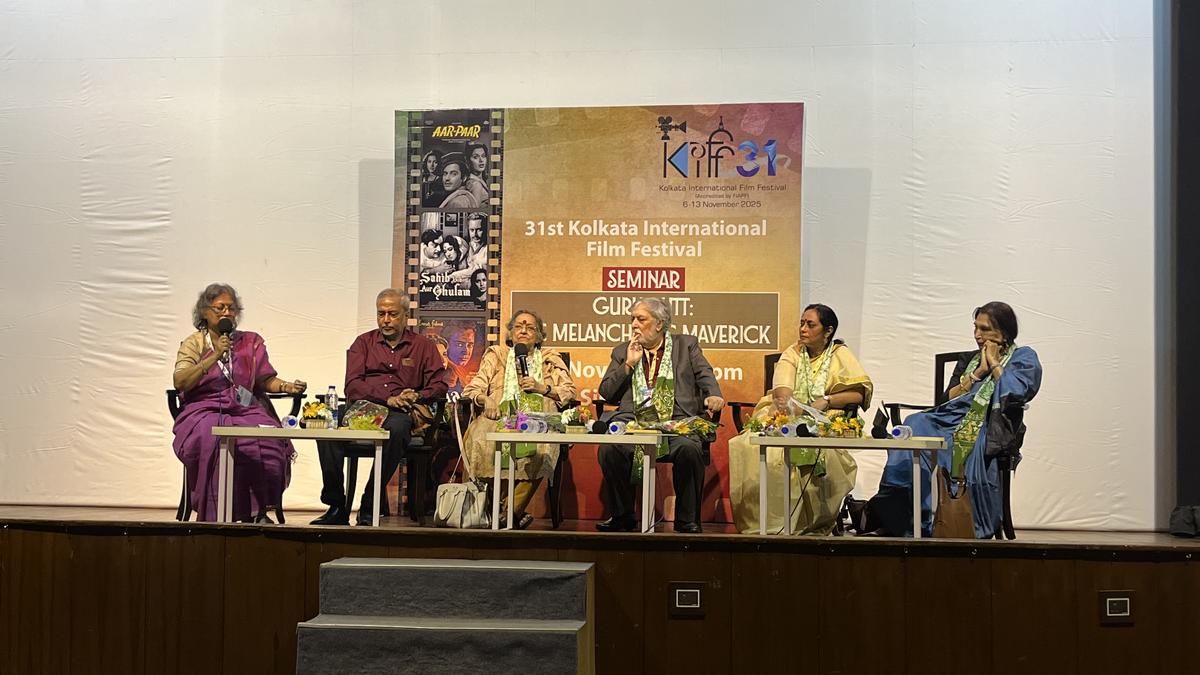
The Enduring Legacy of Guru Dutt: A Cinematic Pioneer Remembered
Guru Dutt remains a towering figure in Indian cinema, a multi-hyphenate talent who excelled as an actor, producer, choreographer, and writer.His early life in Kolkata profoundly shaped his artistic sensibilities, laying the foundation for a filmography that continues to resonate with audiences today. Films like Pyaasa (1957), Kaagaz Ke Phool (1959), and Sahib Bibi Aur Ghulam (1962) aren’t merely classics; they are poignant reflections of a nation grappling with its identity.
Dutt’s work wasn’t simply entertainment; it was a sharp social commentary. He fearlessly exposed the hypocrisy and moral ambiguities of post-independence India, a viewpoint that feels remarkably relevant even now. As film critic Mr. Sharma noted, Dutt’s films served as an “editorial comment” on a nation losing its way, a sentiment echoed by many contemporary observers.
His innovative approach extended to his embrace of Urdu poetry, seamlessly integrating the works of luminaries like Kaifi Azmi and Sahir Ludhianvi into his narratives. this collaboration elevated his films, adding layers of depth and emotional resonance. dutt understood the power of language to convey complex emotions and societal critiques.
The 1950s, when Dutt began his ascent, marked a pivotal moment for indian cinema. Film scholar Moinak Biswas highlights this era as a period of radical change,witnessing the emergence of new performance styles,cinematography techniques,and screenwriting approaches. This fertile ground was cultivated by artists migrating from organizations like the Indian People’s Theatre Association and the Progressive Writers Association, fostering a spirit of experimentation.
The decline of the conventional studio system – New Theatres, Prabhat, Bombay Talkies – created space for autonomous production and, crucially, innovation. Dutt capitalized on this shift, pushing creative boundaries and challenging conventional filmmaking norms.
However, Dutt’s genius wasn’t born in isolation.Journalist and author Sathya Saran sheds light on his complex and often turbulent relationship with director and screenwriter Abrar alvi. Despite a deep friendship, Saran alleges Dutt frequently failed to adequately acknowledge Alvi’s significant contributions, notably in the early stages of their collaboration.
This dynamic was particularly evident in Sahib Bibi Aur Ghulam, where Alvi reportedly played a crucial role in helping Dutt embody the character of Atulya Chakraborty. Saran suggests that many of Dutt’s films benefited from this dual creative input, highlighting the power of collaborative vision.
Despite the complexities of his personal relationships, Dutt consistently portrayed female characters with remarkable depth and nuance.Film scholar Shoma A Chatterji emphasizes that Dutt and his directors consistently treated their heroines as fully realized human beings,imbuing them with emotional tenacity,strength,and complexity. This progressive approach set his films apart.
Beyond the screen, Dutt was a man deeply connected to nature.Journalist Roshmila Bhattacharya recounts his fondness for his farmhouse in Maharashtra, where he sought solace amidst the tranquility of the countryside. This connection to the natural world perhaps informed the underlying melancholy and emotional complexity that those close to him frequently enough associated with him.
Currently, a special exhibition celebrating Guru Dutt and other cinematic icons is underway at Gaganendra Shilpa Pradarshashala in Kolkata’s Nandan premises, as part of the 31st Kolkata International Film Festival. This tribute serves as a powerful reminder of Dutt’s enduring influence and his place as a true visionary in the history of Indian cinema.
Published – november 10, 2025 03:43 am IST


