
Assessing HPAI H5N1 Virus Neutralization in Dairy Cattle: A Detailed Methodology
Highly Pathogenic Avian Influenza (HPAI) H5N1 virus infection in dairy cattle presents a significant concern for both animal and public health. Understanding the immune response, specifically neutralizing antibody production, is crucial for monitoring infection and evaluating potential control strategies. This article details the methods used to assess neutralizing antibodies against HPAI H5N1 in serum samples collected from infected animals, alongside quality control measures employed throughout the study.
sample Collection & Processing
To accurately track the immune response over time, blood samples were collected from infected cattle on days 0, 7, and 14 post-exposure (p.e.). A sterile technique was paramount.
Here’s a breakdown of the process:
* Collection: 1 ml of blood was drawn using a 25G × 1″ needle and a sterile syringe.
* Serum Separation: Blood was transferred into serum separator tubes, allowing for efficient separation of serum.
* Centrifugation: Tubes were centrifuged at 1,200g* for 10 minutes to isolate the serum.
* Storage: Serum aliquots were instantly stored at -20°C until analysis,preserving sample integrity.
Animals were humanely euthanized either upon reaching pre-defined humane endpoints or at the conclusion of the 14-day observation period. all procedures adhered to strict ethical guidelines and were approved by the Cornell University Institutional Animal Care and Use Committee (IACUC approval number 2024-0094).
Virus Neutralization Assay: Detecting Protective Antibodies
The gold standard for assessing protective immunity against influenza viruses is the virus neutralization assay. this assay determines the ability of antibodies in serum to prevent viral infection.We utilized a recombinant H5N1 virus (rTX2/24-miniGFP2) expressing a miniGFP2 reporter gene for sensitive detection.
Here’s how the assay works:
- Serial Dilutions: Serum samples were diluted in a two-fold series, ranging from 1:8 to 1:1,024. This allows for precise determination of antibody titer.
- Virus Incubation: Diluted serum was incubated with 200 TCID50 (Tissue Culture Infectious Dose 50) of the rTX2/24-miniGFP2 virus for one hour at 37°C. This allows antibodies to bind to the virus, possibly neutralizing its infectivity.
- Cell Infection: A suspension of Cal-1 cells was added to each well of a 96-well plate and incubated with the virus-serum mixture at 37°C for 48 hours.
- Fluorescence Microscopy: Plates were examined using a fluorescence microscope (Hybrid microscope ECHO Revolve 3K). The presence or absence of miniGFP2 expression indicates whether the virus was neutralized.
- Titer Determination: Neutralizing antibody titers were expressed as the reciprocal of the highest serum dilution that fully inhibited viral replication, as evidenced by the absence of miniGFP2 expression. Positive and negative control serum samples were included in each assay to ensure accuracy and reliability.
Rigorous Statistical Analysis & Quality Control
Maintaining data integrity and ensuring the validity of our findings were paramount. We employed several strategies:
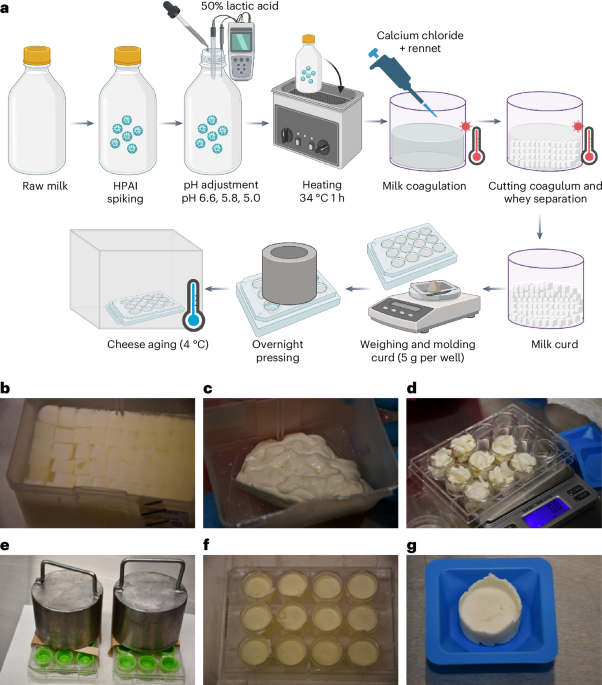
* Experimental Replication: For assessing viral stability in cheese, three independent experiments were conducted for each pH level tested. Company-made cheese was tested across multiple time points using four cheese blocks per time point.
* animal Grouping: Two to four animals were used per experimental group, with equal portrayal of both male and female subjects. Animals were randomly assigned to groups to minimize bias.
* Validated Methods: We utilized robust, validated laboratory methods, including RT-PCR, cell culture, embryonated eggs, virus titration, and the virus neutralization assay described above.
* Statistical Approach: A two-way analysis of variance (ANOVA) followed by Tukey’s multiple-comparisons test was used to analyze experiments with two factors (e.g., time and treatment). A *P value of less than 0.05 was





