
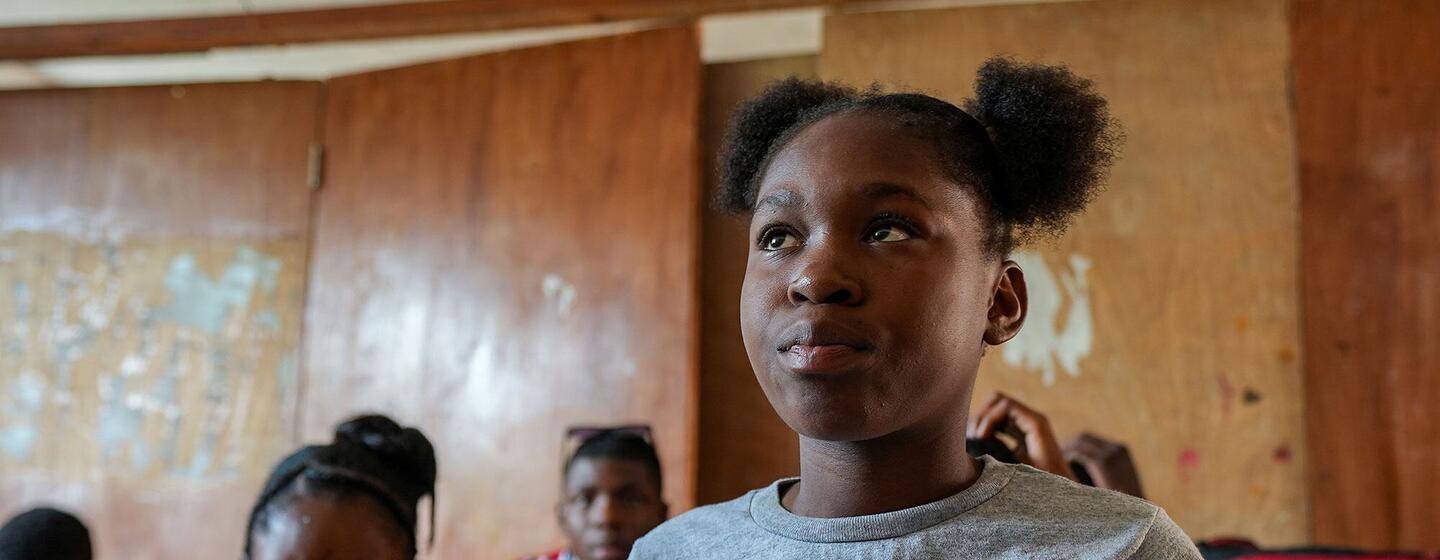
Haiti‘s Silent Crisis: How Education Remains a Lifeline for Displaced Children Like Dieussika
The escalating crisis in Haiti has created a devastating reality for its children.Beyond the immediate dangers of gang violence and displacement, a generation faces the crippling loss of educational opportunities. This isn’t just a disruption to schooling; it’s a threat to the future stability and progress of the nation. As a long-time observer of humanitarian crises and educational interventions, I’ve witnessed firsthand the profound impact of continued learning, even – and especially – in the face of unimaginable adversity.
Recent reports indicate over 1,600 schools are closed, and countless others are occupied by armed groups. This leaves hundreds of thousands of children vulnerable and without access to the fundamental right of education. The situation is particularly dire in overcrowded shelters and displacement sites, where basic resources, including textbooks and qualified teachers, are critically lacking.
But amidst the chaos, stories of resilience emerge. Stories like that of Dieussika, a young Haitian girl whose determination to learn embodies the spirit of a generation refusing to be defined by circumstance.
The Ripple Effect of Displacement on Education
The impact of displacement on a child’s education is multifaceted:
* Interrupted Learning: Forced relocation disrupts the continuity of schooling, leading to significant learning gaps.
* Lack of Resources: Displacement sites often lack the infrastructure and materials necessary for effective education.
* Psychosocial Trauma: Exposure to violence and instability creates emotional barriers to learning.
* Increased Vulnerability: Displaced children are at higher risk of exploitation, child labor, and early marriage, further hindering their educational prospects.
* Gender Disparities: Adolescent girls face unique challenges, including safety concerns, increased caregiving responsibilities, and lack of access to menstrual hygiene products, leading to higher dropout rates.
Dieussika’s Story: A Beacon of Hope
Dieussika’s family, like many others, endured a harrowing journey through multiple temporary shelters. Despite the hardships – disease, insect infestations, and the constant threat of insecurity – she clung to her dream of continuing her education. “There are diseases, insects that bite… but despite everything, I wanted to continue going to school,” she powerfully states.
Her opportunity came through catch-up classes organized by UNICEF. These classes weren’t just about academics; they were about restoring hope and providing a safe space for learning. Dieussika’s story highlights the critical role of targeted interventions in mitigating the educational impact of displacement.
[Image of Dieussika showing her school work – as provided in the original text]
Today, Dieussika aspires to become a leader who champions children’s rights and promotes peace. Her ambition is fueled by a deep understanding of the transformative power of education. “School means so much to me. Without education, my dream would be lost,” she explains.
UNICEF and Education Cannot Wait: Bridging the Gap
Organizations like UNICEF and Education Cannot Wait are working tirelessly to provide educational support to children affected by the crisis.
* catch-Up Classes: These programs address learning loss and help students reintegrate into the formal education system.
* Vocational Training: Skills development programs, such as crochet, leatherwork, and cosmetology, empower adolescents with marketable skills.
* Psychosocial Support: Addressing the emotional trauma experienced by displaced children is crucial for their well-being and ability to learn.
* Provision of Learning Materials: Supplying textbooks,stationery,and other essential resources is fundamental to quality education.
Thanks to five months of catch-up classes supported by Education Cannot Wait, Dieussika was able to take her exams and return to school. This demonstrates the tangible impact of strategic investment in education during emergencies.
A Call to Action: Investing in Haiti’s Future
Dieussika’s message to the world is simple yet profound: “Do not give up on children. Love them even more and give them opportunities to learn and dream.”
This isn’t just a plea for compassion; it’s a strategic imperative. Investing in education is the most effective way to break the cycle of poverty, violence, and instability.
To date, the UN and its partners have reached over 17,500 children with educational and psychosocial support, including 10,500 girls. However, this is just a fraction of the need.
Here’s what needs to happen:
1.


