
For years, the dialogue surrounding the American medical system has often felt like two separate conversations: one held in the sterile corridors of clinics by exhausted physicians, and another whispered in living rooms by patients staring at mounting bills. However, new data from March 2026 suggests these two worlds have finally converged on a single, urgent priority.
In a striking alignment of perspectives, both U.S. Healthcare providers and the citizens they serve now rank healthcare access and affordability as the most pressing issue facing the nation. This convergence, revealed through two independently released surveys, signals a critical tipping point in the American social contract regarding health and wellness.
As a physician trained at Charité – Universitätsmedizin Berlin and having spent over a decade in internal medicine and medical journalism, I have observed various healthcare crises globally. Yet, the current level of synchronized anxiety in the United States is notable. It is no longer just a consumer complaint or a provider grievance. it is a systemic consensus that the current model of delivery and financing is failing both ends of the stethoscope.
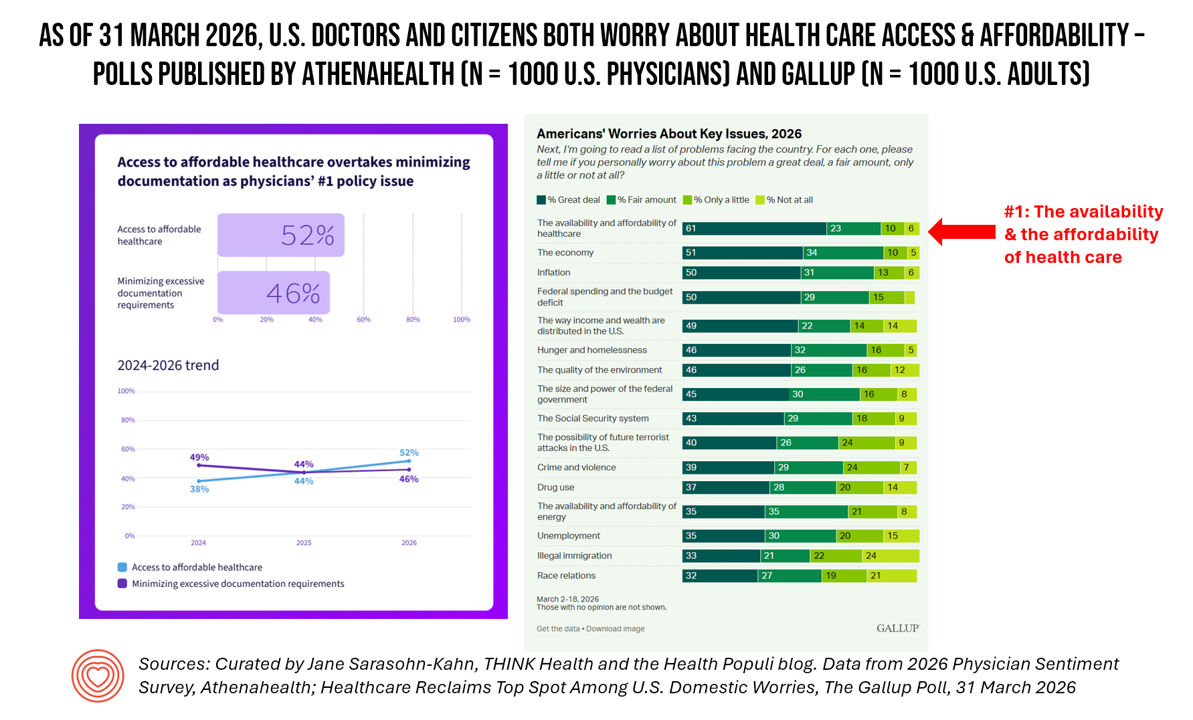
The scale of this concern is best illustrated by recent findings from Gallup, which polled 1,000 U.S. Adults to gauge the primary worries of the American public in March 2026. The results indicate that healthcare has reclaimed the top spot among U.S. Domestic worries—a position it has not held since Gallup conducted a similar survey in 2000.
The Consumer Crisis: A ‘Great Deal’ of Worry
While the general economy and inflation remain significant stressors for Americans, the intensity of the fear surrounding medical costs is distinct. According to a Gallup survey, 61% of Americans reported that they worry a “great deal” about the availability and affordability of healthcare as of March 31, 2026.

To put this in perspective, when measuring “great deal” of worry, healthcare (61%) significantly outweighs the overall economy, which stood at 51% according to survey data. While the economy and healthcare may tie when combining “great deal” and “fair amount” of worry, the veracity and intensity of the concern are highest for medical access.
For the average “health citizen,” this anxiety manifests as “financial toxicity”—a term we use in medicine to describe the devastating impact of high out-of-pocket costs and medical debt on a patient’s quality of life. When the fear of a medical bill outweighs the fear of the illness itself, the fundamental goal of medicine—healing—is compromised.
The Physician Shift: From Paperwork to Policy
Parallel to the consumer experience, U.S. Doctors are reporting a fundamental shift in their professional anxieties. For years, the primary driver of physician burnout was “administrative burden”—the endless cycle of excessive documentation, bureaucracy, and paperwork.
However, the 2026 Physician Sentiment Survey published by Athenahealth reveals that this has been superseded by a more systemic concern. Access to affordable healthcare has risen sharply to become the top policy concern among physicians, increasing from 39% three years ago to 52% in 2026 according to the report.

This shift is profound. When doctors move their primary concern from their own workload (documentation) to their patients’ ability to pay, it suggests that the barriers to care have become so high that they are interfering with the clinical ability to treat patients. Physicians are no longer just fighting the clock; they are fighting a financial system that prevents their patients from entering the clinic in the first place.
The Role of AI and Economic Instability
This crisis is not unfolding in a vacuum. The integration of artificial intelligence (AI) into both the consumer and professional spheres is adding a layer of complexity to these worries. For consumers, the adoption of AI has sparked concerns regarding job security, which directly impacts their ability to maintain employer-sponsored health insurance.
For clinicians, AI is a double-edged sword. While it offers the potential to reduce the very bureaucracy that once topped their list of concerns, it also creates angst regarding the reshaping of workflows and the potential erosion of the physician’s role in the patient relationship. There is a palpable fear that AI could further commoditize healthcare, prioritizing efficiency over the empathy and shared decision-making that define high-quality care.

inflation continues to act as a catalyst, driving up the cost of medical supplies and living expenses, which in turn exacerbates the fragility of the U.S. Healthcare financing model.
The Silver Lining: The Trust-Equity of the Doctor-Patient Bond
Despite the systemic failures of the economy and policy, one area of resilience remains: the relationship between the patient and their personal physician. Data suggests a significant “trust-equity” exists here, where patients continue to look to their individual doctors for truth and advice far more than they trust the government, the media, or non-governmental organizations (NGOs).
This trust is the most valuable asset in the current healthcare landscape. The fact that both patients and doctors now agree that healthcare access and affordability are the top priorities creates a rare opportunity for advocacy. When the provider and the patient are aligned, they can collectively push for legislation and public policy that protects the doctor-patient relationship and ensures that financing does not dictate the quality of care.
Key Takeaways from the March 2026 Surveys
- Patient Priority: 61% of Americans worry a “great deal” about healthcare affordability, the highest level of concern since 2000 via US News/Gallup.
- Physician Priority: Affordability is now the top policy concern for 52% of U.S. Doctors, up from 39% three years ago via Athenahealth.
- Comparative Worry: Healthcare surpasses the overall economy (51%) as the primary “great deal” worry for U.S. Citizens.
- Systemic Shift: For physicians, the concern over patient access has replaced the long-standing frustration with administrative bureaucracy.
- Trust Factor: High levels of trust remain in personal physicians compared to institutional or governmental sources.
As we move further into 2026, the focus will likely shift toward how this shared concern translates into policy action. The alignment between the medical community and the public provides a powerful mandate for reform. Whether through the adjustment of reimbursement models or the implementation of new affordability mandates, the status quo is no longer tenable for those providing the care or those receiving it.
The next major checkpoint for these issues will be the upcoming legislative sessions and policy reviews scheduled for the second half of 2026, where the impact of these sentiments on healthcare funding and access laws will be closely monitored.
Do you feel the cost of care is impacting your health decisions, or are you a provider seeing this trend in your practice? We invite you to share your experiences in the comments below or share this article to keep the conversation moving forward.