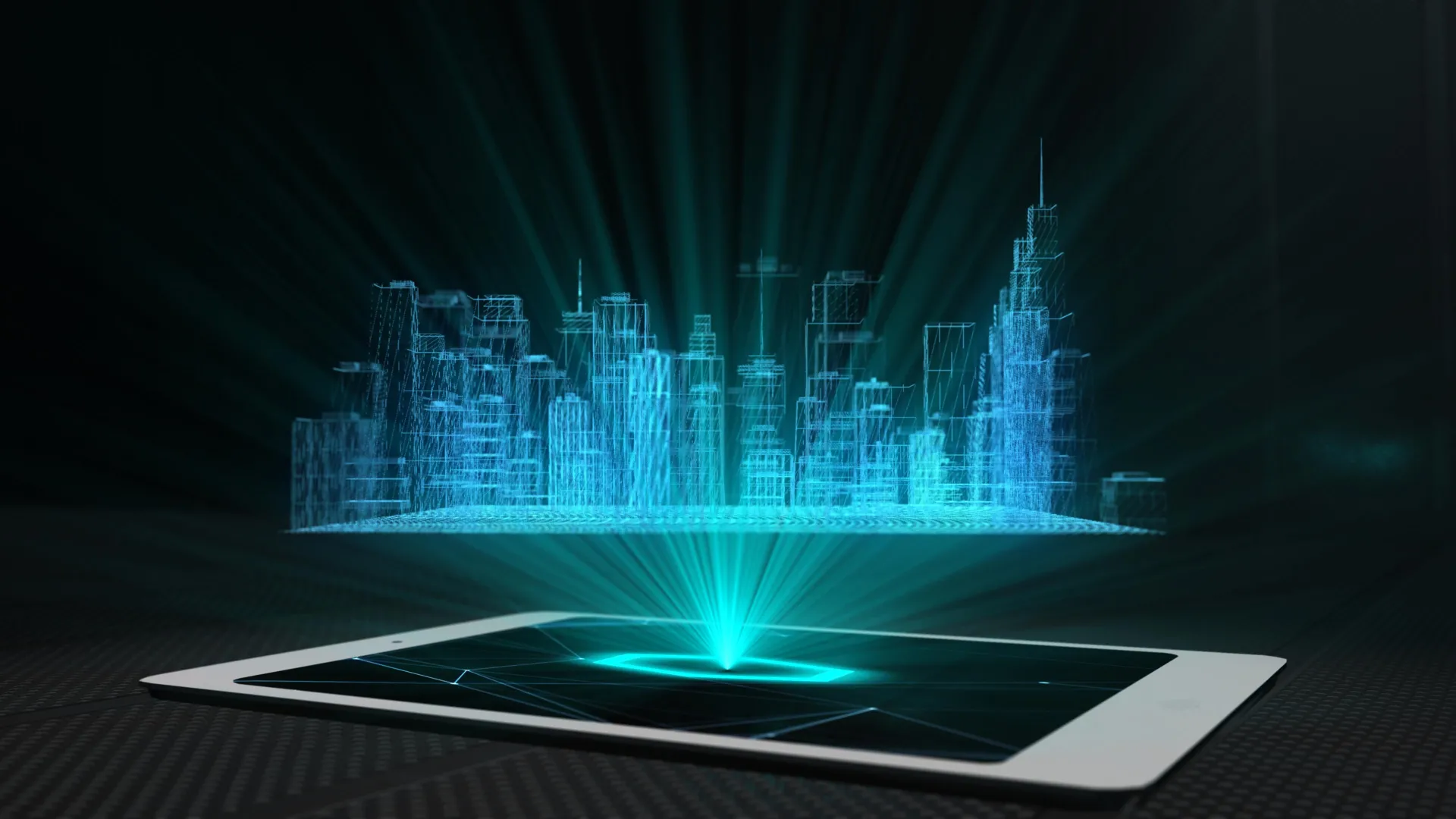
The Dawn of Compact Holography: How OLEDs and Metasurfaces are Revolutionizing displays
For decades, holography – the creation of realistic three-dimensional images – has captivated imaginations, promising a future of immersive entertainment, advanced communication, and revolutionary display technologies. While traditional holograms rely on complex laser systems, a groundbreaking development from the University of St Andrews is poised to dramatically simplify and democratize this technology. Researchers have successfully integrated Holographic Metasurfaces (HMs) with organic Light Emitting Diodes (OLEDs), paving the way for compact, cost-effective holographic displays with applications spanning smart devices, gaming, and beyond.
Beyond Lasers: A New Paradigm for Hologram Creation
The core challenge in widespread hologram adoption has always been practicality. Traditional methods are bulky,expensive,and energy-intensive. The St Andrews team’s innovation bypasses these limitations by leveraging the unique properties of oleds and HMs. OLEDs, already ubiquitous in smartphone screens and modern televisions, provide a flat, efficient, and easily integrated light source. HMs, on the other hand, are meticulously engineered surfaces composed of microscopic structures – meta-atoms, roughly a thousandth the width of a human hair – designed to precisely manipulate light.
This isn’t simply about combining two existing technologies; it’s about synergistic functionality. Previously, HMs were used to create holograms, but required external light sources. This research marks the first time these two components have been unified to form the basic building block of a holographic display.The result is a system that requires substantially less power and space than conventional holographic setups.
How it Works: Pixel-level Light Manipulation
the brilliance of this approach lies in the precise control afforded by the HM. Each meta-atom acts as a miniature pixel,carefully shaped to alter the properties of light passing through it. By subtly modifying the light at each pixel, the HM orchestrates a complex interference pattern. This interference, a fundamental principle of wave physics, is the key to constructing a pre-designed three-dimensional image.
Think of it like sculpting with light. Rather of physically building a 3D object,the HM manipulates light waves to simulate the presence of an object in space. The resulting image appears to float in the air, offering a truly immersive visual experience.
The Advantages of OLED-HM Integration: A Technological Leap
The implications of this breakthrough are far-reaching:
* Miniaturization: the combined OLED-HM system drastically reduces the size and complexity of holographic displays. This opens doors for integration into smaller devices like smartphones, augmented reality (AR) glasses, and wearable technology.
* Cost Reduction: By eliminating the need for expensive laser systems, the cost of producing holographic displays is significantly lowered, making the technology more accessible.
* Enhanced Efficiency: OLEDs are inherently energy-efficient,and the HM’s precise light control minimizes wasted energy,resulting in a more lasting display solution.
* Versatility: HMs are incredibly versatile materials with applications extending beyond displays. They can be used in data storage, anti-counterfeiting measures, advanced microscopy, and elegant sensing technologies.
* Single-Pixel Projection: Perhaps the most striking aspect of this innovation is the potential to project a complete image from a single OLED pixel. Traditional displays require thousands of pixels to create even a simple image; this new approach fundamentally alters that paradigm.
Expert Perspectives: Shaping the Future of Light
“We are excited to demonstrate this new direction for OLEDs,” states Professor Ifor Samuel of the University of St Andrews’ School of Physics and Astronomy. “By combining OLEDs with metasurfaces, we also open a new way of generating holograms and shaping light.”
Professor andrea Di Falco, a leading expert in nano-photonics, emphasizes the impact on real-world applications: “Holographic metasurfaces are one of the most versatile material platforms to control light. With this work, we have removed one of the technological barriers that prevent the adoption of metamaterials in everyday applications. This breakthrough will enable a step change in the architecture of holographic displays for emerging applications, for example, in virtual and augmented reality.”
Professor Graham Turnbull highlights the efficiency gains: “OLED displays normally need thousands of pixels to create a simple picture. This new approach allows a complete image to be projected from a single OLED pixel!”
Looking Ahead: The Holographic Future is Closer than You Think
This research represents a pivotal moment in the evolution of display technology. While still in its early stages,the integration of OLEDs and HMs promises a future where holographic displays are no longer confined to science fiction. Expect to see this technology gradually integrated into a wide range of applications,