
Navigating the Turning Tide: Healthcare profitability in Late2025&a2026Forecast
The healthcare landscape has been navigating turbulent waters for years. But recent data signals a potential shift – a cautious return to financial stability for many health systems. While challenges remain, understanding the current trends is crucial for leaders preparing for 2026. This article dives deep into the latest performance data, offering insights and strategic considerations for navigating the evolving financial realities of healthcare.
A Glimmer of hope: The Late-Year Surge in Profitability
After a prolonged period of thin margins, health system profitability is showing encouraging signs. The national median year-to-date (YTD) operating margin reached 1.5% in november, a notable increase from 1.2% the previous month.
This 0.3% jump marks the fourth consecutive month of enhancement and represents the largest single-month gain observed throughout 2025. For an industry accustomed to operating in the red, this consistency suggests a potential stabilizing baseline.though, as Steve Wasson, Chief Data and Intelligence Officer at strata Decision Technology, cautions, “November’s data suggest some financial stability might potentially be returning as organizations close out the year, but it’s far too early to declare a turning point.”
The Expense Challenge: Drugs & Physician Practice Costs
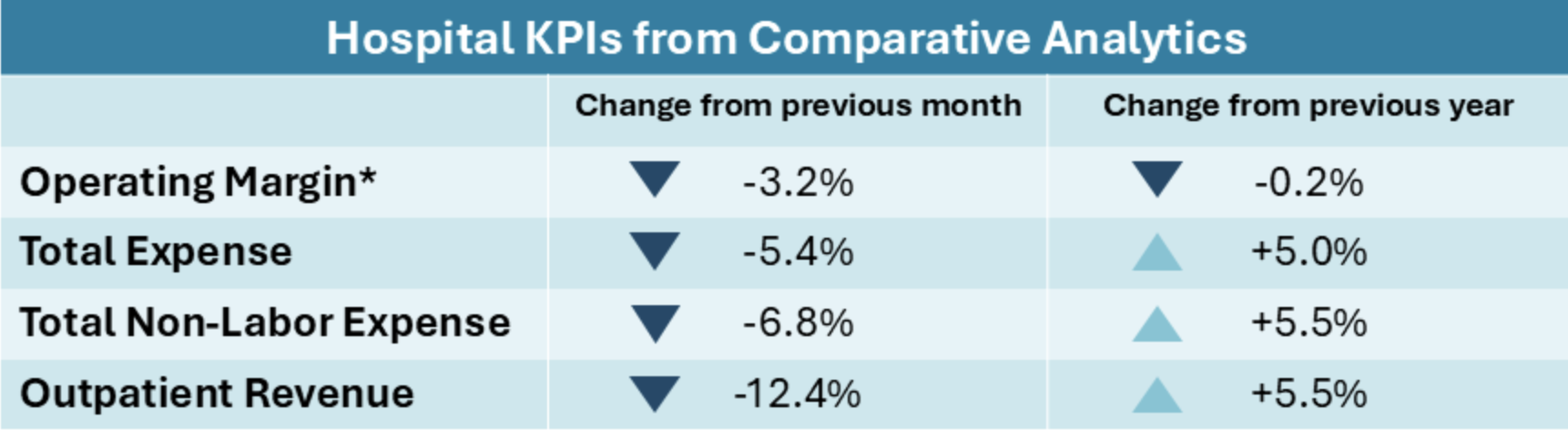
While revenue is improving, controlling expenses remains paramount.Total hospital expenses increased 5.0% year-over-year (YOY) in November. Interestingly, the primary driver wasn’t labor costs, which saw a moderate 3.6% rise, but rather escalating non-labor expenses.
Here’s a breakdown of the key cost drivers:
* drug Expenses: up 9.3% YOY, driven by the increasing prevalence of high-cost therapeutics.
* Supply Costs: Increased by 5.6% YOY.
* Purchased Services: rose 5.5% YOY.
However, the most important financial strain may be impacting physician practices. Data reveals a sector requiring substantial financial support to remain viable. The median total expense per physician full-time equivalent (FTE) now stands at approximately $1.1 million annually.
This represents an 8.2% jump from 2024 and a staggering 17.5% increase compared to 2023. Consequently,health systems are increasingly subsidizing their ambulatory networks,with investment in these practices rising 7.4% YOY.
Volume Shifts: The Inpatient Focus
November’s data also reveals a shift in patient behavior impacting revenue streams. Inpatient admissions increased by 2.0% YOY, driving a significant 6.4% increase in inpatient revenue.
Conversely, the “front door” of the hospital experienced a slowdown.Emergency visits declined 2.8%, and outpatient visits dipped 0.2%. This suggests a trend: fewer patients seeking episodic care, but those admitted require more complex, higher-revenue services.
Regional variations are also apparent. The Northeast and South are experiencing the bulk of inpatient growth, while the Northeast concurrently faces declines in outpatient volume.
Preparing for 2026: From Survival to Strategic Alignment
As you prepare your 2026 budgets, the prevailing strategy is shifting from mere survival to proactive alignment. Gross operating revenue is up 5.3%, indicating increased financial flow. However, achieving true efficiency remains a challenge.
Wasson emphasizes the need for strategic focus: “Leaders will need to remain focused on aligning resources to where demand is strongest while continuing to reassess cost structures entering 2026.”
The era of “do more with less” is demonstrably over. We’ve entered a new reality: “pay more to do more.” Success in 2026 will hinge on your ability to:
- Control Non-Labor Spend: Specifically, aggressively manage pharmaceutical costs.
- Manage Physician Practice Investment: Find lasting solutions to address the escalating costs of supporting your ambulatory network.
- Optimize resource Allocation: Direct resources to areas experiencing the highest demand, notably inpatient services.
- Regionalize Strategies: Recognize and respond to the unique volume and revenue trends in your specific geographic area.
Looking Ahead:
the healthcare financial landscape is complex and constantly





