
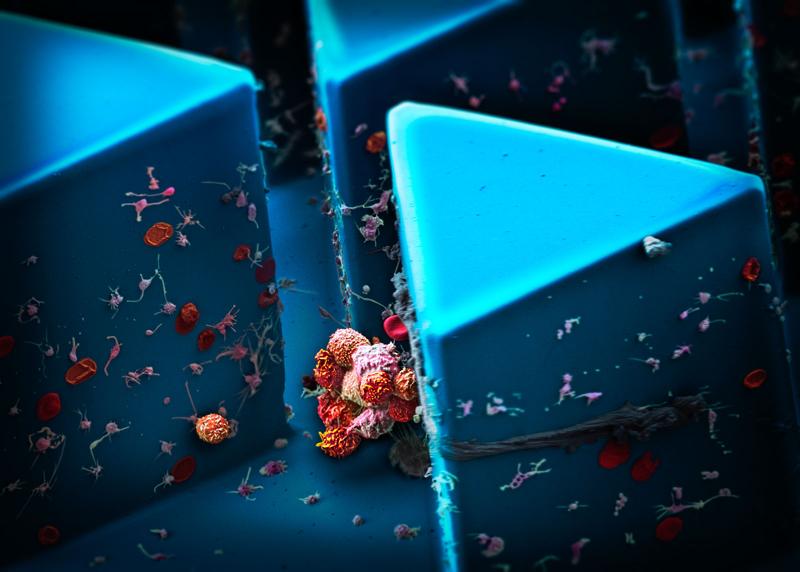
In the fight against cancer, the journey of a single cell is a perilous one. When tumor cells break away from a primary site and enter the bloodstream, they face a hostile environment designed to destroy them. However, recent research has highlighted a more dangerous strategy: instead of traveling alone, some cancer cells form “roaming gangs” known as circulating tumor cell (CTC) clusters.
These clusters are not merely groups of cells; they are highly efficient metastatic precursors. By banding together, these cells significantly increase their chances of surviving the journey through the circulatory system and successfully seeding new tumors in distant organs. For patients and clinicians, understanding the mechanics of these clusters is becoming a critical frontier in preventing the spread of the disease.
The biological advantage of clustering is stark. In breast cancer, for instance, animal studies suggest the clumps may be 50 to 100 times more likely to produce successful metastases than solitary cells. This increased potency persists regardless of the cancer subtype or the prior treatments the patient may have received.
The Survival Advantage of CTC Clusters
To understand why circulating tumor cell (CTC) clusters are so effective, one must look at the obstacles a cell faces in the blood. The bloodstream is a violent environment characterized by fluid shear forces—the physical stress caused by the flow of blood—which can easily tear a single cell apart or push it toward destruction.
most cells are programmed to die when they lose contact with their neighboring cells or their home environment, a process known as detachment-induced anoikis. By remaining clustered, tumor cells can trick their own biological systems into believing they are still part of a tissue, thereby resisting this programmed cell death.
Although a vast number of cells may leave the primary tumor and enter circulation, the majority perish. The clusters, however, act as a protective shield, allowing the cells within to endure the physical and biological pressures of the journey. This collective survival strategy is what makes them such potent drivers of metastasis.
Advances in Detection and Analysis
Because these clusters are rare compared to single CTCs, isolating them for study has historically been a significant challenge. However, recent technological leaps have allowed scientists to identify and analyze these “gangs” with high precision. These advances are crucial for understanding how clusters behave and how they might be targeted.
Current detection methodologies include:
- Microfluidics: Using miniature channels to sort and capture cells based on size and physical properties.
- Flow Cytometry: A laser-based technology used to analyze the physical and chemical characteristics of particles in a fluid flow.
- Immunohistochemistry: The use of antibodies to visualize specific proteins on the surface of the cells, allowing researchers to confirm the identity of the clusters.
These tools enable researchers to see exactly how clusters differ from single cells in terms of gene expression and protein markers, providing a roadmap for potential therapeutic interventions.
Can Drugs Break Up the Gangs?
The central question for oncologists and researchers now is whether these clusters can be disrupted. If the “strength in numbers” is what allows these cells to survive and metastasize, then breaking the clusters apart could theoretically render the cells vulnerable once again to the body’s natural defenses and existing treatments.

Researchers are currently seeking to develop novel treatments specifically designed to disrupt the bonds that hold these tumor cell clusters together. By targeting the molecular “glue” that allows these cells to adhere to one another, scientists hope to prevent the cells from resisting anoikis and surviving the shear forces of the bloodstream.
While this approach represents a promising shift toward preventing metastasis rather than just treating established secondary tumors, these therapies are still in the research and development phase. The goal is to transition from observing these clusters to actively dismantling them before they can seed new growths in the body.
Key Takeaways on CTC Clusters
- Increased Potency: CTC clusters are up to 100 times more metastatic than single circulating tumor cells in breast cancer.
- Survival Mechanism: Clustering helps cells resist fluid shear forces and avoid detachment-induced anoikis (programmed cell death).
- Detection: New tools like microfluidics and flow cytometry allow for the specific isolation and analysis of these cell clumps.
- Therapeutic Goal: Current research is focused on developing drugs that can break up these clusters to impede the spread of cancer.
The focus of current oncology research remains the development of these disruptive therapies. While no specific drug has yet been widely deployed for the sole purpose of breaking up CTC clusters, the identification of these “roaming gangs” provides a clear target for the next generation of anti-metastatic medicine.
We encourage readers to share this article and join the conversation in the comments below regarding the future of medical innovation in cancer care.