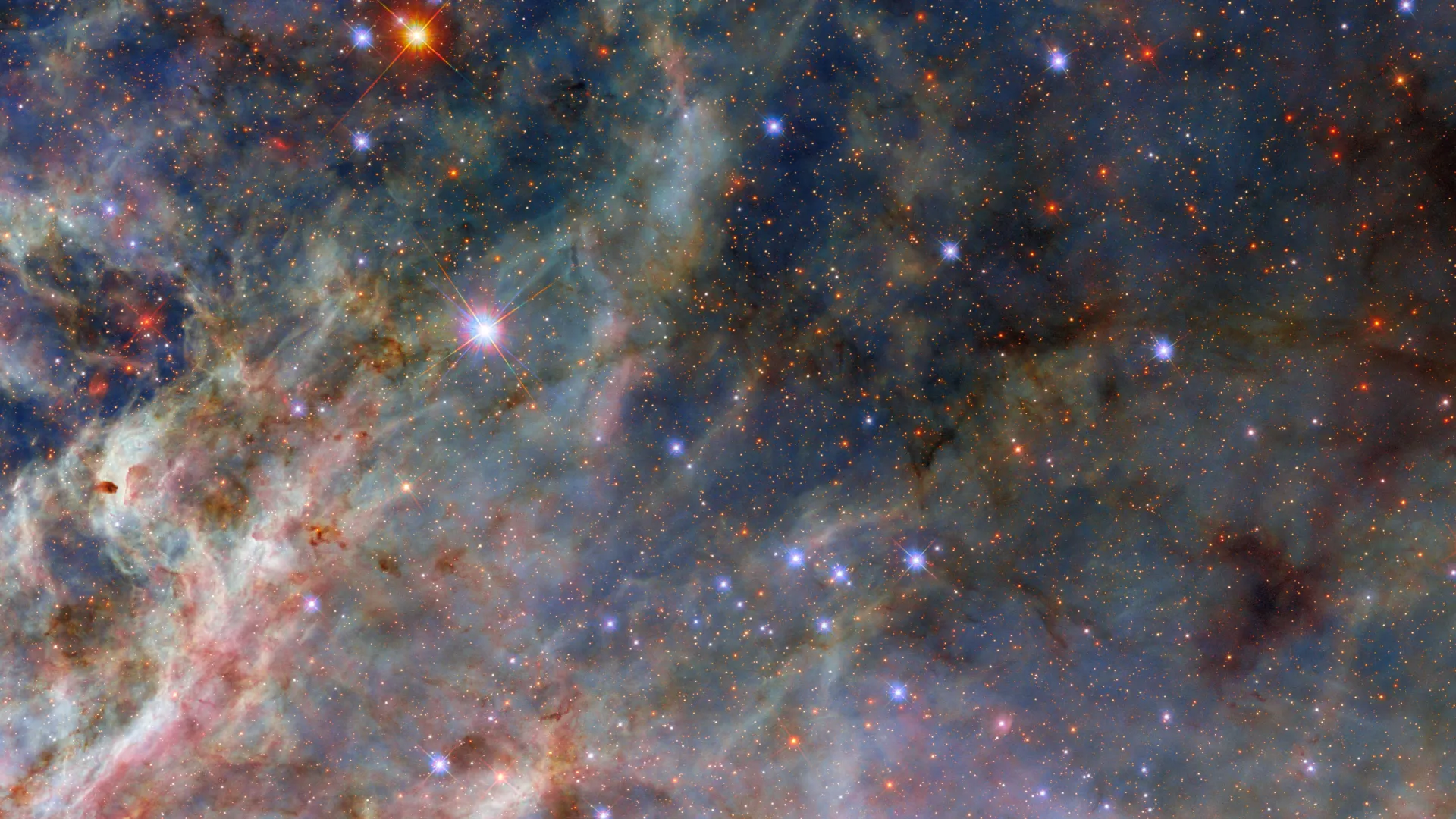
## Unveiling the Cosmic Tarantula: A Deep Dive into the Largest Star-forming Region Near us
Have you ever gazed up at the night sky and wondered about the birthplaces of stars? the universe is filled with breathtaking stellar nurseries,but few are as spectacular and scientifically notable as the Tarantula Nebula. This vibrant, chaotic region, captured in stunning detail by the NASA/ESA Hubble Space Telescope, isn’t just a lovely image; it’s a window into the processes that govern star formation on a massive scale. This article will explore the intricacies of the Tarantula Nebula, its location, the stars it births, and the ongoing research unraveling its mysteries. Understanding this nebula provides crucial insights into galactic evolution and the lifecycle of stars – a key area of star formation.
Where is the Tarantula Nebula Located? A Galactic Outlier
Unlike manny nebulae found within our own Milky Way galaxy, the Tarantula Nebula resides in the Large Magellanic Cloud (LMC), a dwarf galaxy approximately 160,000 light-years away.The LMC is the largest of the dozens of smaller satellite galaxies orbiting the milky Way, situated in the constellations Dorado and Mensa. This extragalactic location makes the Tarantula Nebula notably valuable to astronomers. Studying star formation in a different galactic environment allows for comparisons and helps us understand if the processes are universal or influenced by the specific conditions within the Milky Way.
The LMC’s proximity and relatively low metallicity (the abundance of elements heavier than hydrogen and helium) also contribute to its importance. Lower metallicity environments, common in the early universe, tend to favor the formation of more massive stars. This makes the Tarantula Nebula a sort of “living fossil,” offering a glimpse into how star formation occurred billions of years ago.
Did You Know? The Tarantula Nebula is also known as 30 Doradus, a designation from the catalog compiled by astronomer John Frederick William herschel in 1834.
The Heart of Stellar Creation: Exploring the Nebula’s Features
The Tarantula Nebula isn’t just large; it’s the largest and brightest star-forming region in the entire Local Group of galaxies - the group to which the Milky Way and LMC belong. Within its swirling clouds of gas and dust, some of the most massive stars known to exist are born. These stellar behemoths can reach up to 200 times the mass of our Sun!
R136: A Super Star cluster
At the nebula’s core lies R136, a dense super star cluster teeming with hundreds of young, massive stars. This cluster is a powerhouse of energy, emitting intense ultraviolet radiation that sculpts the surrounding gas and dust, creating the nebula’s intricate and dramatic appearance. The extreme radiation and stellar winds from these stars are responsible for ionizing the hydrogen gas, causing it to glow brightly.
wolf-Rayet Stars: Stellar Giants in Thier Final Stages
Beyond R136, the Tarantula Nebula is also home to rare and fascinating Wolf-Rayet stars. These are massive stars that have already shed their outer layers of hydrogen, exposing their hotter, inner cores. They are characterized by incredibly strong stellar winds and are nearing the end of their lives, destined to explode as supernovae. These stars play a crucial role in enriching the surrounding interstellar medium with heavy elements, providing the raw materials for future generations of stars. Understanding Wolf-Rayet stars is vital to understanding stellar evolution.
pro Tip: When observing images of the Tarantula Nebula, pay attention to the different colors. Red typically indicates ionized hydrogen, while blue ofen represents scattered starlight.
Hubble’s Ongoing Inquiry: Scylla and ULYSSES Programs
The Hubble Space Telescope has been instrumental in studying the Tarantula Nebula, thanks to its ability to observe in multiple wavelengths of light. Two key observing programs, Scylla and ULYSSES, are providing invaluable data.
- ULLYSSES (Ultraviolet Legacy Library of Young Stars as Essential Standards): This program focuses on massive young stars in the small and Large Magellanic Clouds, providing a thorough ultraviolet spectral library.
- Scylla: Designed to complement ULYSSES, Scylla investigates the structures of