
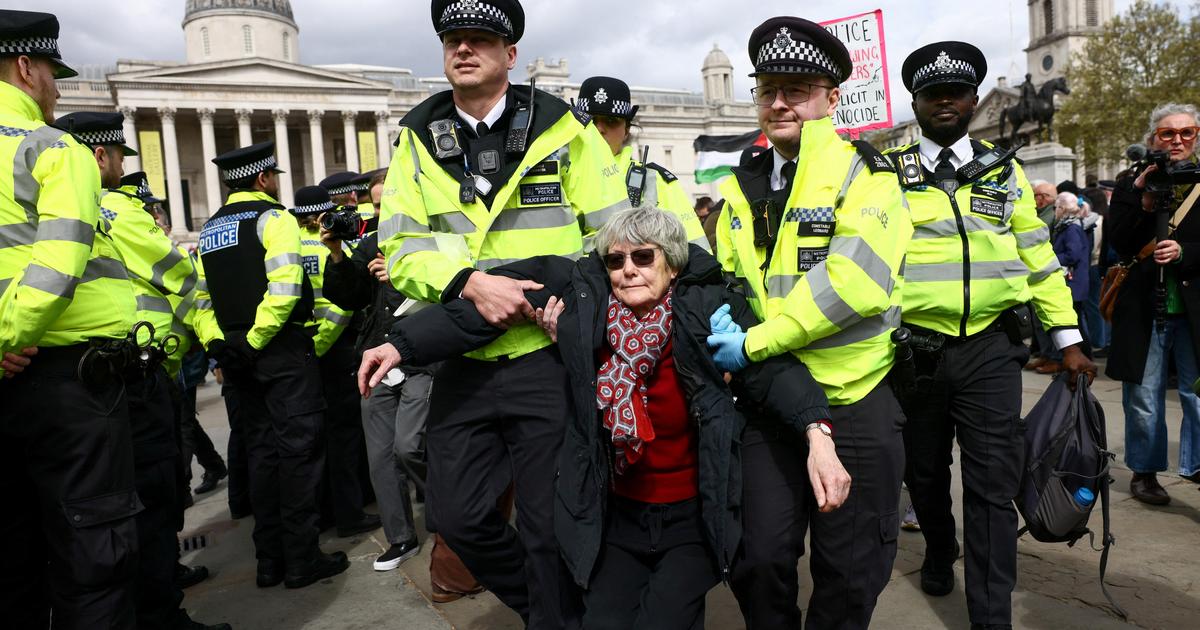
London authorities arrested 523 people on Saturday during a demonstration in the heart of the capital, as supporters gathered to demand the lifting of a government ban on the group Palestine Action. The arrests took place during a silent gathering at Trafalgar Square, which organizers described as a peaceful sit-in.
The Metropolitan Police confirmed via a post on X that the individuals detained ranged in age from 18 to 87. The scale of the police response underscores the heightened tension surrounding the group, which has been prohibited by the UK government since July 2025 following allegations of vandalism, including targeted actions at an air force base according to reports from Le Figaro.
Among those taken into custody was Robert Del Naja, a member of the renowned British band Massive Attack. Witnesses reported that Del Naja was seated with a sign stating “I Support Palestine Action” before being escorted away by three police officers, as detailed by the Press Association (PA) via Le Figaro.
The Trafalgar Square Sit-In and Police Response
The event, which occurred around midday on April 11, 2026, was characterized by its silence. Hundreds of participants occupied Trafalgar Square in a non-violent display of dissent, with many carrying placards that read “Je m’oppose au génocide, je soutiens Palestine Action” (I oppose genocide, I support Palestine Action), a slogan that has become a focal point of the movement’s visibility as reported by Le Monde.
Despite the peaceful nature of the sit-in, the police moved in to make mass arrests. The decision to detain over 500 people in a single afternoon highlights the strict enforcement of the ban on Palestine Action. The diversity of the detainees—spanning nearly seven decades of age—suggests a broad base of support or sympathy for the group’s cause among the public.
Legal Context: The Ban on Palestine Action
The current unrest is rooted in a legal conflict between the group Palestine Action and the government of Prime Minister Keir Starmer. The Labour government officially banned the organization in July 2025, citing acts of vandalism carried out by its activists. Specifically, the government pointed to attacks on military infrastructure, including an air force base, as the justification for the proscription via Le Figaro.
Since the imposition of that ban, the crackdown on affiliated activists has been extensive. Authorities have reported that more than 2,700 people have been arrested since July 2025 in connection with the group’s activities or support for its banned status according to the Journal de Montréal.
Palestine Action is currently engaged in a legal battle against the UK government to overturn the ban, arguing that the restrictions infringe upon their rights to protest and freedom of expression. The outcome of these judicial proceedings will likely determine the future of the group’s operations within the United Kingdom.
Key Details of the April 11 Arrests
| Detail | Information |
|---|---|
| Total Arrests | 523 people |
| Location | Trafalgar Square, London |
| Age Range | 18 to 87 years old |
| Nature of Protest | Silent sit-in / Peaceful gathering |
| Notable Detainee | Robert Del Naja (Massive Attack) |
Broader Implications for Civil Liberties
The mass arrests in London raise significant questions regarding the balance between national security and the right to peaceful assembly. Although the government maintains that the ban is necessary to prevent vandalism and protect military assets, critics argue that the arrest of hundreds of peaceful protesters—including senior citizens and public figures—represents an overreach of police power.
The involvement of figures like Robert Del Naja brings international attention to the case, framing the struggle not just as a political dispute over Palestine, but as a challenge to the UK’s current approach to political dissent and the legal definition of “vandalism” versus “political expression.”
As Palestine Action continues its legal challenge against the Starmer administration, the events of April 11 serve as a stark reminder of the volatility surrounding this issue. The sheer number of arrests since July suggests that the government is committed to a zero-tolerance policy regarding the group’s presence in public spaces.
The next significant development will be the progression of the judicial battle between Palestine Action and the UK government. Updates on court rulings regarding the legality of the ban are expected to provide clarity on whether such mass arrests will continue.
World Today Journal encourages readers to share their perspectives on the balance between public order and the right to protest in the comments section below.