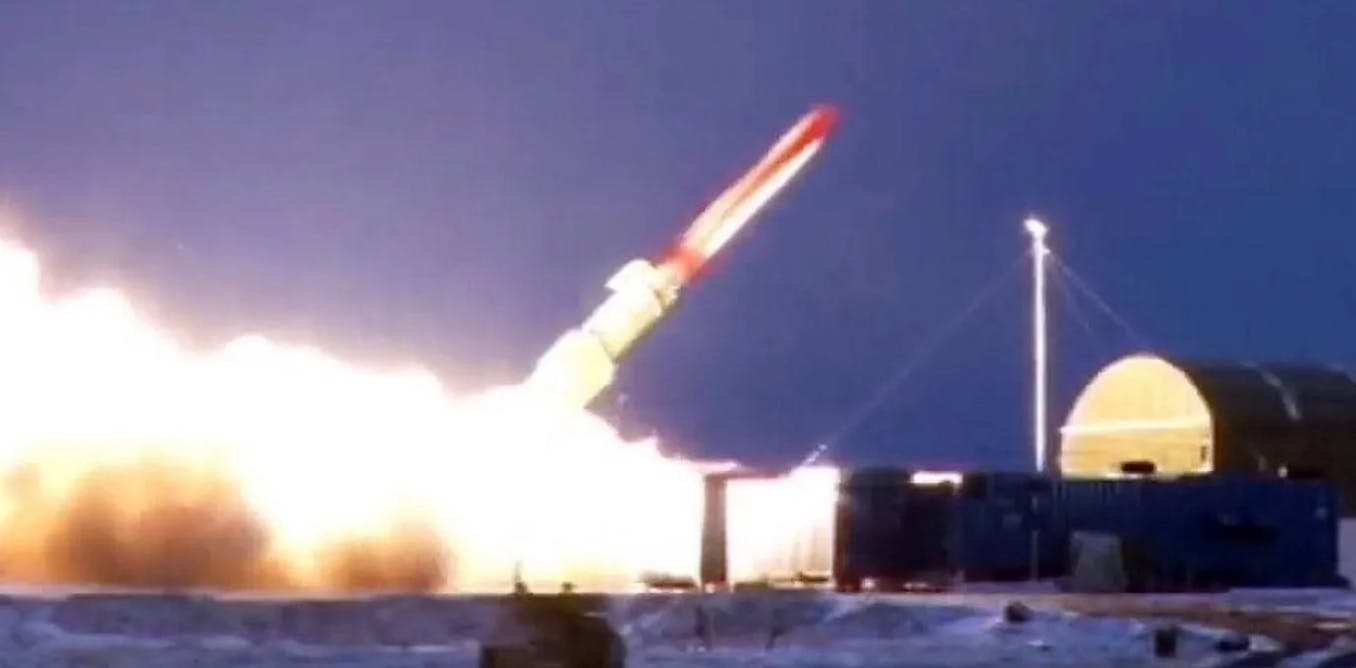
The Emerging Threat of Nuclear-Powered Missiles: A Challenge to Global Stability
For decades, the specter of nuclear war has been tempered by the concept of mutually assured destruction. But a new generation of weapons, particularly Russia’s Burevestnik cruise missile, is reshaping the strategic landscape and raising serious concerns about global stability.This article will delve into the technology, challenges, and implications of nuclear-powered missiles, offering an expert viewpoint on this evolving threat.
What are Nuclear-Powered Missiles?
These aren’t missiles carrying nuclear warheads, but missiles powered by a small nuclear reactor. This basic difference unlocks capabilities previously unattainable with conventional propulsion.
* Extended Range: Nuclear power allows for virtually unlimited range, as the missile isn’t reliant on carrying vast amounts of fuel.
* Low-Altitude flight: The compact power source enables sustained low-altitude flight, making detection by radar substantially harder.
* High Maneuverability: Nuclear-powered missiles can execute complex maneuvers,further complicating defense efforts.
These characteristics combine to create a weapon that poses a unique challenge to even the most refined missile defense systems. You might be wondering why this technology hasn’t been more widespread.The answer lies in the meaningful technical and safety hurdles.
The Technical Hurdles of Nuclear Propulsion
Harnessing nuclear fission for missile propulsion is an engineering feat fraught with difficulty. The core challenge revolves around managing the immense energy released.
* Extreme Temperatures: The fission process generates temperatures reaching thousands of degrees Fahrenheit. Materials capable of withstanding such heat are essential to prevent the missile from self-destruction.
* Radiation Shielding: Containing the radioactive byproducts of fission is critical. Effective shielding adds weight and complexity.
* Miniaturization: Fitting a functional nuclear reactor into a missile body requires significant miniaturization of components.
these challenges explain why the U.S. abandoned its own nuclear-powered missile program, Project Pluto, in the 1960s. The risks, both technical and environmental, proved too substantial at the time.
Safety Concerns: A Persistent Shadow
Beyond the engineering complexities, safety concerns remain paramount. The potential consequences of a mishap are severe.
* Launch Failures: A failed launch could result in widespread radiation contamination. This is a major concern, mirroring the historical reluctance to utilize nuclear technology in space.
* Storage Vulnerability: Nuclear-powered weapons require secure storage for extended periods. An attack on a storage facility could trigger a catastrophic radiation leak.
* Proliferation Risks: The technology itself raises proliferation concerns, as it could potentially fall into the wrong hands.
Russia’s Burevestnik: A Resurgent Threat
Russia’s Burevestnik (SSC-8) missile represents a renewed push in this area. While details remain scarce, Russian claims are noteworthy.
* Reported Capabilities: Moscow asserts the Burevestnik has flown over 8,700 miles at low altitude,sustained for 15 hours. This demonstrates a significant advancement in nuclear-powered propulsion.
* maneuverability: Russian officials emphasize the missile’s ability to maneuver, designed to evade existing antimissile systems.
* Development History: The Burevestnik has been in development for over two decades, indicating a long-term commitment to this technology.
It’s critically important to note that independent verification of these claims is limited. Though, the very existence of the Burevestnik program signals a shift in strategic thinking.
Disrupting Strategic Stability: The Core Concern
While defending against the Burevestnik is a valid concern, the more significant issue is its potential to destabilize the existing global order.
* Erosion of Mutual Deterrence: The Burevestnik’s maneuverability and low-altitude flight profile could potentially overwhelm current missile defense systems. This raises questions about the credibility of existing deterrents.
* The Rise of new Defense Systems: The development of systems like the U.S.’s “Golden Dome” and China’s hypersonic missiles are further complicating the equation. These advancements create a dynamic where offense and defense are constantly leapfrogging each othre.
* Reduced Warning Time: Low-altitude, maneuverable missiles can approach their targets with minimal warning, compressing decision-





![Wednesday News: Latest Updates & Headlines – [Date]](https://assets.thelocal.com/cdn-cgi/rs:fit:1200/quality:75/plain/https://apiwp.thelocal.com/wp-content/uploads/2025/12/watermarks-logo-Arisdorf_Baerenfels_Gold_1_1.jpg@webp "Wednesday News: Latest Updates & Headlines – [Date]")