
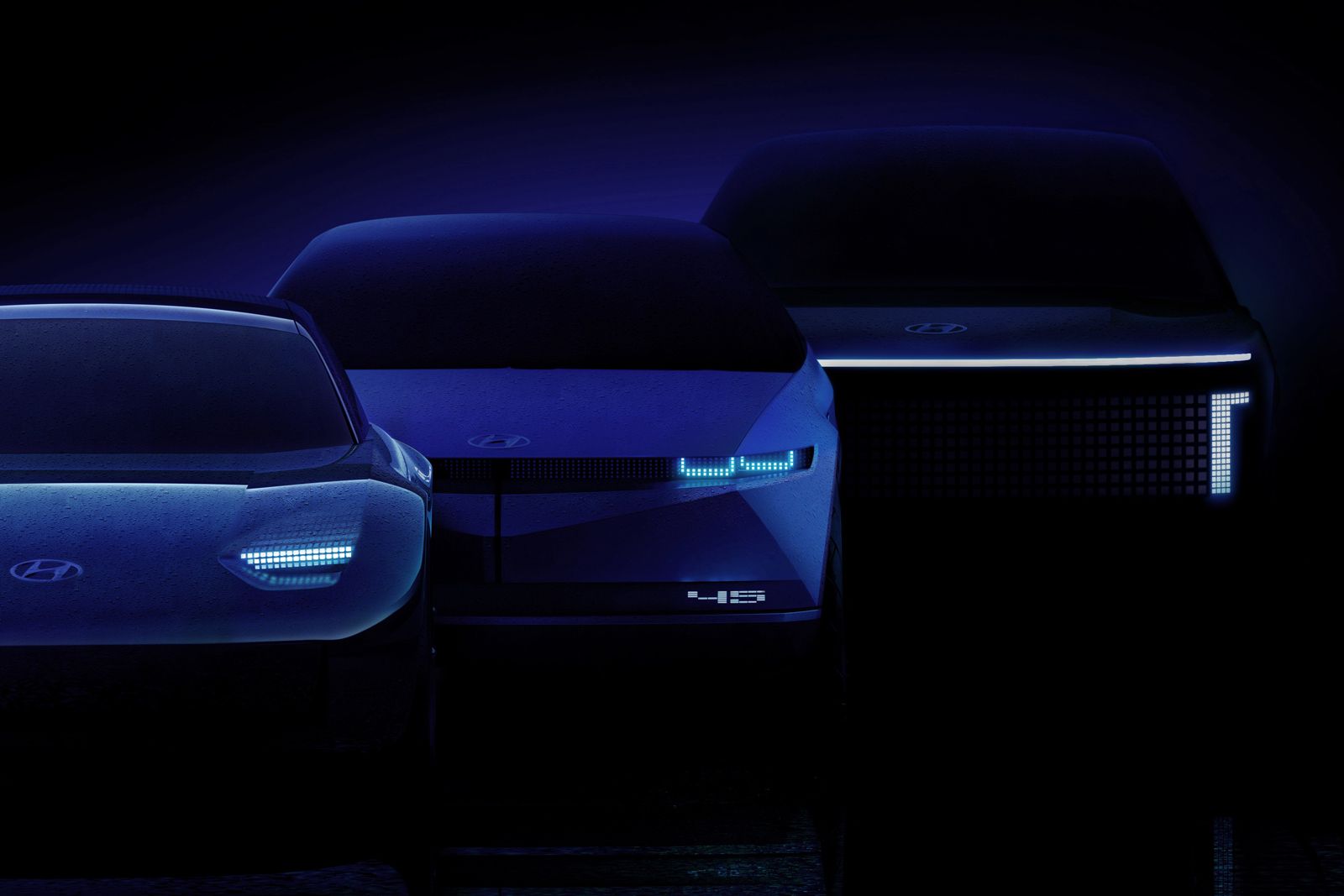
Hyundai Motor Company is making a strategic pivot in one of the world’s most competitive automotive landscapes. The South Korean giant has officially launched its dedicated electric vehicle (EV) brand, IONIQ, in the Chinese market, signaling a comprehensive effort to regain its footing through a localized approach to electrification and design.
The announcement took place during an “IONIQ Brand Launch Event” held from April 7 to April 10, 2026, at the Hyundai Motorstudio Beijing. During this event, the company formalized its entry into the Chinese EV sector and unveiled two concept cars to the world for the first time, marking a departure from previous global strategies in favor of a “China-optimized” ecosystem via Hyundai Motor Group.
This move comes as Hyundai seeks to leverage its global reputation for safety and quality—highlighted by the award-winning IONIQ 5 and IONIQ 6—whereas integrating specific technologies tailored to the unique demands of Chinese consumers. The strategy focuses on a “human-centric” vision, branded as “Progress for Humanity,” which aims to blend high-level global standards with local lifestyle solutions.
Localizing the EV Ecosystem: Technology and Strategy
Hyundai’s approach to the Chinese market is not merely about introducing existing models, but about rebuilding the brand’s ecosystem. Central to this strategy is a new technical roadmap that combines the company’s established quality benchmarks with localized innovations. A key pillar of this effort is a partnership with Momenta, a Chinese autonomous driving technology firm, to implement self-driving capabilities optimized for the local environment via It Chosun.

Beyond software, Hyundai is addressing the specific infrastructure challenges of the region. The company plans to introduce Extended Range Electric Vehicle (EREV) technology, designed to mitigate range anxiety and account for the current state of charging infrastructure and long-distance travel patterns within China via It Chosun.
The brand identity is also being overhauled for the region. Moving away from the standard global naming conventions, Hyundai is introducing a new model naming system based on “planets.” This conceptual framework is intended to reflect a structure where the customer’s life is the center, and the products and services orbit around those needs, effectively repositioning the brand and its sales channels to be consumer-centric.
‘The Origin’: A New Design Language for China
To capture the attention of Chinese consumers, Hyundai has unveiled a new design language titled “The Origin.” This aesthetic direction prioritizes the company’s unique identity over fleeting trends, focusing on “first impression competitiveness” through the use of silhouettes completed by a single, continuous curve via It Chosun.
As part of this design debut, two concept cars were revealed at the Beijing event: the “Venus Concept” and the “Earth Concept.” These vehicles serve as the physical manifestation of “The Origin” design language and the brand’s intent to present a refreshed image of Hyundai to the Chinese public via Hyundai Motor Group.
Key Strategic Pillars of the China Launch
- Localized Technology: Collaboration with Momenta for region-specific autonomous driving.
- Infrastructure Solutions: Introduction of EREV (Extended Range Electric Vehicle) technology to address charging needs.
- New Design Identity: The “The Origin” language, debuting with the Venus and Earth concept cars.
- Consumer-Centric Branding: A planet-themed naming system to shift focus toward the customer’s lifestyle.
Global Pedigree Meeting Local Demand
Hyundai is entering this phase of the Chinese market with significant momentum from its global EV success. The IONIQ brand has already secured a series of prestigious accolades that the company intends to use as a foundation for trust in China. The IONIQ 5 and IONIQ 6 were recognized as “Car of the Year,” “Electric Car of the Year,” and “Design of the Year” at the World Car Awards in 2022 and 2023, respectively via Hyundai Motor Group.
the high-performance variants, IONIQ 5 N and IONIQ 6 N, claimed the “World Performance Car” titles in 2024 and 2026. By pairing these global quality certifications with the new “China-optimized” solutions, Hyundai aims to overcome previous slumps in the region and establish a sustainable, high-growth trajectory in the world’s largest EV market via Joseilbo.
The integration of localized software, specialized hardware like EREVs, and a distinct design language suggests that Hyundai is no longer treating China as a standard export market, but as a unique ecosystem requiring a bespoke operational model.
The next major milestone for Hyundai’s Chinese strategy will be the transition of these concept designs into production models and the rollout of the Momenta-powered autonomous systems. We will continue to monitor official announcements regarding the commercial release dates for the Venus and Earth-inspired production vehicles.
What are your thoughts on Hyundai’s “planet-based” branding and localized EV strategy for China? Share your perspective in the comments below.