
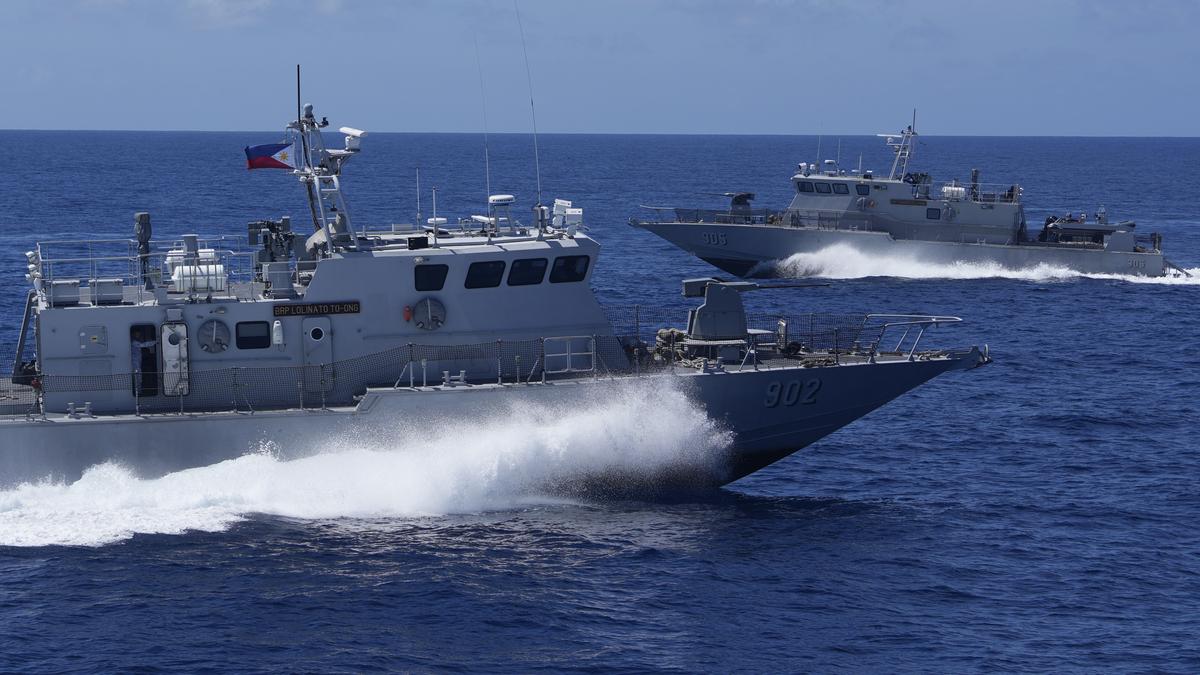
Philippines Deepens Maritime Cooperation with India Amidst South China Sea Tensions
The Philippines is actively strengthening its strategic partnership with india, a move underscored by President Ferdinand Marcos Jr.’s recent state visit and a growing focus on maritime security cooperation. This deepening alliance comes against a backdrop of escalating tensions in the south China Sea, where the Philippines faces increasingly assertive actions from China, and a broader need to bolster deterrence and maintain a rules-based international order in the Indo-Pacific region.
Naval Demonstrations of Solidarity & Shadowing by China
Recent joint maritime patrols between the Philippine and Indian navies, including a port call by the Indian Navy tanker INS Shakti in Manila, are demonstrative of this burgeoning relationship. According to Philippine Armed Forces Chief of Staff, General Romeo Brawner Jr., the INS Shakti’s visit was “more than ceremonial,” serving as “a powerful signal of solidarity, strength in partnership and the energy of cooperation between two vibrant democracies.”
These patrols haven’t gone unnoticed by Beijing. While no direct intervention occurred during the joint exercises, Philippine forces reported being “shadowed” by Chinese vessels. General Brawner noted this was anticipated, mirroring past interactions during patrols with other international partners like the United States, Japan, Australia, New Zealand, and France. China routinely monitors such activities from a distance, a tactic reflecting its sensitivity to external involvement in the disputed waters.
South China Sea Disputes & China’s Assertiveness
The South China Sea remains a critical flashpoint. China’s expansive claims to nearly the entire sea, a vital global trade route, are contested by the Philippines, Vietnam, Malaysia, Brunei, and Taiwan. These claims have led to frequent confrontations and a growing sense of unease among regional actors.
Just recently, a Chinese ship ran aground near a Philippine-occupied island in the spratly Islands, further exacerbating tensions. The Philippines has responded by increasing its naval presence in the area, often accompanied by international media to document China’s actions – a strategy that has drawn sharp criticism from Beijing.
China’s Ministry of National Defense recently labelled the Philippines a “troublemaker” for its alignment with foreign powers, warning of “resolute countermeasures” against any perceived provocations. Defence Ministry spokesperson Colonel Zhang Xiaogang reiterated China’s unwavering commitment to safeguarding its territorial sovereignty and maritime rights.
Philippines’ Strategy: Modernization & Partnerships
Recognizing the need to deter potential conflict, the Philippines is pursuing a two-pronged strategy: modernization of its armed forces and the cultivation of strong partnerships with like-minded nations.
“the way to do that is number one, the Armed Forces of the Philippines has to be strengthened through modernisation and secondly, we need to partner with like-minded nations and that’s what we’re doing with India,” General Brawner stated.
The partnership with india is particularly important. Beyond the naval cooperation, President Marcos Jr.’s visit aims to broaden engagement across multiple sectors, including defense, trade, investment, agriculture, tourism, and pharmaceuticals. This comprehensive approach reflects a desire to build a robust and multifaceted relationship with a key regional player.
Historical Context & Regional Implications
The current tensions are not isolated. China shares a long-standing land border dispute with India, marked by a 1962 war and subsequent deadly skirmishes. This historical context adds another layer of complexity to the regional security landscape.
The Philippines’ proactive approach to strengthening its defense capabilities and forging alliances is a clear indication of its commitment to safeguarding its sovereignty and promoting regional stability. The deepening ties with India, alongside existing partnerships, are crucial components of this strategy.Looking Ahead: A Rules-Based Indo-Pacific
The philippines and India share a commitment to a “rules-based international order” in the Indo-Pacific.This shared vision underscores the importance of upholding international law, peaceful resolution of disputes, and freedom of navigation.
As President Marcos Jr. engages with Prime Minister Narendra modi and other Indian leaders, the focus will be on solidifying this partnership and exploring new avenues for cooperation. The future of regional security hinges on the ability of nations like the Philippines and India to work together to maintain a stable and prosperous indo-Pacific region.
Sources:
* [https://www.thehindu.com/news/international/chinese-ship-runs-aground-off-philippines-occupied-island-in-the-disputed-south-china-sea/article69671886.ece](https://www.thehindu.com/news/international/chinese-ship-runs-aground-


