
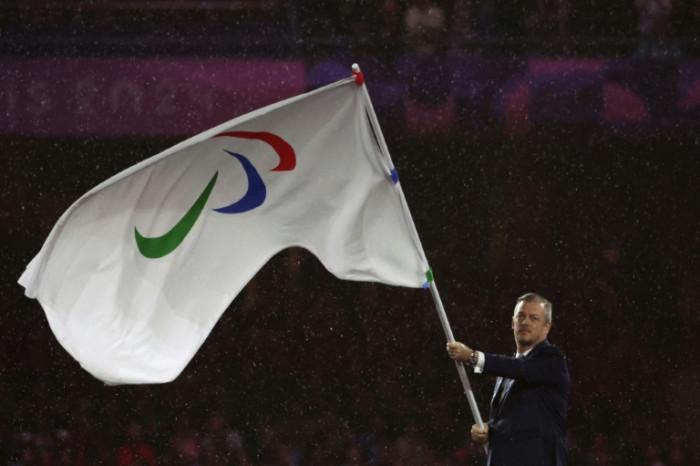
Paralympic Shift: Russia and Belarus Reinstated, Sparking International Outcry and Uncertainty for Milan-Cortina 2026
Munich, Germany – A controversial decision by the International Paralympic Committee (IPC) to lift the partial suspension of Russia and Belarus has ignited a firestorm of protest, particularly from Ukraine, and cast a shadow of uncertainty over the upcoming Milan-Cortina 2026 Paralympic Winter Games. The move, approved at the IPC General Assembly in Seoul, allows athletes from both nations to compete under their own flags, despite the ongoing war in Ukraine and continued geopolitical tensions.
This decision marks a critically important shift in the IPC’s stance, initially adopted in response to Russia’s invasion of Ukraine in 2022. While a partial suspension was implemented in 2023, the full reinstatement now grants the National Paralympic Committees (NPC) of Russia and Belarus their full membership rights and privileges. The IPC stated it will “work with the two members involved to put practical arrangements in place as soon as reasonably possible.”
Ukrainian Fury and Calls for Resistance
The reaction from Ukraine has been one of vehement condemnation. Matviy Bidnyi, Ukraine’s Sports minister, accused those who voted in favor of the reinstatement of betraying “their conscience and the Olympic values.” He emphasized the moral implications of allowing representatives of an aggressor nation to compete on the world stage while their country continues to suffer from war and occupation.
“This decision means NPC Belarus and NPC Russia now regain their full rights and privileges of IPC membership,” the IPC confirmed in a statement.
Bidnyi further stressed the crucial role of the host nation and organizing committee, urging European partners hosting the Winter Paralympic Games to prevent the display of the Russian flag “over the free and democratic space while the war of aggression continues.” Ukraine has indicated its participation in the Milan-Cortina Games remains contingent on a collective decision,signaling a potential boycott if the situation isn’t addressed.
A Complex Landscape: International Federations Hold the Key
While the IPC has reinstated the NPCs, the actual participation of Russian and Belarusian athletes remains far from guaranteed. The power to determine which nations compete in the six sports comprising the Winter paralympic programme – para Alpine skiing, para cross-country skiing, para snowboarding, para biathlon, para ice hockey, and wheelchair curling – rests with the respective international sports federations. Crucially, many of these federations have maintained existing bans on athletes from Russia and Belarus, even under neutral flags.
This creates a complex and perhaps fragmented landscape. The IPC’s decision essentially opens the door, but the federations hold the key to whether athletes will actually be able to qualify and compete.
Marie-Amelie Le fur,President of the French Paralympic Committee,highlighted the potential for quota reallocation. “To date, not all quotas have been filled… When the quotas are re-established, under the guise of universality, this could also open up quotas for the Russian and Belarusian committees, which have regained their rights.” She emphasized the need to await the positions of the international federations and the final selection process.
Historical Context: A Pattern of Suspension and Neutral Participation
This isn’t the first time Russian athletes have faced restrictions at the Paralympic Games. The Russian flag was absent from the 2014 Sochi Games (held on Russian soil) due to a doping scandal. Subsequent Games saw Russian athletes competing under a neutral banner in Rio 2016, Pyeongchang 2018, and Tokyo 2021, again due to doping violations. The IPC fully excluded the Russian and Belarusian Paralympic Committees from the 2022 Beijing Winter Olympics.
A limited form of participation was permitted at the 2024 Summer Paralympics in Paris, allowing athletes from Russia and Belarus to compete under a neutral flag and adhering to strict neutrality conditions.
Echoes of the Olympic Decision
The IPC’s decision closely mirrors a recent move by the International Olympic Committee (IOC), which authorized the participation of Russian and Belarusian athletes at the Milan-Cortina Winter Olympics, also under a neutral flag and subject to stringent neutrality conditions.Kirsty Coventry, IOC President, confirmed the alignment, stating the approach would be “the exact same approach that was done in Paris.”
Though, the IOC’s decision, like the IPC’s, relies heavily on the qualification processes established by individual international federations, leaving the final composition of the delegations uncertain. The size of the Russian and Belarusian delegations will ultimately depend on how many athletes can meet the qualification criteria set by these federations.
Looking Ahead: A Period of Intense Negotiation and Scrutiny
The coming months will be critical. Intense negotiations are expected between the IPC, international federations, host





