
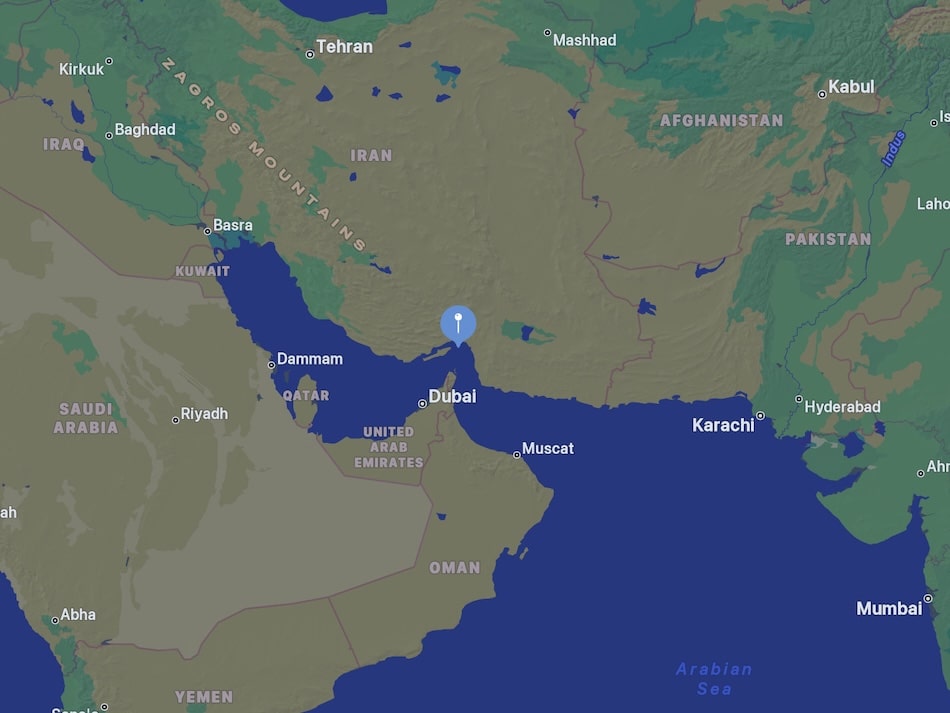
The fragile hope of a two-week ceasefire between the United States and Iran has cast a tentative spotlight on one of the world’s most critical maritime chokepoints. For the international community, the primary objective is the Strait of Hormuz reopening, a move that would signal the beginning of the complete for a naval blockade that has paralyzed global energy markets and left thousands of mariners in peril.
As of Thursday, April 9, 2026, the diplomatic atmosphere remains tense. While a ceasefire has been announced, the reality on the water is far from stable. The strait, a narrow artery connecting the Persian Gulf to the Gulf of Oman, has transitioned from a bustling highway of global trade to a militarized zone. The stakes are immense: this waterway carries approximately one-fifth of the world’s transported oil and natural gas.
For the 20,000 sailors currently stranded aboard ships trapped in the Persian Gulf, the ceasefire is not just a geopolitical milestone—We see a lifeline. According to the International Maritime Organization (IMO), roughly 2,000 vessels, including oil tankers, bulk carriers, and six cruise ships, are unable to exit the Gulf due to the ongoing volatility and the threat of Iranian intervention.
The Catalyst of the 2026 Hormuz Crisis
The current crisis was ignited on February 28, 2026, following a devastating escalation in regional conflict. The situation spiraled when the Supreme Leader of Iran, Ali Khamenei, who had led the nation for over 36 years, was killed by a joint U.S.-Israeli military operation on February 28. In immediate retaliation, the Islamic Revolutionary Guard Corps (IRGC) declared a forceful blockade of the Strait of Hormuz, effectively shutting down one of the most vital transit points for global energy.
The impact was instantaneous. Before the conflict erupted, the IMO reported that approximately 150 ships traversed the strait daily. Following the blockade, that number plummeted to just four or five vessels per day, with passage granted only to those deemed “non-hostile” by Iranian authorities per UN reports. To enforce this closure, Iran confirmed the deployment of naval mines and carried out 21 confirmed attacks on commercial shipping, resulting in the deaths of 10 sailors and leaving several others injured as recorded by Wikipedia.
This blockade represents the most significant challenge to global energy supplies since the energy crises of the 1970s. By restricting the flow of oil and liquefied natural gas (LNG), the IRGC exerted immense pressure on the global economy, driving up fuel prices in the United States and Europe and causing acute energy shortages in several Asian nations heavily dependent on Gulf exports.
The ‘Transit Fee’ Deadlock and International Law
Despite the announcement of a ceasefire, the path to a full reopening is blocked by a contentious demand from Tehran. Iran has proposed the implementation of a “transit fee”—essentially a toll for ships passing through the strait—as a prerequisite for its full reopening according to Deutsche Welle.

This demand has sparked a fierce legal and diplomatic debate. Legal experts warn that charging a toll for passage through a natural strait would violate the principle of “freedom of navigation,” a cornerstone of international maritime law. This principle is enshrined in the United Nations Convention on the Law of the Sea (UNCLOS), which stipulates that foreign ships cannot be charged fees simply for passing through territorial waters, though specific service fees for non-discriminatory services are permitted per UNCLOS guidelines.
The legal complexity is compounded by the fact that neither the United States nor Iran are signatories to UNCLOS. However, the U.S. Administration under President Trump has remained firm. White House officials stated on Wednesday, April 8, that the administration opposes the imposition of transit fees, viewing such a move as an illegal attempt by Iran to consolidate control over the waterway and profit from a global crisis as reported by DW.
Geopolitical Friction and the Struggle for Escorts
The crisis has also strained alliances and highlighted the reluctance of several global powers to engage in direct military confrontation. In March, President Trump publicly called upon the United Kingdom, France, China, South Korea, and Japan to deploy warships to the region to provide escorts for commercial vessels according to Reuters reports cited by Wikipedia.
The response from these allies was largely lukewarm. The United Kingdom declined, citing a desire to avoid being drawn deeper into the conflict. Japan’s Prime Minister Sanae Takaichi informed the National Diet that there were no current plans to dispatch destroyers to the area, and Australia similarly declined to send ships per Wikipedia. By April 1, President Trump expressed public frustration with South Korea’s “uncooperative” stance, arguing that nations benefiting from the strait’s security should share the burden of maintaining it.
Amidst this friction, Iran has played a selective game of diplomacy. Foreign Minister Araghchi indicated on March 26 that ships from “friendly” nations or those meeting specific conditions—specifically mentioning China, Russia, and India—would be allowed safe passage per Wikipedia.
Humanitarian Impact: 20,000 Sailors in Limbo
While the headlines focus on oil prices and diplomatic cables, the human cost of the blockade is staggering. The concentration of 2,000 ships in the Persian Gulf has created a floating crisis. These vessels are not merely economic assets; they are homes to approximately 20,000 seafarers who have been trapped for weeks.
Damian Chevalier, Director of the Maritime Security Division of the IMO, has emphasized that the ceasefire is a critical first step for these individuals. The psychological and physical toll of being stranded in a war zone, with the constant threat of missile attacks or mine strikes, cannot be overstated. For many of these crews, the “unstable” nature of the current ceasefire means they remain in a state of suspended animation, waiting for a definitive signal that the waters are safe for transit per UN News.
Why the Strait of Hormuz is a Global Vulnerability
To understand why the world is so focused on this narrow passage, one must appear at the geography. At its narrowest point, the strait is only 39 kilometers (21 nautical miles) wide. It is the only sea passage from the Persian Gulf to the open ocean. For nations like Saudi Arabia, Iraq, and the United Arab Emirates, it is the primary exit for their oil and gas exports per UN News.
Any disruption here creates a domino effect:
- Energy Price Spikes: Because such a high percentage of global supply passes through this single point, even a limited interference causes immediate volatility in global crude prices.
- Supply Chain Delays: Beyond energy, the blockage of bulk carriers disrupts the transport of chemicals and other raw materials essential for global manufacturing.
- Regional Instability: The militarization of the strait increases the risk of accidental skirmishes, which could potentially reignite the full-scale war between the U.S. And Iran.
What Happens Next?
The immediate future of the Strait of Hormuz reopening rests on a high-stakes diplomatic meeting scheduled for this coming weekend. U.S. And Iranian delegations are planned to meet in Pakistan to negotiate the terms of the ceasefire and, more importantly, to consolidate an agreement that would allow for the safe and unrestricted return of commercial shipping per UN News.
The primary point of contention will almost certainly be the “transit fee.” If Iran insists on payments as a condition for reopening, the U.S. May be forced to choose between maintaining the principle of freedom of navigation and the urgent need to stabilize global energy markets and rescue stranded sailors.
| Metric/Event | Detail | Impact/Status |
|---|---|---|
| Trigger Event | Death of Ali Khamenei (Feb 28) | Led to IRGC naval blockade |
| Global Energy Impact | ~20% of oil and LNG supply | Price spikes and Asian shortages |
| Shipping Volume | 150 ships/day $\rightarrow$ 4-5 ships/day | Near-total paralysis of trade |
| Humanitarian Toll | 20,000 sailors stranded | 2,000 ships trapped in Persian Gulf |
| Casualties | 21 confirmed attacks | 10 sailors deceased |
The world now watches Pakistan, where the success or failure of this weekend’s talks will determine whether the Strait of Hormuz returns to being a corridor of commerce or remains a flashpoint for global conflict.
We invite our readers to share their perspectives on this developing crisis in the comments below. How should the international community balance the principle of freedom of navigation against the urgency of global energy stability?