
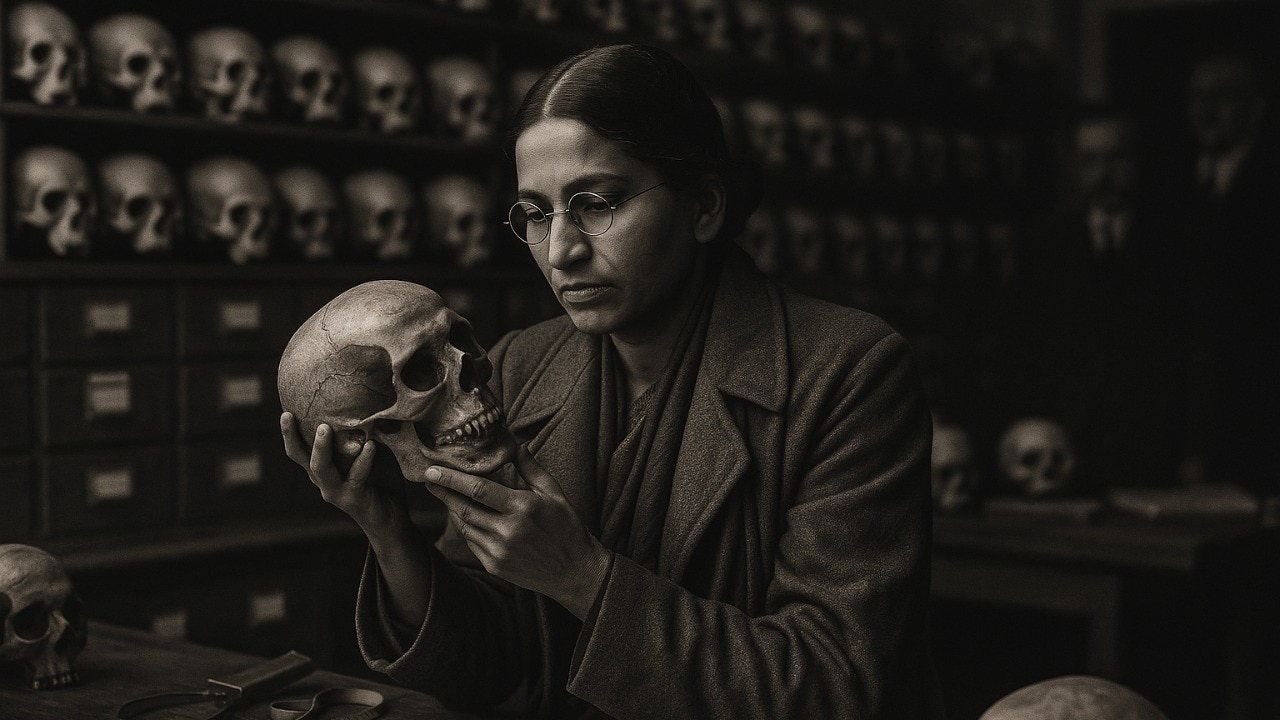
Irawati Karve: The Anthropologist Who Redefined India
Irawati Karve (1905-1970) wasn’t just an anthropologist; she was a quiet revolutionary. Her groundbreaking work challenged deeply ingrained societal norms about caste, gender, and identity in India, leaving a legacy that continues to resonate today. This article explores her life, work, and enduring impact, demonstrating why she remains a pivotal figure in Indian social sciences.
Pioneering Kinship and caste Studies
Before karve, understandings of caste were frequently enough rooted in rigid, biological determinism. She fundamentally shifted this viewpoint. Her research demonstrated that caste wasn’t a fixed destiny, but a dynamic social formation.
Karve meticulously showed how migration patterns, marriage practices, and geographical factors shaped and reshaped caste structures. She explained, rather than condemned or idealized, offering a nuanced understanding of a complex system. This approach was revolutionary for its time.
A Vision for a Modern India
Karve’s vision extended beyond academic analysis. She actively articulated a strikingly modern and inclusive India.As highlighted in the biography Iru: The Remarkable life of Irawati Karve, she envisioned:
“A multi-cultural, multilingual society which has knowledge of one another’s culture and has decided to live and work together in comradeship.”
This forward-thinking perspective championed diversity and collaboration – ideals still relevant in contemporary India.
(Image: Irawati with human remains from the Mesolthic period, Langhnaj, Gujarat, February 1944 [Photo from ‘Iru: The remarkable Life of Irawati karve’ by Urmilla Despande and Thiago Pinto Barbosa])
Reimagining the Mahabharata: Yuganta
In 1967, Karve published Yuganta: The End of an Epoch, her most celebrated work. This wasn’t a retelling of the Mahabharata as a divine narrative. Instead, she presented the epic’s characters as profoundly human.
Draupadi, Kunti, Bhishma, and Yudhishthira weren’t simply mythological figures.Thay became flawed individuals grappling with complex moral dilemmas. Yuganta demonstrated the power of anthropological insight to breathe new life into ancient stories, making them relevant to modern audiences.
However, her bold interpretations weren’t universally accepted. Scholar Louis Dumont, a prominent figure in Indian studies, criticized her for attributing historical significance to the epic. This highlights the challenging nature of her work and her willingness to question established norms.
Beyond Academia: A Life of Quiet Rebellion
Irawati Karve’s rebellion wasn’t confined to her research. She lived a life that defied societal expectations for women in mid-20th century india.
Consider these examples:
* Mobility: She fearlessly rode a Lambretta scooter through the streets of Pune, a time when women frequently enough observed purdah (veil).
* Self-Expression: She dressed as she pleased and spoke her mind without hesitation.
* Priorities: She valued ideas, independence, and truth above ritual, conformity, and comfort.
(Image: Irawati with her Lambretta scooter, Pune, 1950 [Photo from ‘Iru: The Remarkable Life of Irawati Karve’ by Urmilla Despande and Thiago Pinto Barbosa])
Those who knew her best recall a woman deeply committed to her principles. As Iru notes, she saw herself first and foremost as a scientist, driven by evidence and truth.
An enduring Legacy
Irawati Karve passed away on August 11, 1970, but her influence continues to grow. She fundamentally altered the conversation around identity in India.
She proved that:
* Race isn’t destiny.
* Caste isn’t biological.
* Women deserve equal access to education, research, and public life.
Her life serves as a powerful reminder that a single individual, armed with intellect and courage, can dismantle even the most entrenched ideologies. Today, as we grapple with issues of race, gender, caste, and identity, we are building upon the path she so bravely cleared.
Published On: Dec 15, 20





![Word of the Year Quiz: Test Your Vocabulary | [Year] Trends](https://i0.wp.com/th-i.thgim.com/public/incoming/zidc4i/article70424845.ece/alternates/LANDSCAPE_1200/IMG_GettyImages-22043581_2_1_O7FB8NRI.jpg?resize=150%2C100&ssl=1 "Word of the Year Quiz: Test Your Vocabulary | [Year] Trends")