
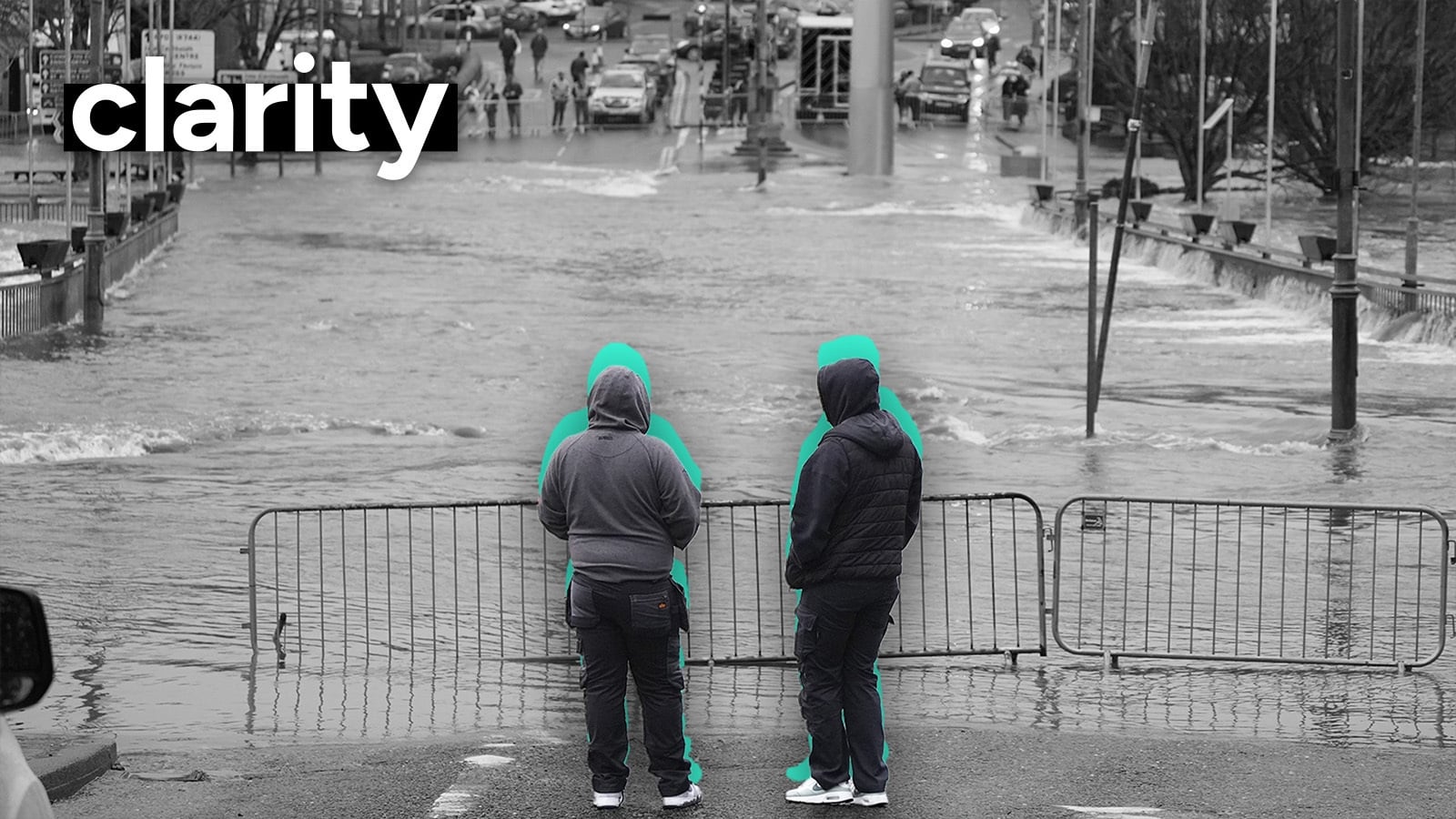
For many residents across the Republic of Ireland, the arrival of winter brings more than just a drop in temperature; it brings a mounting anxiety over the rising waters of rivers and the saturation of the land. While the nation possesses sophisticated meteorological capabilities to predict the weather, the transition from a general weather forecast to a precise, local flood warning remains a complex challenge.
The gap between knowing it will rain and knowing exactly which street will flood is where the danger lies. As climate change alters precipitation patterns and urban development encroaches on natural drainage systems, the reliance on data-driven risk management has never been more critical. Ireland has invested heavily in mapping and assessment, yet the ability to translate this vast amount of technical data into real-time, actionable warnings for every community is a persistent hurdle.
At the center of this effort is the Office of Public Works (OPW), which manages the national flood information portal. This system is designed to provide location-specific access to flood risk and management information, bridging the gap between national policy and local reality. However, as the environmental landscape shifts, the tools used to predict and manage these events are being tested by unprecedented variables.
The Architecture of Flood Risk Management
Ireland’s approach to flood management is not arbitrary; it is built upon a rigorous legal and technical framework. The development of the national Flood Maps was driven by the need to comply with the European Communities (Assessment and Management of Flood Risks) Regulations 2010 to 2015, which implemented Directive 2007/60/EC. This directive established a mandatory framework for assessing and managing flood risks to reduce adverse consequences for human health, the environment, cultural heritage, and economic activity.
A cornerstone of this framework is the Catchment Flood Risk Assessment and Management (CFRAM) Programme. Developed by the Commissioners of Public Works in collaboration with Dublin City Council, other local authorities, and Ordnance Survey Ireland, the CFRAM Programme provides the data that fuels the floodinfo.ie portal. This portal allows users to access river and coastal flood extents, including both current extents and future projections that account for the effects of climate change.
For the average citizen, the portal offers a “past flood event summary report.” By selecting a location on the map, users can generate a report that summarizes all past flood events within 2.5 kilometres of that specific point. This historical data is essential for understanding vulnerability, but the challenge remains in turning these historical patterns into predictive, local warnings during an active weather event.
The Climate Challenge and Inland Flooding
The difficulty in issuing precise warnings is compounded by the evolving nature of inland flooding in Ireland. According to the Environmental Protection Agency (EPA), inland flooding is now widespread and encompasses all types of inland flood hazards. The risk is not uniform across the country; rather, it is heavily influenced by geography and precipitation gradients.
River and groundwater flooding are particularly prominent in the west of Ireland. A primary example is the Shannon estuary, where high levels of runoff reflect a distinct east-west gradient in precipitation. When heavy rainfall hits the west, the volume of water moving through the river systems can overwhelm existing defenses, making local warnings a matter of urgent necessity.
Climate change is further complicating these projections. While there are still large uncertainties in future precipitation projections for Ireland, current data indicates an increased level of flood risk during winter months. This means that areas previously considered safe may become prone to flooding, while those already at risk will face intensified threats. This is especially true for areas located at the confluence of major rivers, where the merging of multiple water sources can lead to rapid and unpredictable rises in water levels.
Why Data Does Not Always Equal Warning
If the OPW and EPA have the maps and the data, why is the “last mile” of communication—the local warning—so difficult? The answer lies in the intersection of hydrology, urban planning, and environmental change.
One of the most significant factors is the alteration of the landscape. The EPA has noted that flood risk has been exacerbated by the development of lands, particularly the construction of buildings on flood plains. Such development alters natural flow routes and reduces the volume available for flood storage, meaning water that once sat harmlessly in a field now flows directly into residential areas.
the increase in impermeable surfaces—such as roads, roofs, and car parks—has drastically reduced the land’s absorption capacity. This leads to increased runoff rates, putting immense pressure on urban drainage systems that may not have been designed for current volumes of water. When the ground cannot absorb rain and the drains cannot carry it away, flooding occurs rapidly, often faster than a centralized warning system can communicate a specific local threat.
These factors create a volatile environment where “data” (the knowledge that a region is at risk) does not always translate into a “warning” (the knowledge that a specific house will flood in two hours). The integrity of flood defenses and the capacity of urban drainage are constantly being challenged by these shifting dynamics.
Mitigation and the Path Forward
To combat these risks, the OPW continues to develop and implement a variety of Flood Relief Schemes. These capital works programmes are designed to provide physical protection to vulnerable communities, supplementing the informational warnings provided by the digital portals.

The OPW likewise provides technical specifications and guidance notes used when commissioning the design of these schemes and the preparation of flood maps. These documents ensure that as novel defenses are built, they are based on the most current hydrological data and climate projections. For stakeholders and planners, these resources are available via the Gov.ie policy information page.
The goal is to move toward a more integrated system where real-time hydrometric data—water level measurements—can be combined with high-resolution mapping to provide the “clear, local warnings” that communities require. By integrating archived water level data with real-time monitoring, authorities aim to reduce the uncertainty that currently plagues local flood predictions.
Key Resources for Flood Risk Information
| Resource | Primary Purpose | Key Feature |
|---|---|---|
| floodinfo.ie | National flood information portal | Interactive flood maps and past event reports |
| Gov.ie (OPW) | Policy and technical resources | Flood Relief Schemes and technical specifications |
| Climate Ireland (EPA) | Climate hazard analysis | Impact assessments of inland flooding and climate change |
As Ireland continues to face the dual threats of climate change and urban expansion, the focus must remain on the ability to communicate risk. The infrastructure for data collection exists; the challenge now is the refinement of that data into a lifeline for the people living in the path of the water.
The next phase of flood risk management will likely depend on the continued update of Flood Plans and the completion of ongoing Flood Relief Schemes under the OPW’s capital works programme. Updates on these schemes and new flood mapping data are periodically released through the official government portals.
Do you live in an area prone to flooding? Have you found the national flood maps useful for your property planning? Share your experiences in the comments below.