
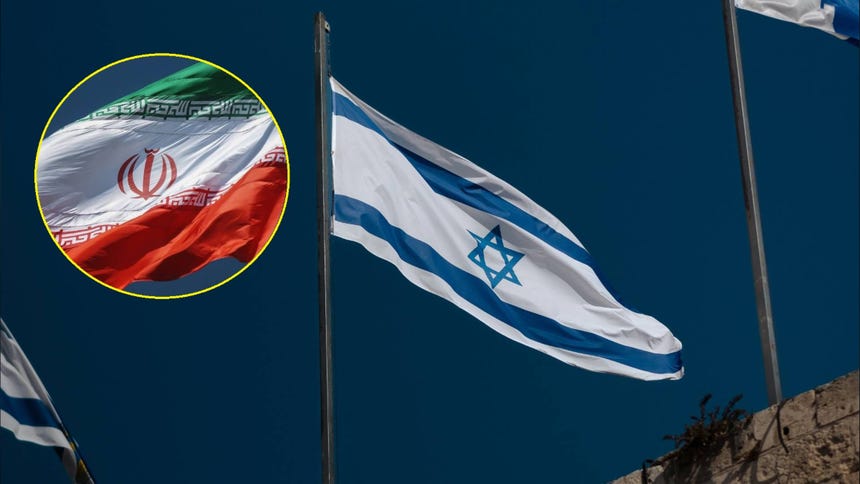
Tehran is under fire once again as Israel and the United States launched a joint offensive on the Iranian capital, striking residential and strategic zones in a significant escalation of the ongoing regional conflict. The attacks, confirmed by both the Israeli Defense Forces (IDF) and the Iranian Red Crescent, coincide with a high-stakes deadline set by U.S. President Donald Trump regarding the reopening of the Strait of Hormuz.
This joint offensive marks a critical juncture in what is now the 38th day of the war between the United States, Israel, and Iran. While the IDF has claimed the strikes were designed to damage key Iranian infrastructure, the human cost is mounting across the region, with residential areas in both Tehran and Haifa reporting casualties and destruction.
The timing of the strikes is inextricably linked to a diplomatic and military ultimatum. President Trump has demanded the immediate reopening of the Strait of Hormuz, a vital artery for global energy supplies that has been subject to a blockade. The deadline for this ultimatum is set for Tuesday, April 7, 2026, at 20:00 according to reports from Clarín.
Strategic Strikes on Iranian Energy and Missile Infrastructure
The joint offensive has targeted more than just the capital. In a coordinated effort to degrade Iran’s military and economic capabilities, Israel has expanded its bombing campaign to include critical petrochemical sites. The Israeli military confirmed the bombardment of the Pars Sur petrochemical complex, which is recognized as housing the largest natural gas reserves in the world as detailed by Clarín.

the IDF announced a secondary strike on a petrochemical complex in Shiraz, located in southern Iran. Military officials stated that this facility was one of the final remaining sites used to produce critical chemical components for explosives and the development of ballistic missiles per the Israeli military communiqué.
In Tehran, the impact has been visible in residential sectors. Smoke was reported rising from the east and west parts of the city following the aerial assaults according to DW. The Iranian Red Crescent has been deployed to provide emergency aid in these affected residential zones, though they have not yet reported official casualty figures from this specific wave of attacks as reported by BioBioChile.
The Hormuz Ultimatum and Iranian Defiance
The current military pressure is the “stick” accompanying President Trump’s ultimatum. In a recent press conference, the U.S. President adopted an uncompromising tone, asserting that “everything in Iran could be eliminated in one night and it could be tomorrow” according to Clarín. This rhetoric is aimed specifically at forcing Tehran to end the blockade of the Strait of Hormuz.
The response from Tehran has been one of open defiance. The spokesperson for the Iranian military operations command, Khatam Al-Anbiya, dismissed Trump’s warnings as “unfounded threats” and “crude and arrogant rhetoric,” stating that such words have “no effect” on the continuation of Iranian military operations per state-cited declarations. The IRGC has warned that the Strait of Hormuz “will never be what it was” following the recent threats from the White House according to DW.
Despite the blockade, some maritime activity continues. A Turkish-owned vessel recently passed through the strait, marking the third such transit during the current blockade as reported by DW.
The Human Toll: From Haifa to Lebanon
While strategic targets are the primary focus of the joint offensive, the conflict is claiming civilian lives across multiple borders. In Lebanon, the Israeli offensive has been devastating, leaving nearly 1,500 people dead according to DW.
The violence has also reached northern Israel. On Sunday, April 5, 2026, an Iranian missile struck a residential building in the port city of Haifa per the Philippine Department of Foreign Affairs. The strike resulted in the deaths of four people: a Filipina national, her Israeli husband, and the husband’s parents. The bodies were recovered from the rubble a day later by Israeli emergency services as confirmed by DW.
Amidst the chaos, the European Union has issued a warning regarding the internal dynamics within Iran, stating that the “Iranian civilian population is the main victim of the Iranian regime” according to DW.
Summary of Key Conflict Developments (Day 38)
| Metric/Event | Detail | Status/Impact |
|---|---|---|
| Primary Target | Tehran, Pars Sur, and Shiraz | Infrastructure damage; residential smoke |
| US Deadline | Tuesday, April 7, 20:00 | Ultimatum to reopen Strait of Hormuz |
| Lebanon Casualties | Nearly 1,500 dead | Result of Israeli offensive |
| Haifa Strike | April 5, 2026 | 4 deaths, including a Filipina national |
| Strategic Asset | Pars Sur Complex | World’s largest natural gas reserves targeted |
As the clock ticks toward the 20:00 deadline tonight, the world watches to notice if Tehran will concede to the demands of the United States or if the expiration of the ultimatum will trigger an even more expansive military response. While Iran has proposed an end to the war, the ongoing strikes on its petrochemical hubs suggest that the U.S. And Israel are prioritizing the degradation of Iran’s missile capabilities and economic leverage over immediate diplomatic concessions as reported by BioBioChile.
The next critical checkpoint will be the 20:00 deadline this Tuesday, April 7, 2026, which will determine the immediate trajectory of the conflict in the Persian Gulf.
We invite our readers to share their perspectives on this developing crisis in the comments below. Please share this report to preserve others informed on the evolving situation in the Middle East.