
Fragile Progress: Israel Outlines next Steps in Gaza Ceasefire, Facing Hurdles too Disarmament and Long-Term Stability
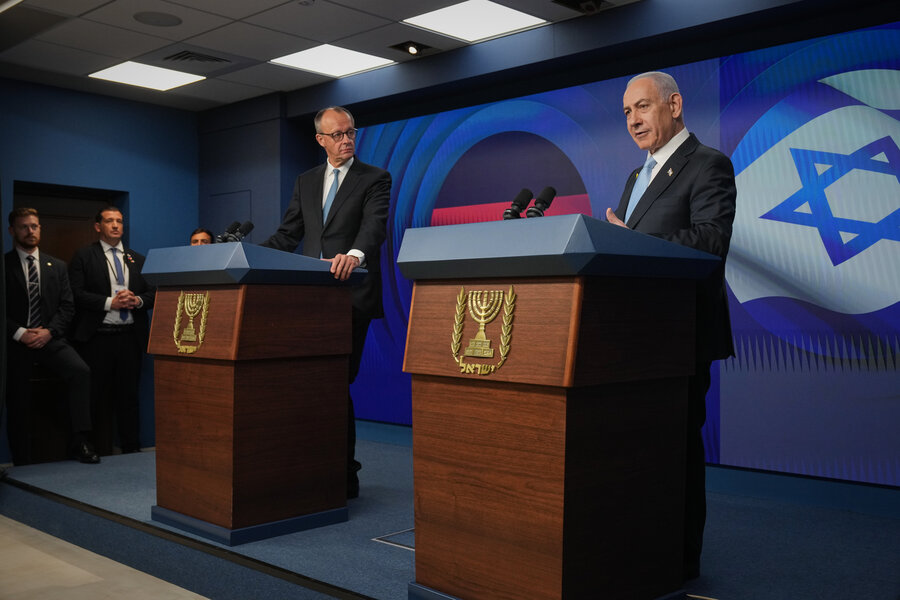
The fragile ceasefire between Israel and Hamas is entering a critical phase, with Israeli Prime Minister Benjamin Netanyahu outlining enterprising, yet challenging, plans for the future of Gaza. Speaking alongside visiting German Chancellor Friedrich Merz,Netanyahu detailed a multi-stage process encompassing the return of remains of Israeli citizens,the disarmament of Hamas,the establishment of a temporary palestinian government,and ultimately,the deradicalization of the Gaza Strip.However, notable obstacles remain, including stalled negotiations over the return of remains, concerns about Hamas’s commitment to disarmament, and the complexities of establishing a sustainable governing structure.
Phase Two: disarmament, International Security, and Provisional Governance
Netanyahu indicated that the second phase of the U.S.-brokered ceasefire, built around a 20-point plan championed by President Donald Trump, could begin as soon as the end of the month. A central component of this phase is the return of the remains of Ran Gvili, a 24-year-old Israeli police officer killed during the October 7th Hamas attack and afterward taken to gaza.
“The return of Mr. Gvili’s remains would mark the completion of the first phase,” Netanyahu stated,emphasizing the urgency of this humanitarian aspect of the agreement. However, Hamas claims difficulties in locating all remains, citing the extensive damage caused by Israel’s two-year offensive in Gaza. Israel has responded with skepticism, accusing Hamas of purposeful delays and threatening to resume military operations or curtail humanitarian aid if the remains are not returned promptly.
Beyond the return of remains, Phase Two envisions the deployment of an international force to secure gaza and the formation of a temporary Palestinian government to manage daily affairs under the oversight of an international board, reportedly led by president Trump. This arrangement is intended to provide stability and facilitate the transition towards a more permanent solution.
Challenges to Implementation and the Path to Deradicalization
netanyahu acknowledged the significant challenges ahead, stating that the second phase is “just as challenging” as achieving the initial ceasefire. He further highlighted a third, even more ambitious phase: the deradicalization of Gaza.
“As I mentioned to the chancellor, there’s a third phase, and that is to deradicalize Gaza, something that also people believed was impractical. But it was done in Germany, it was done in Japan, it was done in the Gulf States.It can be done in Gaza, too, but of course Hamas has to be dismantled,” he asserted. This ambitious goal, while drawing parallels to prosperous deradicalization efforts in other nations, hinges on the complete dismantling of Hamas – a prospect that remains highly uncertain.
Germany’s Steadfast Support and Commitment to a Two-State Solution
Chancellor Merz reaffirmed Germany’s unwavering support for Israel’s security and existence, rooted in the historical responsibility stemming from the Holocaust. “This is part of the unchanging core of our relationship. This applies today, it applies tomorrow, and it applies forever,” he declared.
Germany is actively contributing to the implementation of the ceasefire by deploying officers and diplomats to a U.S.-led civilian and military coordination center in southern Israel, alongside providing crucial humanitarian aid to Gaza.
While maintaining its commitment to a two-state solution as the ultimate path to peace, Germany emphasized that recognition of a Palestinian state shoudl come at the end of a comprehensive peace process, not as a precondition.
Diplomatic Concerns and Ongoing Violence
Netanyahu revealed concerns about a potential arrest warrant issued by the International Criminal Court (ICC) last year,which is influencing his decision to postpone any planned diplomatic visits to germany. Chancellor Merz indicated no current plans for a visit but left the door open for a future invitation. He also confirmed that there are no immediate plans for renewed German bans on military exports to Israel, following a temporary suspension lifted after the ceasefire began.
Despite the ceasefire, violence continues to simmer. the Israeli military reported killing a militant who approached troops near the “Yellow Line” dividing Israeli-controlled Gaza from the rest of the territory. As the ceasefire began in October, Gaza’s Health Ministry reports over 370 Palestinians have been killed by Israeli forces.
The Human Cost and the Path Forward
The conflict has exacted a devastating toll. Gaza’s Health Ministry, operating under Hamas, reports over 70,100 Palestinian deaths since the start of Israel’s offensive. while operating within a complex political environment, the Ministry maintains detailed records considered generally reliable by the international community.
The October 7th Hamas attack on southern Israel resulted in the deaths of approximately 1,2


