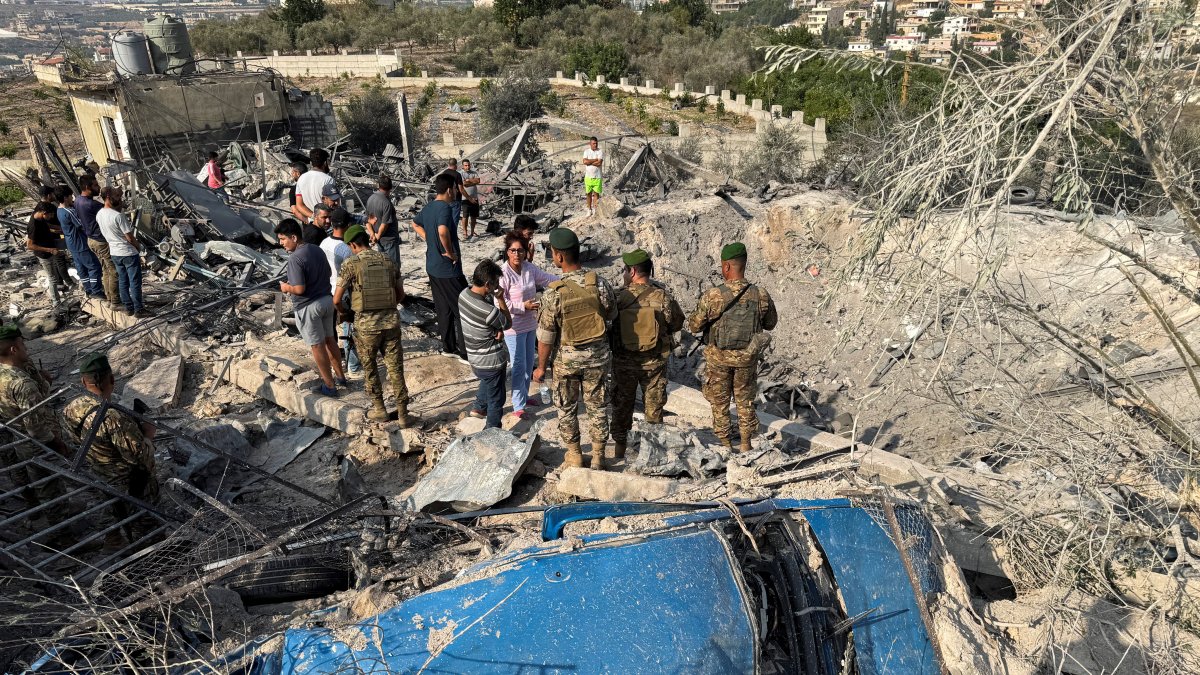
Escalating Tensions: Israel’s Renewed Strikes in Southern Lebanon
Recent days have witnessed a significant increase in hostilities along the Israel-Lebanon border, marked by a wave of Israeli airstrikes. these attacks represent a sharp escalation despite the existing ceasefire, raising concerns for regional stability and civilian safety.
What Happened?
Israeli forces launched airstrikes targeting what they claim is Hezbollah‘s “military infrastructure.” The strikes specifically hit the villages of tayba, Tayr Debba, and Aita al-Jabal. According to israeli reports,these positions had been rebuilt nearly a year after a U.S.-brokered ceasefire brought months of conflict to a close.
However, reports from Lebanese residents paint a different picture. They describe heavy bombardment and widespread destruction impacting residential areas, even after evacuation warnings were issued. This underscores the challenges of protecting civilians in active conflict zones.
Hezbollah’s Response and Warnings
Just hours before the strikes, Hezbollah issued a strong statement. They urged the lebanese goverment to refrain from entering into any negotiations with Israel. This highlights the complex political dynamics at play and Hezbollah’s firm stance against normalization with Israel.
Furthermore, Avichay Adraee, the Israeli military’s Arabic spokesperson, stated that residents were advised to evacuate. Specifically, they were told to move at least 500 meters away from buildings allegedly used by Hezbollah. This raises questions about the precision of the targeting and the potential for unintended consequences.
Why This Matters to You
This escalation has several key implications.
* Increased Risk to Civilians: You’ll find civilians are once again caught in the crossfire as Israel expands its operations deeper into southern Lebanon.
* Fragile Ceasefire: The renewed attacks threaten to unravel the existing ceasefire, potentially leading to a wider conflict.
* Regional Instability: The situation adds to the already volatile environment in the Middle East, with potential ripple effects across the region.
* Humanitarian Concerns: Destruction of infrastructure and displacement of residents create urgent humanitarian needs.
Looking Ahead
The current situation demands careful attention. It’s crucial to monitor developments closely and understand the potential for further escalation. As tensions mount, the need for diplomatic efforts to de-escalate the conflict and protect civilians becomes increasingly urgent. You can stay informed by following credible news sources and analyzing the evolving dynamics on the ground.

![Omada Software Updates: Faster, Smarter Networking | [Year]](https://i0.wp.com/www.computerweekly.com/visuals/ComputerWeekly/Hero%20Images/wireless-network-mobile-broadband-1-adobe.jpeg?resize=150%2C150&ssl=1 "Omada Software Updates: Faster, Smarter Networking | [Year]")