
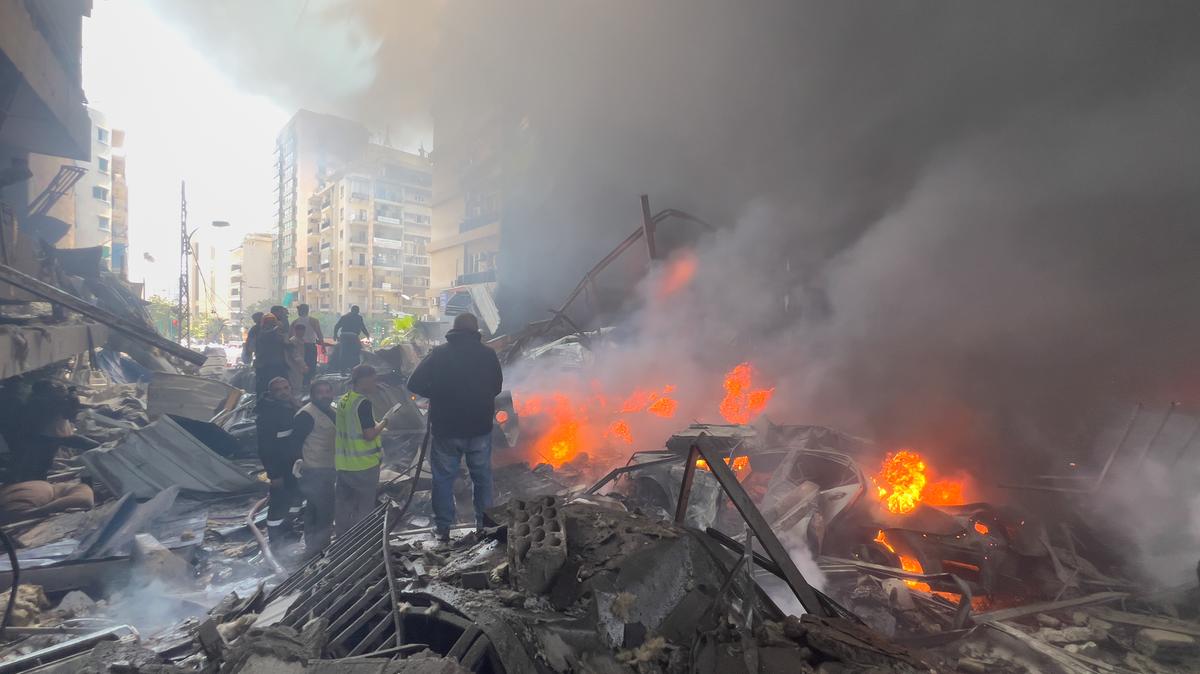
Israel has launched a massive wave of air strikes across Lebanon, marking a significant escalation in the ongoing conflict between the Israeli military and Hezbollah. The operation, described by the Israeli military as the largest coordinated strike of the current war, targeted more than 100 Hezbollah command centers and military sites within a ten-minute window BBC. The strikes hit multiple regions, including the southern suburbs of Beirut, southern Lebanon, and the eastern Bekaa Valley PBS.
These Israel strikes in Lebanon occurred just hours after the announcement of a ceasefire between the United States and Iran. While international observers initially hoped the deal might bring a broader regional calm, the office of Israeli Prime Minister Benjamin Netanyahu explicitly denied assertions that the agreement covered the conflict in Lebanon. This denial followed mediation efforts by Pakistan, which helped facilitate the US-Iran ceasefire BBC.
The timing and intensity of the attacks have sent shockwaves through the region, particularly as strikes reached central Beirut—an area the Israeli military had rarely targeted since the current Israel-Hezbollah war began on March 2 The Hill. The suddenness of the incursions has left Lebanese hospitals overwhelmed and numerous civilians trapped under the rubble of collapsed buildings BBC.
The Scale of the Military Operation
The Israeli military’s strategy focused on rapid, high-volume impact. By striking over 100 targets in just 10 minutes, the operation aimed to disrupt Hezbollah’s command and control infrastructure simultaneously across different geographic fronts PBS. The strikes were not limited to military installations but hit heavily populated areas in the southern suburbs of Beirut and the eastern Bekaa Valley BBC.
The inclusion of central Beirut in the target list represents a notable shift in the operational map of the conflict. While southern and eastern Lebanon have seen regular activity, the strikes on central Beirut were carried out without warning, increasing the volatility of the urban environment The Hill.
Humanitarian Crisis and Mass Displacement
The human cost of the conflict has reached staggering levels. Reports indicate that more than 1,500 people have been killed across Lebanon, a figure that includes 130 children BBC. The violence has triggered a displacement crisis of unprecedented proportions, with more than 1.2 million people—approximately one in five of the Lebanese population—forced to flee their homes BBC.
The majority of those displaced belong to Shia Muslim communities in the south, the eastern Bekaa Valley, and the southern suburbs of Beirut, areas where Hezbollah maintains significant influence BBC. Entire villages near the border have been destroyed as part of the military campaign, leaving thousands without shelter or access to basic services.
Strategic Objectives: The ‘Security Buffer Zone’
Central to Israel’s current military strategy is the creation of what authorities call a “security buffer zone” BBC. The goal of this zone is to destroy Hezbollah’s infrastructure and push its fighters away from the border to prevent future incursions into Israeli territory.

However, this objective has raised significant international and local concerns. We find growing fears that the establishment of this buffer zone could lead to a long-term occupation of Lebanese territory, potentially preventing displaced residents from ever returning to their homes BBC.
The Geopolitical Disconnect: US, Iran, and Lebanon
The current escalation highlights a complex geopolitical divide. The war between the US and Israel against Iran began in late February BBC, leading to the recent ceasefire mediated by Pakistan. However, the Israeli government’s insistence that this ceasefire does not apply to Lebanon suggests that the Israel-Hezbollah conflict is being treated as a separate operational theater.
While the US-Iran deal may have paused direct hostilities between those powers, the lack of a corresponding agreement for Lebanon has left the country vulnerable to continued strikes. In response to the ongoing violence, the Lebanese presidency has stated it will continue “efforts to include Lebanon in regional peace” BBC, though such diplomatic paths remain fraught with difficulty as long as military operations continue.
Summary of Conflict Impact
| Metric | Verified Figure | Affected Areas |
|---|---|---|
| Total Fatalities | 1,500+ (including 130 children) | Nationwide Lebanon |
| Displaced Population | 1.2 million+ | South, Bekaa Valley, Beirut Suburbs |
| Recent Strike Scale | 100+ targets in 10 minutes | Beirut, South Lebanon, Bekaa Valley |
| Conflict Start Date | March 2 | Israel-Lebanon Border/Urban Centers |
The situation remains volatile. As the Lebanese presidency seeks to integrate the country into broader regional peace frameworks, the immediate future depends on whether Israel continues its push for a security buffer zone or if diplomatic pressure can secure a localized ceasefire. The next critical checkpoint will be the outcome of the Lebanese presidency’s ongoing regional peace efforts BBC.
We invite our readers to share their perspectives on these developments in the comments below. Please share this report to keep others informed on the evolving crisis in Lebanon.