
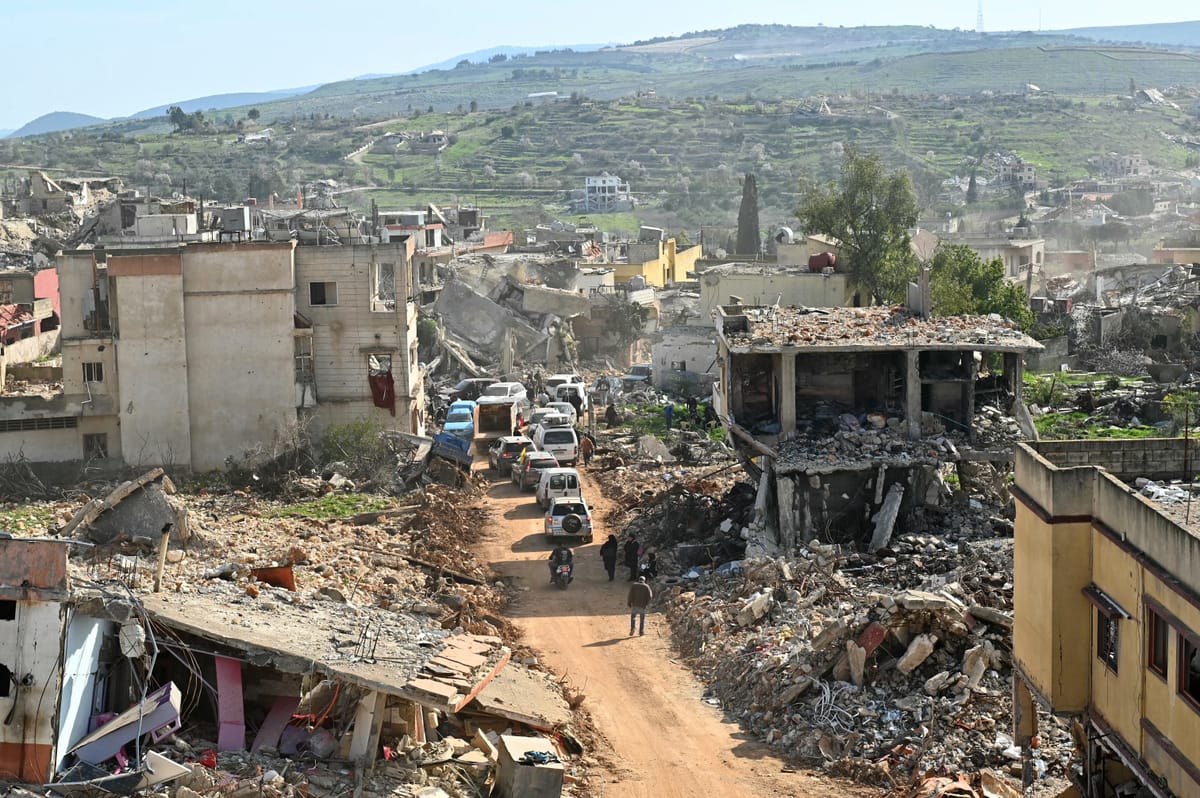
The geopolitical landscape of the Levant has shifted violently once again as the Israel’s ongoing war on south Lebanon intensifies, marked by a transition from targeted airstrikes to a comprehensive ground invasion. What began as a series of projectile exchanges has evolved into a systematic military campaign aimed at reshaping the border between the two nations, leaving hundreds of thousands of civilians caught in the crossfire.
The current escalation was triggered on March 2, 2026, when Hezbollah launched projectiles into northern Israel, specifically targeting a missile defense site south of Haifa via Wikipedia. This marked the first breach of the 2024 ceasefire. In response, the Israel Defense Forces (IDF) launched a multifaceted campaign, initiating ground operations in southern Lebanon on March 16, 2026 via Wikipedia.
At the heart of the conflict is a strategic objective to establish a permanent security perimeter. Israeli officials have explicitly stated their intention to occupy significant portions of southern Lebanon to create a “buffer zone,” a move that has sparked international concern over long-term forced displacement and the legality of the operations under international law.
The human cost has been staggering. In Lebanon, reports indicate that over 1,461 people have been killed and 4,430 injured, with more than 1,000,000 people displaced from their homes via Wikipedia. On the Israeli side, at least 29 people have been killed amid the wider conflict involving Hezbollah and Iran, including 10 soldiers lost during the ground incursion via The New York Times.
The Strategy of the Litani River Buffer Zone
Israeli Defense Minister Israel Katz has outlined a rigorous plan to ensure that Hezbollah cannot return to the border regions. The centerpiece of this strategy is the occupation of all Lebanese territory south of the Litani River, which sits approximately 19 miles from the border via The Guardian.
According to Katz, the IDF intends to maintain control over this area, including the remaining Litani bridges, to eliminate the “Radwan forces”—Hezbollah’s elite unit—and destroy all remaining weaponry in the region via The Guardian. This approach is not merely about military presence but involves the physical erasure of infrastructure.
Katz stated that homes and villages near the border would be destroyed, citing the “Rafah and Beit Hanoun model in Gaza” as the blueprint for these operations via The Guardian. The goal of this destruction is to prevent the return of approximately 600,000 residents to the border areas via The Guardian.
Human Rights Watch has warned that these stated intentions could constitute war crimes, specifically regarding wanton destruction and forced displacement via The Guardian. The Israeli military has defended these actions, with spokesperson Maj Doron Spielman asserting that “every home in southern Lebanon, the Shiite homes, are command centres” via The Guardian.
Casualties and Military Losses
The conflict has resulted in significant losses for both combatants and non-combatants. The reporting on militant casualties varies by source. Internal sources report over 400 militants killed, while Israeli officials claim the number is closer to 1,000 via Wikipedia. Israel reports the capture of two Radwan Force militants via Wikipedia.
The impact on international peacekeepers and emergency services has also been severe. Three UNIFIL peacekeepers have been killed and six injured during the hostilities via Wikipedia. Six paramedics and one member of the Civil Defense have been killed, highlighting the danger faced by those attempting to provide humanitarian aid in the conflict zone via Wikipedia.
Timeline of the 2026 Escalation
| Date | Event | Details |
|---|---|---|
| March 2, 2026 | Hezbollah Projectile Attack | Targeted missile defense site south of Haifa, breaking 2024 ceasefire. |
| March 16, 2026 | Israeli Ground Invasion | IDF began ground operations in southern Lebanon. |
| March 31, 2026 | Buffer Zone Announcement | Minister Katz vowed to occupy areas up to the Litani River. |
Broader Geopolitical Context: The Iran Connection
The war in Lebanon is not an isolated event but is deeply intertwined with the 2026 Iran war. Hezbollah stated that its decision to restart fighting was intended to force Israel to cease aggression and evacuate seized Lebanese territories, while simultaneously emphasizing that this specific move was unrelated to the broader Iran war via Wikipedia.
However, other reports suggest a direct link, stating that the military campaign in Lebanon was launched shortly after Hezbollah fired rockets to avenge the killing of the Iranian supreme leader, Ayatollah Ali Khamenei via The Guardian. This indicates that the southern Lebanese border has grow a primary theater for a larger regional power struggle.
The instability has reached the highest levels of Lebanese governance. General elections, which are critical for the country’s political stability, have been postponed to 2028 via Wikipedia, further complicating the prospect of a diplomatic resolution or a return to civilian administration in the occupied south.
Humanitarian Impact and Displacement
The scale of displacement in Lebanon is one of the most critical aspects of the crisis. With over one million people displaced, the internal migration has put immense pressure on cities and villages in the north and center of the country via Wikipedia. The threat of permanent displacement is now a reality for those living south of the Litani River, as the IDF continues to raze public infrastructure and residential homes.
For many residents, the current invasion is viewed not as a new war, but as the continuation of a conflict that never truly ended after the 2024 ceasefire. Families in the south have reported enduring a state of “de facto occupation” and constant terror, characterized by drone attacks and ground incursions that have persisted for over a year and a half.
The destruction of villages is not limited to the immediate border. Israeli jets have conducted bombing raids on targets across the country, including the southern suburbs of Beirut, known as Dahiyeh, where residential buildings have been destroyed via The Guardian.
As the conflict continues, the international community remains focused on the potential for a wider regional conflagration. The next critical checkpoint will be the continued movement of the IDF toward the Litani River and any potential diplomatic interventions to prevent the permanent displacement of 600,000 Lebanese citizens.
We encourage our readers to share this report and leave their comments below on how the international community should address the humanitarian crisis in southern Lebanon.