Slovak Biathletes Aim for Olympic qualification Amidst Tight Competition
Oberhof, germany – The road to the 2026 Winter Olympics is proving challenging for Slovak biathletes, demanding peak performance and strategic results in the coming weeks. What began as a plan for Jakub Borguľa to focus on readiness wiht coach Martin Bajčičák and skip the Oberhof World Cup has dramatically shifted, with the young athlete now actively pursuing crucial qualification points.
“I’m happy to have the chance to fight for the Olympics,” Borguľa humbly stated to Slovak Biathlon.
He backed up those words with a standout performance in the Oberhof sprint race, securing a remarkable 31st place and earning his first-ever World Cup points. This result injects vital momentum into the teamS Olympic aspirations.
A Difficult Path to Milan-Cortina
olympic qualification isn’t straightforward. The current system heavily weights results from the previous season’s Nations Cup, leaving Slovakia in a precarious position. Currently, no slovak biathlete has a guaranteed spot.
“Olympic qualification is incredibly strict, as it’s based on Nations Cup results from last season, not this one. We don’t currently have any guaranteed places,” explains Peter Vozár, president of the Slovak Biathlon Association, in an interview with Sportnet prior to the Oberhof World Cup. “Our two best athletes need to finish within the top 12 in the IBU qualification ranking (for countries outside the top 20 in last year’s Nations Cup).It’s very tight – Tomáš Sklenárik is currently ninth and Jakub Borguľa twelfth, but neither has a secure spot yet. Ideally, both will qualify, but the worst-case scenario is neither will. We strongly believe we can avoid that.”
The next two weeks are critical, with the World Cup events in Oberhof and Ruhpolding, alongside IBU Cup competitions in Arber and Osrblí, holding the key to qualification. Only sprint and mass start results from both World Cup and IBU Cup events will be considered.
Vozár emphasizes the need for advancement: “The guys need to perform better in the coming weeks then they did in the first part of the season if they want to be nominated for the Olympics.”
Fair Conditions and a Strong Start for borguľa
The oberhof sprint benefited from consistent track conditions, a factor Vozár highlighted as crucial. “If it’s freezing and the track is hard, the differences between starting groups aren’t dramatic. But if it’s warm and the track is broken up, as it was in december, those starting later are at a meaningful disadvantage.”
Borguľa himself welcomed the equal footing. “I’m very happy with the conditions because everyone will have the same track, and the races will be fair. It’s a little cold, and my fingers are freezing, though!” he shared before the start.
His race began with a flawless shooting performance in the prone position, hitting all five targets. A single penalty loop in the standing stage didn’t derail his momentum, and he finished with the 32nd fastest run time – even outpacing World Champion Emilien Jacquelin by 13 seconds.
“Before the race, I wasn’t feeling my best and started cautiously. I wanted to focus especially on shooting, and I think I succeeded. In the last lap, I received details about my position and gave it everything to get the best possible result,” Borguľa explained to Slovak Biathlon. He also credited his team’s excellent ski preparation,noting he was able to overtake competitors on the downhills.
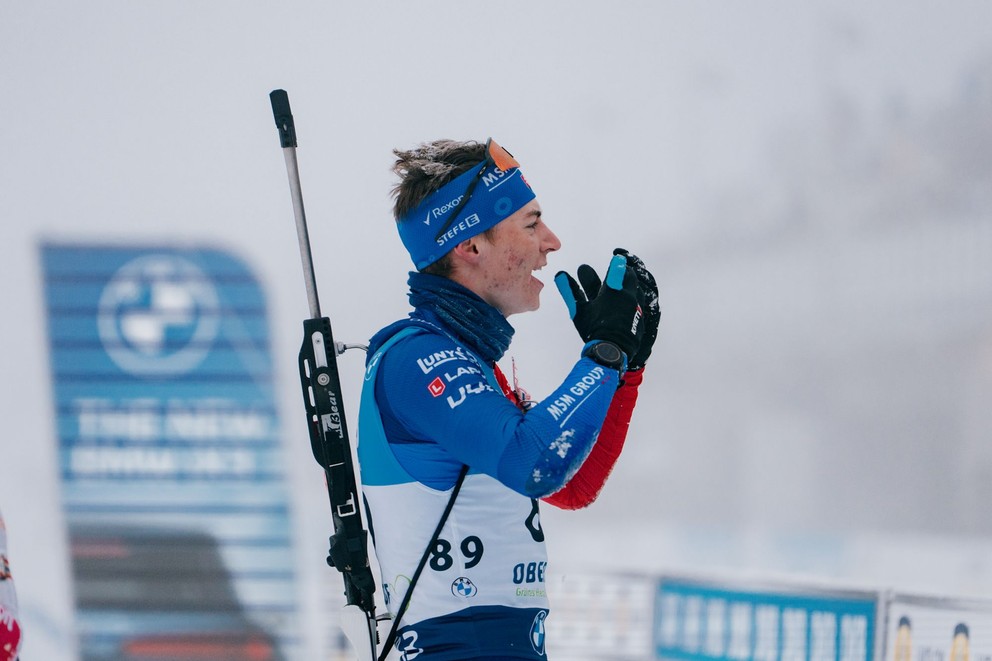
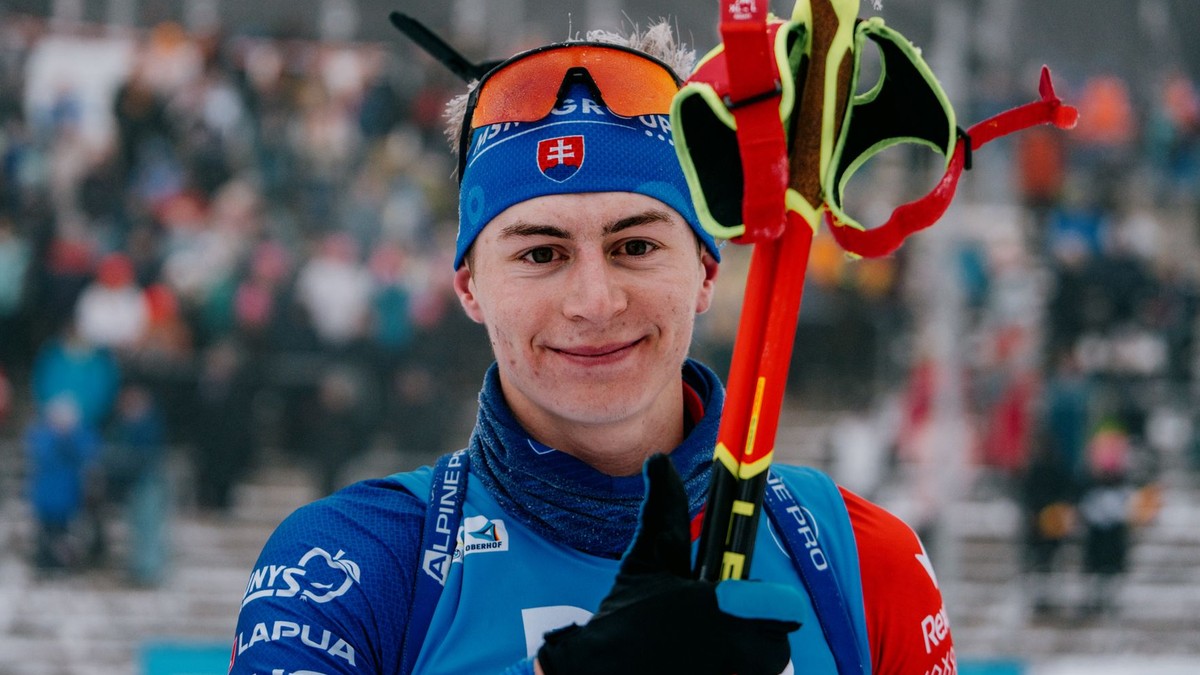
Image of Jakub Borguľa celebrating at the finish line. (Author: Matej Lepeň/Slovak Biathlon)
Progress for the Entire Team
Borguľa wasn’t the only Slovak showing promise. Martin Maťko improved upon his previous career-best result from Annecy, where he finished 79th with one penalty. In Oberhof, he secured a strong 55th place with the same number of errors. He recently spent time training with Olympic champion Anastasia Kuzminova in Pokljuka, a period he hopes will translate into continued improvement.
“I hope I’ve gained