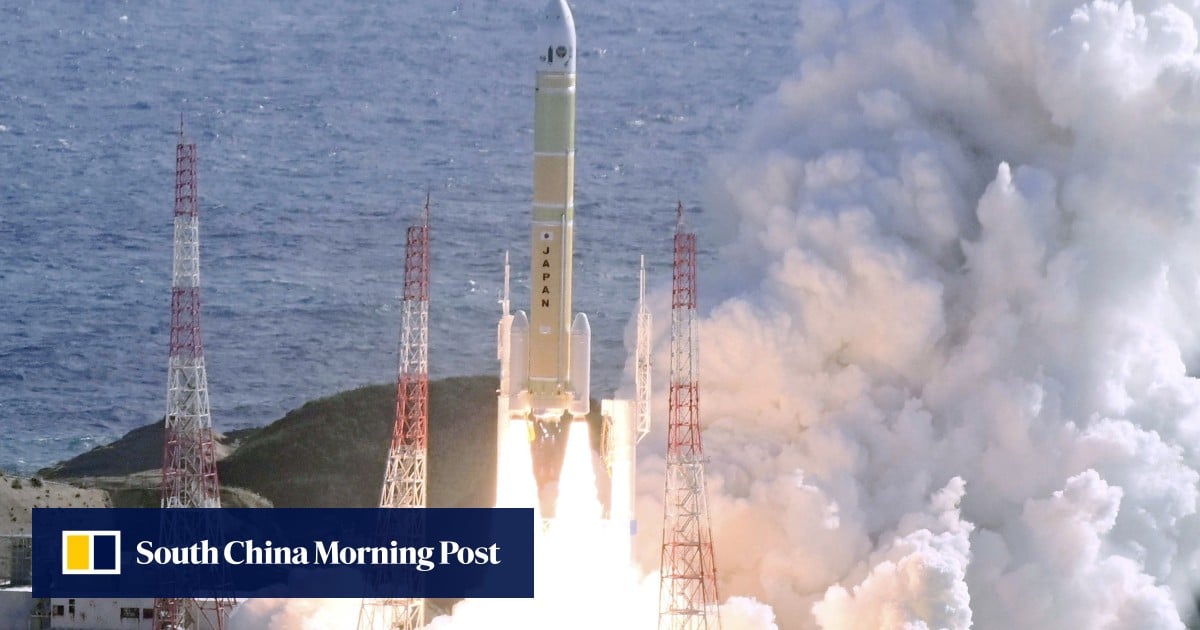
Japan’s rocket Failure: A Reckoning for its Cautious space Program
Japan’s recent H3 rocket failure has ignited a critical national conversation. It’s forcing a re-evaluation of whether the country’s traditionally cautious approach to space exploration can compete in today’s rapidly evolving industry. The failure,resulting in the loss of a satellite,has drawn sharp criticism and raised questions about Japan’s future ambitions in space.
A Setback for Japan’s Space Aspirations
On Monday, the domestically-built H3 rocket – intended to be Japan’s new flagship launcher – experienced a critical malfunction. this incident is being widely described by local media as a “significant setback.” Experts warn that regaining the trust of international partners and potential customers will be a long and challenging process.
You might be wondering what this means for Japan’s overall space program. The loss impacts the reputation of the Japan Aerospace Exploration Agency (Jaxa) and its primary engine supplier, Mitsubishi Heavy Industries. However, it’s crucial to avoid hasty conclusions.
The Cost of Perfection: A Culture of Caution
Aerospace experts acknowledge the damage to Jaxa’s standing. Yet, many point to a deeper, systemic issue within Japan’s approach to aerospace development. Lance Gatling, president of Nexial Research, explains that this is simply “the nature of the space business.”
Here’s a breakdown of the core challenge:
* Emphasis on Perfection: Japan’s space program historically prioritizes flawlessness, leading to lengthy development cycles.
* Slow Iteration: When issues arise, resolving them can be a protracted process.
* Hierarchical Decision-Making: A tendency to wait for direction can hinder rapid problem-solving.
Essentially, Japan hasn’t “failed enough.” This may sound counterintuitive, but in the high-stakes world of space exploration, learning from failures is paramount.
The New Space Landscape: Speed and Resilience
The modern space industry is dramatically different than it once was. Today, success hinges on:
* Rapid Iteration: Frequent launches and speedy adjustments based on data are essential.
* Tolerance for Risk: Accepting a degree of failure as part of the learning process is now commonplace.
* Cost-Effectiveness: Competitive pricing is crucial for attracting customers.
These factors are driving the rise of private space companies like SpaceX, which have embraced a “fail fast, learn faster” philosophy. Japan’s traditional model, built on meticulous planning and risk aversion, is struggling to adapt.
Looking Ahead: What Needs to Change?
To remain competitive, Japan needs to embrace a more agile and resilient approach. this requires:
* Streamlining Decision-Making: Empowering engineers and technicians to take initiative.
* Accelerating Development Cycles: Reducing the time it takes to identify and address problems.
* Accepting Calculated Risks: Recognizing that some failures are inevitable and valuable learning opportunities.
The H3 rocket failure is a wake-up call. It highlights the need for a fundamental shift in mindset.If Japan can adapt, it can still play a significant role in the future of space exploration. However, clinging to outdated methods risks falling behind in this increasingly dynamic field.