
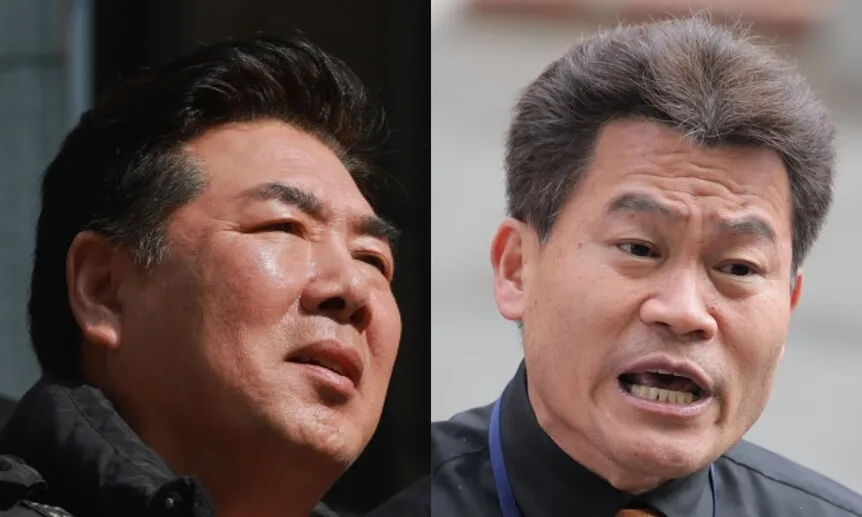
A sharp divide has emerged within South Korea’s conservative camp following the decision of former history lecturer and high-profile conservative figure Jeon Han-gil to abandon the People Power Party (PPP). The departure has sparked a public and vitriolic confrontation with Go Seong-guk, a far-right YouTuber and current party member, who has characterized the move as an act of “futile defeatism.”
The conflict highlights a growing tension between conservative figures who believe in the efficacy of institutional politics and those who argue that the current political system is incapable of delivering a right-wing victory. Although Jeon Han-gil has expressed deep skepticism regarding the possibility of success within the established party structure, Go Seong-guk views such an outlook as a betrayal of the struggle undertaken by right-wing citizens over the past decade.
This internal rift comes at a critical juncture for the People Power Party, as it navigates complex leadership dynamics and prepares for upcoming electoral challenges. The clash between Go and Jeon is not merely a personal dispute but a proxy for a larger debate over whether the PPP should remain a broad-tent conservative party or transform into a more combative, far-right entity.
The “Defeatism” Dispute: Go Seong-guk’s Critique
During a live broadcast on his YouTube channel, “Go Seong-guk TV,” on April 8, 2026, Go Seong-guk launched a scathing attack on Jeon Han-gil’s decision to exit the party. Go described the departure as “futile defeatism” and claimed it constituted an “insult to the freedom-wing citizens” of South Korea **.
Go’s frustration stems from his belief that the party requires more members to support the current leadership under Jang Dong-hyeok. According to Go, the Jang Dong-hyeok leadership has fought relentlessly against those he labeled as “opportunistic traitors,” specifically naming Han Dong-hyeok and Oh Se-hoon **. In Go’s view, leaving the party during such a struggle is a move that runs contrary to the “desperate struggle” of the right-wing populace.
Go further argued that by dismissing the utility of institutional politics, Jeon is effectively erasing the efforts of conservatives who have protested in public squares for the last ten years. He asserted that such a perspective mocks the history of victory achieved by the freedom-wing since the founding of the Republic of Korea **.
Jeon Han-gil’s Exit: Institutional Skepticism
Jeon Han-gil, who joined the People Power Party in June of the previous year, has grow an influential voice among strong conservatives. But, his reasons for the Jeon Han-gil People Power Party departure center on a perceived lack of viability within the current political framework. Jeon has stated that “there is no chance of winning” in battles fought within the institutional system **.
Beyond the internal party dynamics, Jeon has expressed a profound sense of futility regarding upcoming electoral cycles, specifically claiming that the local elections are “meaningless” in the current climate **. This suggests a strategic shift away from traditional party membership toward external influence or alternative forms of political activism.
Key Points of Contention
| Issue | Go Seong-guk’s Position | Jeon Han-gil’s Position |
|---|---|---|
| Institutional Politics | Crucial for victory; must support leadership. | Ineffective; no chance of winning within the system. |
| Local Elections | A necessary battleground for the right. | Considered meaningless. |
| Party Identity | Should be a “combative far-right party.” | Deep skepticism toward current party efficacy. |
| View of Departure | “Futile defeatism” and an insult. | A result of deep skepticism and lack of hope. |
The Strategic Vision for a “Combative” Right
The conflict reveals Go Seong-guk’s broader ambition for the People Power Party. Beyond criticizing Jeon, Go has advocated for the transformation of the PPP into a “combative far-right party” **. This vision emphasizes a more aggressive, uncompromising approach to conservatism, moving away from the moderate or “opportunistic” tendencies he attributes to other party figures.

This push for a more militant political identity reflects a trend among certain segments of the South Korean right who feel that traditional party structures are too compromising. By framing Jeon’s departure as “defeatism,” Go is attempting to consolidate a base that views political struggle as a moral imperative, regardless of the immediate odds of success.
Broader Implications for South Korean Conservatism
The public fallout between these two figures underscores the fragmentation of the right-wing coalition in South Korea. When influential figures like Jeon Han-gil—who possesses a significant following from his career as a lecturer—publicly declare that institutional politics is a dead end, it risks demoralizing the party’s grassroots base.
Conversely, the aggressive rhetoric employed by Go Seong-guk may further polarize the party, potentially alienating moderate conservatives while galvanizing a hard-right core. The tension between the “institutionalists” (who seek to win via elections and party governance) and the “activists” (who view the system as rigged or broken) remains a central conflict within the PPP.
For global observers, this internal strife mirrors similar patterns seen in other democratic nations, where populist right-wing figures struggle to balance the require for institutional power with the demand for ideological purity and “combative” rhetoric.
The next critical checkpoint for the People Power Party will be the upcoming local elections, which will serve as a practical test of whether Jeon Han-gil’s skepticism of institutional victory is justified or if Go Seong-guk’s call for a combative, unified front can yield tangible results.
World Today Journal encourages readers to share their thoughts on the evolving dynamics of South Korean politics in the comments section below.