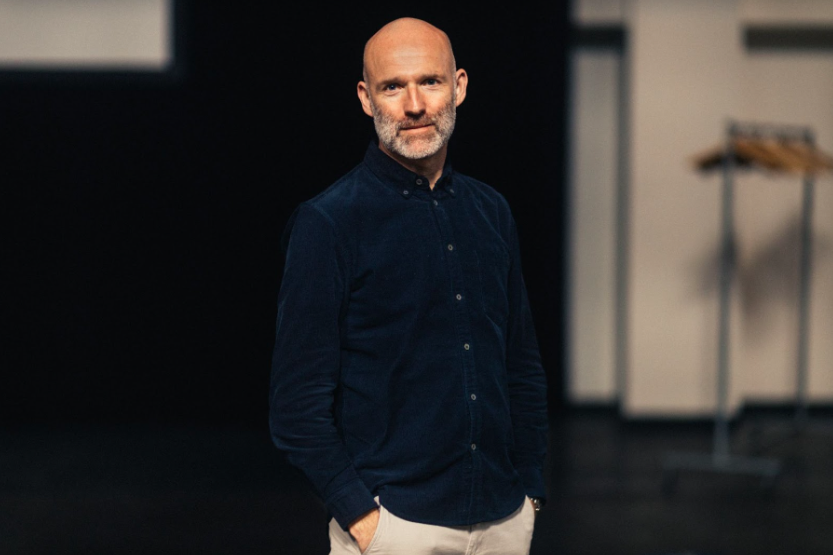
Navigating the Future of News: A Retrospective with Bonnier News CEO, Anders Ørskov
The news industry stands at a pivotal moment, grappling with unprecedented disruption from artificial intelligence, shifting consumer habits, and a fundamental re-evaluation of its value proposition. As Anders Ørskov concludes his twelve-year tenure as CEO of Bonnier News, his insights offer a crucial roadmap for navigating this complex landscape. This article draws upon a recent conversation with Ørskov, exploring his reflections on the challenges faced, lessons learned, and the path forward for a financially viable and impactful journalism.
A Constant State of Adaptation: The Unexpected Resilience of News
Ørskov’s longevity in the industry – over three decades – has instilled in him a profound appreciation for its inherent adaptability. “What has surprised me most is that,after all this time,I still find it incredibly exciting,” he shared. “We constantly face hard questions,but we also constantly find new answers. This industry always worries about the future, but it also produces new solutions with remarkable resilience.” This inherent resilience, he believes, will be critical in confronting the challenges posed by AI. He expresses confidence that the collective ingenuity within the industry will unlock the next generation of solutions, even amidst the pressures of rapidly evolving technology.
AI: From Skepticism to Strategic Imperative
Bonnier News’s journey with AI exemplifies this adaptive spirit. Ørskov credits his Head of AI, Kasper Lindskow, with foresightfully championing the technology years before its widespread recognition. “Five years ago,Kasper asked for investment,and when I questioned the business case,he found external partnerships to fund it. That gave us a head start. And I will always be grateful to Kasper for that.” This early investment has positioned Bonnier News to proactively address the opportunities and threats presented by AI.
Looking ahead, Ørskov anticipates a shift in the relationship between news organizations and their audiences.”Agents will compete with us for the direct relationship with the users,” he predicts. However, he remains steadfast in his belief in the power of highly relevant, targeted content. Segmentation will become even more refined, but he also sees potential in scaling subscription models through platform-like offerings.
“The Bonnier News Local case with +Alt in Sweden and a similar product from Amedia in Norway shows the potential of something non-niche, almost platform-like, combining news with other content such as live-sports,” he explains. This approach, supported by AI-driven personalization and, perhaps, AI-generated content, represents a compelling avenue for growth.
The emergence of AI-driven content creation, exemplified by companies like Better Collective in Denmark (producing betting-related content), further underscores the evolving landscape. While raising critically important questions about the definition of journalism, it highlights the direction the market is heading.
The Weight of Leadership and the Courage to Confront Reality
Leading a major news association for twelve years is undeniably demanding. Ørskov acknowledges the personal toll,admitting to sleepless nights and the impact on his family. Though, he emphasizes the privilege of engaging in meaningful discussions and collaborating with talented individuals. “Those experiences outweigh the tough moments,” he states.
Reflecting on his tenure,Ørskov identifies a key regret: a defensive mindset that often permeates the industry. “We frequently enough act protective and assume society understands the value of journalism. That often makes us resistant to change.” He points to the decline of print as a prime example.”We all knew it was in structural decline, but we talked about it as something we could avoid. I wish I had been clearer in saying we couldn’t.”
This realization underscores a critical lesson for the future: the need for faster resource allocation from declining areas to growth opportunities and bolder investment in new ventures. while JP/Politiken benefited from financial strength to pursue such initiatives,Ørskov believes more decisive action should have been taken sooner. “I spent too long trying to defend something that couldn’t be defended.”
The Journalist’s Paradox: Purpose, Defense, and the Path to Conversion
Is it harder to make these difficult decisions as a journalist? Ørskov believes so. “Journalists feel a strong sense of purpose, and when that purpose is challenged, we become defensive. That can be a difficult starting point for transformation in a constantly changing landscape.”
Though, he also highlights the industry’s inherent strengths: its collaborative spirit and creative energy. “we inspire each other and share ideas more than most sectors.That spirit is one of our biggest strengths. And


![Nigeria Mosque Blast: Deaths & Latest Updates | [Year]](https://i0.wp.com/s.france24.com/media/display/edad9848-e0fb-11f0-aa07-005056bf30b7/w%3A1280/p%3A16x9/AP25077805366921.jpg?resize=330%2C220&ssl=1 "Nigeria Mosque Blast: Deaths & Latest Updates | [Year]")