The Shifting Sands of Oyyl: How Vegetation is Stabilizing a Vast Dune Field
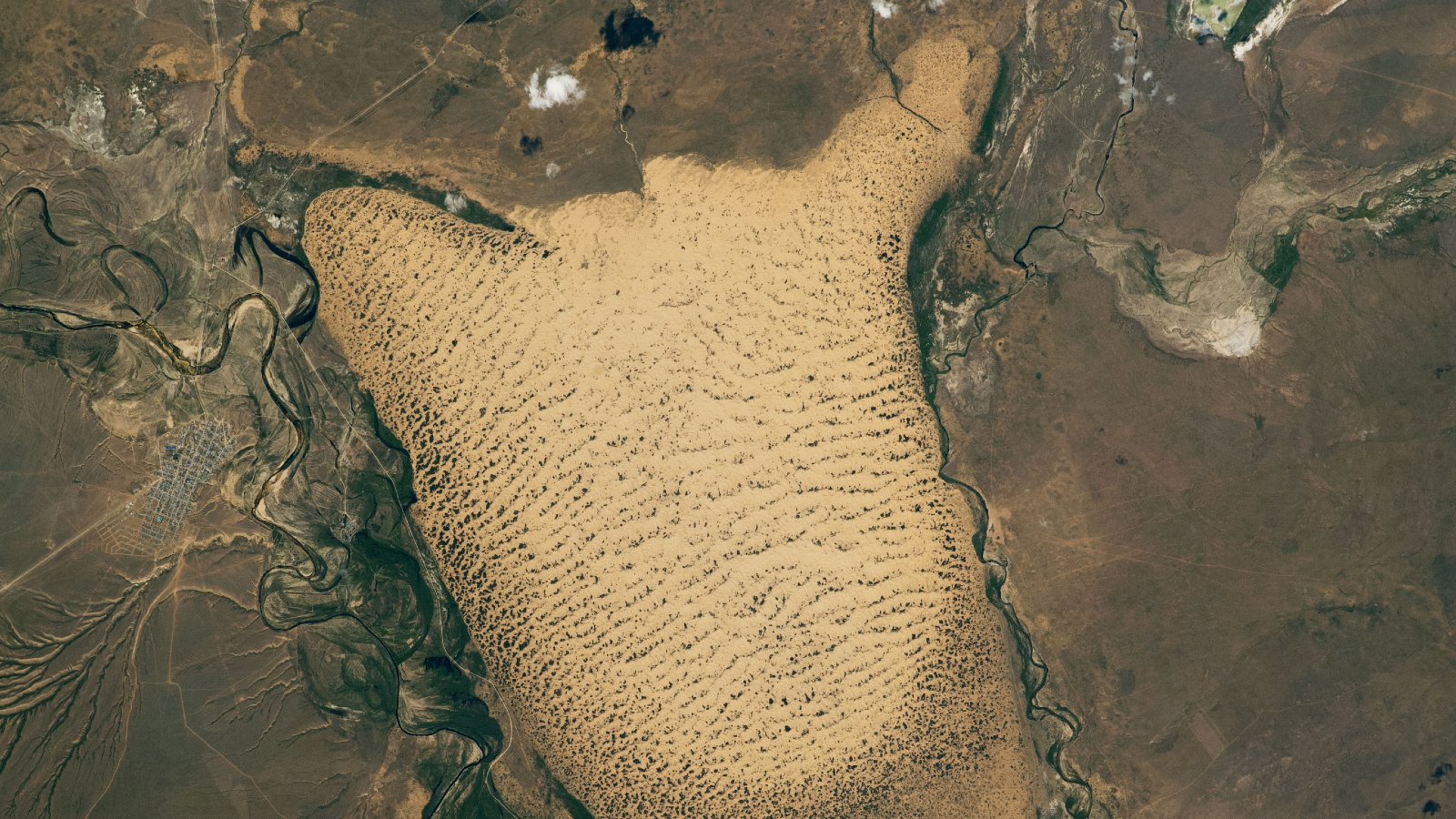
A mesmerizing aerial view reveals a sprawling dune field in the Oyyl region, showcasing a dynamic interplay between wind, sand, and the tenacious grip of plant life. These aren’t static landscapes; they’re constantly evolving, shaped by the relentless forces of nature. But a captivating process is underway – vegetation is beginning to take hold, slowly but surely anchoring these shifting sands.
Understanding the Dune Dynamics
Parallel lines etched across the dunes aren’t random patterns. They represent ridges of sand meticulously sculpted by the prevailing winds, steadily migrating northward over time. You can visualize these ridges as waves frozen in a sandy sea, each one a testament to the wind’s power.
Dark patches scattered throughout the field mark areas where plants have successfully rooted themselves within these ridges. This is where the story takes a compelling turn. When vegetation density increases, it can effectively stabilize a ridge, halting its movement – a phenomenon observed in coastal dunes worldwide.
The Role of Water and Vegetation
Most of the plant life concentrates along the southern and western edges of the dune field. This distribution is directly linked to the Uil River, which meanders around the outskirts of Oyyl, providing a crucial water source.
Consider this: water is life, and in this arid environment, it’s the key to unlocking vegetation growth. As plants establish themselves, their root systems bind the sand particles together, creating a natural barrier against erosion.
A Landscape in Transition
The process of dune stabilization is a gradual one. Scientists are currently observing and studying whether the entire dune field will eventually succumb to this vegetative takeover.
Here’s what’s happening:
Wind Action: The wind builds up ridges of sand.
Plant Colonization: Plants take root in the ridges, benefiting from slight moisture accumulation.
Stabilization: Increased vegetation density anchors the ridges, preventing further movement. Long-Term Impact: Over time, a once-shifting landscape transforms into a more stable ecosystem.
What Does This Mean for the Future?
The evolving landscape of Oyyl offers a unique opportunity to study desertification and ecological restoration. It highlights the remarkable resilience of nature and the potential for vegetation to reclaim even the most arid environments.
You might wonder what this means for the broader ecosystem. Stabilizing dunes can create habitats for various species, influencing biodiversity and potentially impacting local climate patterns.
Ultimately,the story of Oyyl’s dunes is a reminder of the intricate connections within our planet’s ecosystems and the power of even small organisms to shape the world around us. It’s a landscape in flux, and its future remains a captivating subject of scientific inquiry.