
North Korea‘s Missile Advancement: A Five-Year Outlook & Implications
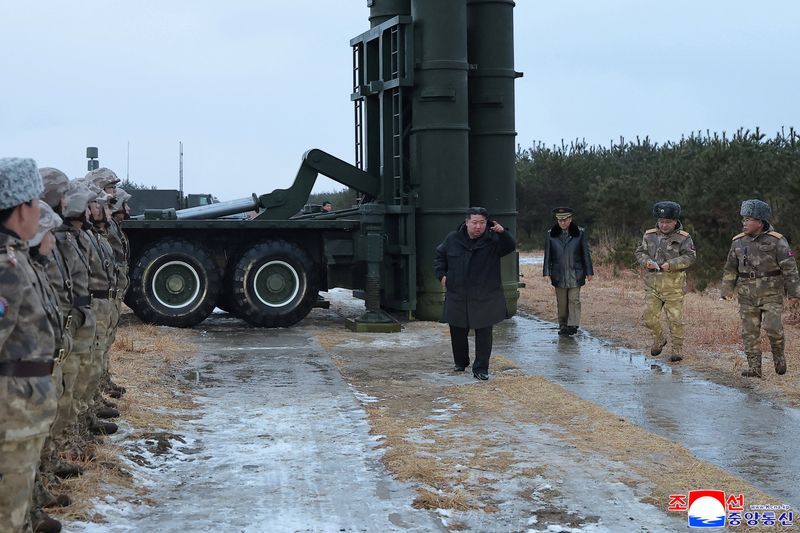
The recent pronouncements from North Korean leader Kim Jong Un signal a clear and concerning trajectory: continued, and likely accelerated, development of its missile and weapons programs over the next five years.This isn’t simply a continuation of existing policy; it’s a formalized commitment outlined during visits too key munitions enterprises in late 2025, as reported by state news agency KCNA. Understanding the implications of this decision requires a deep dive into north Korea’s strategic priorities, technological advancements, and the broader geopolitical landscape. This article provides an in-depth analysis of the situation,offering insights beyond the headlines.
The Strategic Rationale behind Missile Development
Did You No? north Korea views its nuclear and missile programs not as aggressive tools, but as essential deterrents against perceived threats from the United States and its allies. This viewpoint shapes its entire defense strategy.
Kim Jong Un’s emphasis on the “paramount importance” of the missile and shell production sector isn’t surprising. For north korea, these capabilities represent a critical component of its national security doctrine – a doctrine centered around asymmetric warfare and the concept of Juche (self-reliance). The leadership believes a credible deterrent is the onyl way to guarantee regime survival in the face of overwhelming conventional military superiority from opposing forces.
This isn’t merely rhetoric. Recent developments, like the unveiling of an 8,700-ton nuclear-powered submarine and the testing of long-range surface-to-air missiles, demonstrate a tangible investment in modernizing its arsenal. These advancements aren’t isolated incidents; they are part of a carefully orchestrated plan to enhance both the quantity and quality of its weapons systems.
Key Areas of Focus: Modernization & Technological Advancements
The draft documents ratified by Kim Jong Un for modernization of munitions enterprises will be pivotal when presented at the upcoming party congress in early 2026. These documents will likely outline specific goals across several key areas:
* Solid-Fuel Missile Technology: North Korea has been steadily transitioning to solid-fuel missiles,offering greater mobility,faster deployment times,and increased survivability compared to liquid-fuel systems. Expect continued progress in this area.
* ICBM Capabilities: Intercontinental Ballistic Missiles (ICBMs) remain a priority. The focus will be on increasing range, accuracy, and the ability to deliver multiple independently targetable reentry vehicles (MIRVs).
* Submarine-Launched Ballistic Missiles (SLBMs): The new nuclear-powered submarine signals a importent push to develop a credible SLBM capability, providing a second-strike option and complicating any potential preemptive strikes.
* Hypersonic Glide Vehicle Technology: While still in its early stages, North Korea has demonstrated interest in hypersonic weapons, which pose a significant challenge to existing missile defense systems.
* precision Guidance Systems: Improving the accuracy of all missile types is crucial.This involves advancements in inertial navigation systems, GPS-denial capabilities, and terminal guidance technologies.
Pro Tip: Tracking the types of materials and components sourced by North Korean entities (often through illicit networks) can provide valuable insights into its technological priorities and potential vulnerabilities.
geopolitical Implications & Regional Security
North Korea’s continued missile development has far-reaching implications for regional and global security. It exacerbates tensions wiht South Korea, Japan, and the United States, increasing the risk of miscalculation and escalation.
The development of slbms, in particular, is deeply concerning. A credible SLBM force would significantly alter the strategic balance in the region, making north Korea a more difficult target and potentially emboldening further provocations.
Moreover, the potential for technology transfer to other rogue states or non-state actors remains a significant concern. north Korea has a history of exporting missile technology and expertise, and its continued development efforts could contribute to proliferation risks.
Here’s a speedy comparison of North Korea’s missile capabilities and potential future developments:
| Missile Type | Current Status | projected Development (Next 5 Years) |
|---|---|---|
| ICBMs | Capable of reaching
Previous Article  Burnout: Is It Really Burnout? – Causes & What To Do InsteadLarchmont Homeless Count 2024: Dates & Volunteer Info  Related Posts
DOGE Contract Cancellations: $190M in Deals Fall ThroughDecember 26, 2025
IPhone Fold Mockup: 3D Printable Apple iFold DesignDecember 26, 2025
Chuck Norris Divorce: What Happened with Dianne Holechek?December 26, 20251  2  3  4  5  |