
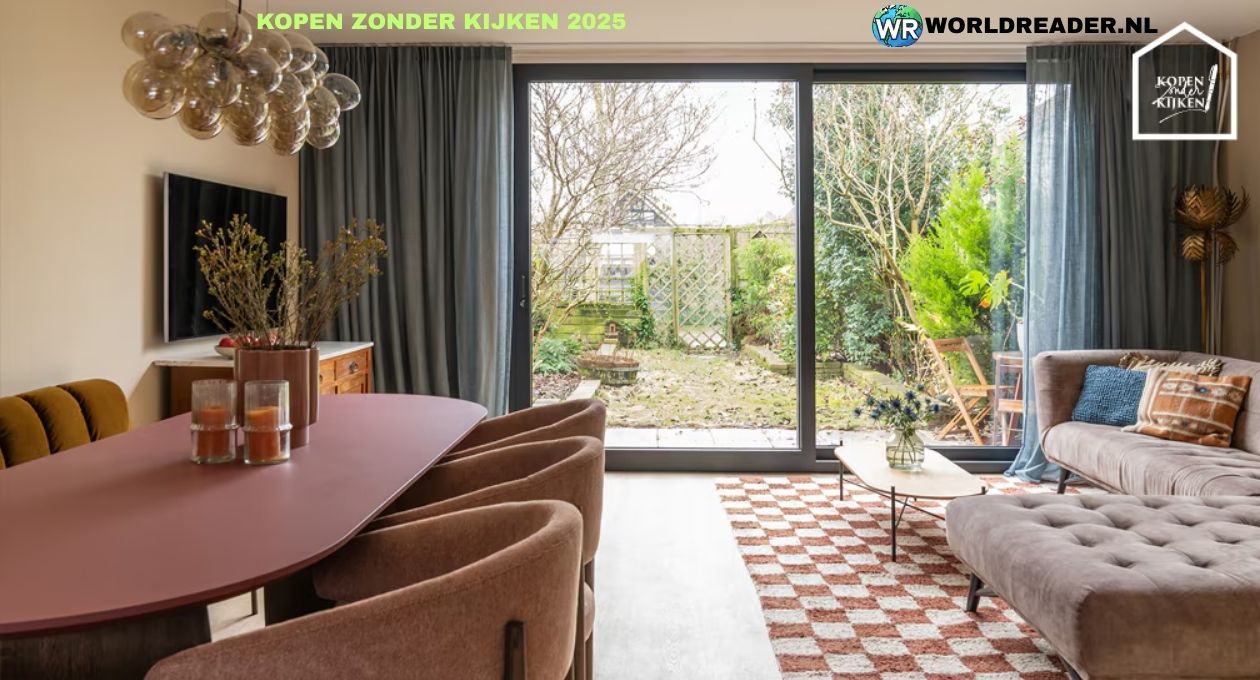
The dream of homeownership is increasingly becoming a high-stakes gamble in the Netherlands, where the scarcity of available properties has turned the search into a grueling endurance test. Even for those willing to depart the crowded Randstad urban hub and those armed with significant financial resources, the reality of the current market is often a stark lesson in compromise and frustration.
This systemic struggle is vividly illustrated in the experience of Dennis and Samara Abbas, a couple whose journey on the RTL4 program Kopen zonder kijken highlights the widening gap between buyer expectations and market availability. Their story is not merely about a television narrative, but a reflection of a broader national trend where finding a home in the Netherlands requires not just money, but a willingness to sacrifice core desires.
For the Abbas family, the move was driven by a need for proximity to kinship. Samara, who fled Iraq for the Netherlands 30 years ago, sought to relocate her family from their previous home in Hengelo to the north of the country to be closer to her relatives socialnieuws.nl. However, as the “exit clock” of the program ticked down, the couple found that their budget and requirements were frequently at odds with the limited inventory in their preferred regions.
The Geographic Divide and the Cost of Compromise
The search for a new residence began with a specific set of requirements: a home of approximately 140 square meters, four bedrooms, and a garden of about 90 square meters socialnieuws.nl. Although these figures may seem modest to some, the intersection of these needs with a specific location created a nearly insurmountable obstacle.
The primary tension lay in the choice of location. Samara was deeply attached to Haren and was only willing to consider the nearby area of Glimmen. Dennis, conversely, was more flexible and suggested expanding the search to include Assen. This disagreement mirrored a common struggle for many modern buyers: the conflict between emotional ties to a specific neighborhood and the pragmatic necessity of expanding one’s search radius to find a viable property.
As the search progressed without success, the couple was forced to make significant concessions. When it became clear that no house within their budget met their initial criteria in Haren or Glimmen, they reduced their requirements to a house of 125 square meters and a garden of 75 square meters socialnieuws.nl. Despite these reductions in size, the lack of inventory remained a critical issue.
Emotional Toll and the ‘Exit Clock’
The pressure of the search took a visible toll on the couple. With only 32 days remaining on their deadline, the prospect of failure loomed large. Samara admitted to a decline in enthusiasm, noting that the process had taken far too long rtl.nl. Dennis expressed similar doubts, questioning how much more he was willing to concede to make the move a success, stating that if the home was not meant to be, they would have to stop.
This emotional volatility is a hallmark of the current Dutch housing crisis. The psychological weight of “water bij de wijn” (compromising one’s standards) often leads to buyer fatigue, where the desire for a new home is eventually eclipsed by the stress of the search itself.
Financial Escalation and the Final Acquisition
In an attempt to break the deadlock, Dennis and Samara took the step of increasing their financial ceiling. They raised their budget to 550,000 euros socialnieuws.nl. Even with this substantial increase, the breakthrough only occurred when Samara finally agreed to include Assen in the search area.
Once the geographic constraints were loosened, realtor Alex van Keulen was able to secure a property for the couple. The final purchase price was 525,000 euros socialnieuws.nl. This outcome underscores a critical reality of the current market: budget alone is often insufficient if This proves coupled with overly restrictive location preferences.
The financial transition was further eased by the successful sale of their previous home in Hengelo. This sale provided the couple with an additional budget of 95,000 euros specifically dedicated to the renovation of their new Assen property socialnieuws.nl. This renovation phase, managed by contractor Bob Sikkes and stylist Roos Reedijk, allowed the couple to finally transform the purchased house into a home that met their family’s needs.
Family Dynamics During the Transition
The move was particularly poignant given the family’s growth. During the filming of their journey, both Dennis and Samara were 34 years old socialnieuws.nl. They were already parents to a two-year-old son, Noah, and the transition to the new home coincided with the birth of their second son, Malik.
The addition of a newborn to the equation added another layer of urgency to the search. The need for four bedrooms was not merely a preference but a functional necessity for a growing family, making the eventual success in Assen a vital victory for the household.
Key Takeaways from the Abbas Search
- Location Flexibility: Even with a budget of 550,000 euros, a home could not be found until the search area was expanded from Haren and Glimmen to include Assen socialnieuws.nl.
- The Necessity of Concessions: The couple had to reduce their house size expectations from 140 to 125 square meters and their garden from 90 to 75 square meters to align with market reality socialnieuws.nl.
- Budget vs. Availability: The experience demonstrates that high budgets do not guarantee a swift search in the current Dutch climate, particularly when specific regional preferences are maintained.
- Renovation as a Solution: The utilize of a 95,000 euro renovation fund allowed the couple to customize a property that may not have met all their initial needs upon purchase socialnieuws.nl.
The journey of Dennis and Samara Abbas serves as a microcosm of the broader residential property struggle in the Netherlands. It highlights a market where the “perfect” home is a rarity, and success is often defined by the ability to pivot, compromise, and expand one’s horizons.
For those currently navigating the Dutch housing market, the Abbas case suggests that the fastest route to ownership may lie in the willingness to look beyond the most desired neighborhoods and to view a property not as a finished product, but as a canvas for renovation.
As the housing market continues to evolve, further updates on regional availability and pricing trends are expected from national real estate monitors. We encourage readers to share their own experiences with the current housing climate in the comments below.