
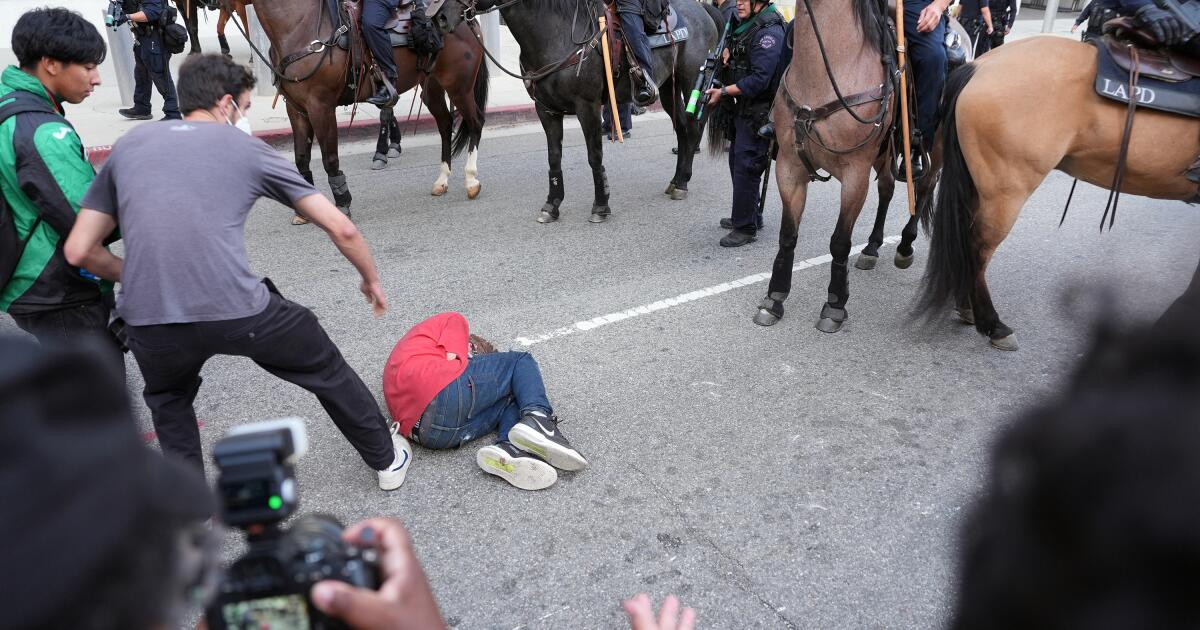
A University of Southern California freshman has suffered a permanent, life-altering injury after being shot in the eye during a political demonstration in downtown Los Angeles. Tucker Collins, 18, was attending a “No Kings” protest to document the event through photography when he was allegedly struck by a projectile fired by a Department of Homeland Security (DHS) agent.
The incident occurred on March 28, 2026, during a rally that was part of a larger national movement against the administration of President Donald Trump. According to his attorney, V. James DeSimone, Collins was struck by what appeared to be a less-lethal projectile containing chemical irritants. The severity of the injury was such that medical professionals had to remove Collins’ right eye according to his legal representative.
The “No Kings” protests represent a significant wave of civil unrest, marking the third iteration of rallies aimed at protesting policies imposed by the Trump administration. Organizers estimate that more than 8 million people participated in the March 29 demonstrations across the United States to protest issues including immigration enforcement, the rising cost of living, and the Iran war according to BBC reporting.
The case of Tucker Collins has raised urgent questions regarding the targeting of members of the press and student documentarians during public demonstrations. DeSimone alleges that law enforcement focused violence on individuals documenting the crowd rather than those engaging in disruptive behavior, noting that this is not an isolated incident of eye loss linked to DHS agents.
The March 28 Incident in Los Angeles
The events took place near the Metropolitan Detention Center in Los Angeles, where the “No Kings” rally had drawn large crowds to Temple Street. Collins, a student at USC, was positioned to take photographs of the proceedings when the projectile struck him. Following the injury, he was moved to the side of the protest and provided with an eye patch.
The path to emergency medical care was not immediate through official channels; DeSimone stated that a nurse who happened to be driving by the scene offered to transport Collins to the hospital. The resulting medical complications led to the surgical removal of his right eye. As of April 7, 2026, Collins remains in recovery and was not well enough to be interviewed by the press.
The Department of Homeland Security has not immediately responded to requests for comment regarding the shooting or the specific agent involved. This lack of immediate transparency follows a pattern of escalating tensions between federal agents and protesters during the third wave of these national rallies.
Patterns of Violence Against Documentarians
The injury to Tucker Collins is being framed by his legal team as part of a broader trend of aggression toward the press. DeSimone told the Los Angeles Times that law enforcement has targeted people who were documenting and taking photos of the crowd instead of targeting those throwing objects into the crowd according to the attorney’s statements.

DeSimone claimed that Collins is the third or perhaps fourth person to lose an eye due to actions by a Department of Homeland Security agent, noting that two such instances previously occurred in Orange County. This suggests a systemic issue with the deployment of “less-lethal” munitions in urban protest environments.
Understanding “Less-Lethal” Projectiles
The projectile used in the attack on Collins reportedly contained chemical irritants. While categorized as “less-lethal,” these munitions—which can include rubber bullets, bean bag rounds, or chemical canisters—are designed to incapacitate or disperse crowds. However, when these projectiles strike sensitive areas such as the eyes, they can cause permanent blindness or necessitate the removal of the organ.
The Scope of the ‘No Kings’ Movement
The rally in Los Angeles was one of many across the U.S. The “No Kings” movement is characterized by its opposition to what organizers describe as tyrannical rule and the influence of “billionaire cronies” within the current administration according to event organizers.
The scale of these protests has been immense, with demonstrations occurring in nearly every major U.S. City, as well as international locations such as London and Paris. In Washington D.C., protesters packed the National Mall and lined the steps of the Lincoln Memorial, utilizing effigies of President Donald Trump and Vice President JD Vance to call for their ousting and arrest as reported by the BBC.
The administration’s response to these rallies has been dismissive. A White House spokesperson characterized the protests as “Trump Derangement Therapy Sessions,” suggesting that the only individuals interested in the events are reporters paid to cover them per the BBC’s report.
Key Takeaways of the Case
- Victim: Tucker Collins, an 18-year-old USC freshman.
- Injury: Permanent loss of the right eye following a projectile strike.
- Alleged Perpetrator: An agent of the Department of Homeland Security (DHS).
- Context: A “No Kings” protest in Los Angeles on March 28, 2026.
- Legal Claim: Attorney V. James DeSimone alleges that law enforcement targeted documentarians and photographers.
What Happens Next
The legal trajectory for Tucker Collins will likely involve a civil lawsuit against the Department of Homeland Security for the use of excessive force and the targeting of a member of the press. The focus will remain on whether the agent followed established protocols for the use of less-lethal munitions and whether the targeting of a photographer violates constitutional protections regarding the freedom of the press.
As the “No Kings” movement continues to mobilize millions across the country, the incident in Los Angeles serves as a critical point of contention regarding the safety of journalists and student documentarians in the field. The public and legal communities await a formal response or internal investigation report from the DHS.
We will continue to monitor this story for updates on legal filings and official statements from the Department of Homeland Security. We invite our readers to share their thoughts on the protection of press freedoms in the comments below.