
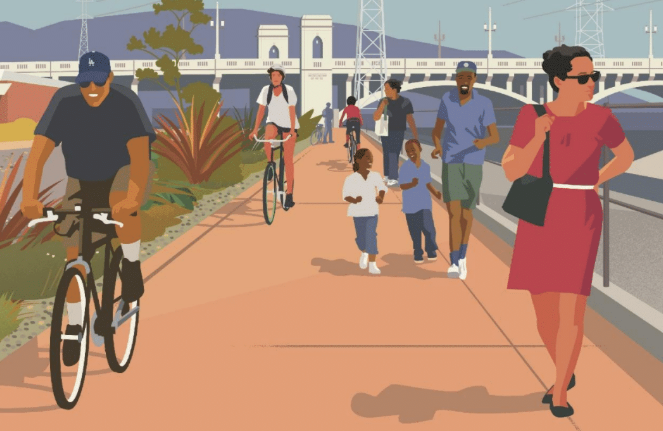
Closing the Gap: The Proposed LA River Path Extension – A Complete Guide
The vision of a continuous, car-free pathway along the entire Los Angeles River is inching closer to reality. The Los Angeles County Metropolitan Transportation Authority (Metro) is currently evaluating options to close an 8-mile gap in the LA River path, a project poised to revolutionize recreation and transportation in the region.this article provides a detailed overview of the proposed extension,its potential impacts,public engagement opportunities,and what it means for the future of the river and surrounding communities. We’ll delve into the specifics of the draft Environmental Impact Report (EIR) and offer insights into this important infrastructure project.
Understanding the Project & Its Significance
The proposed project aims to connect the existing LA river Path segments in Elysian Valley to Maywood, creating a dedicated walking and biking trail physically separated from vehicle traffic. This isn’t just about adding another bike lane; its about unlocking the potential of the LA river as a vibrant public space, promoting active transportation, and enhancing community connectivity. The path will run along the river from Riverside Drive in Los Angeles to Atlantic Boulevard in Maywood.
Did You Know? The LA River was once a free-flowing waterway, but was channelized in concrete in the 1930s to control flooding. Revitalization efforts, like the river Path, aim to restore some of its natural character and accessibility.
Exploring the Alternatives: A Detailed Breakdown
Metro’s draft EIR outlines seven distinct alternatives for completing the 8-mile stretch.These options vary in scope, cost, and potential impact.Hear’s a summary:
* choice 1: Full 8-Mile Path (5 Bridges, 9 Access Points): This represents the most comprehensive option, providing maximum connectivity.
* Alternative 2: Full 8-Mile Path (7 Bridges, 11 Access Points): Similar to alternative 1, but with increased bridge and access point density.
* Alternative 3: Northern Segment (3.2 Miles): Focuses on completing the path in the northern portion of the gap.
* Alternative 4: Southern Segment (5 Miles): Prioritizes the southern section of the missing link.
* Alternative 5: East Bank routing: Favors constructing the path primarily along the east bank of the river.
* Alternative 6: West Bank Routing: Prioritizes construction along the west bank.
* Alternative 7: No Build: Maintains the status quo, with no new path construction.
| Alternative | Path Length (Miles) | Approximate Bridges | Approximate Access Points |
|---|---|---|---|
| Alternative 1 | 8 | 5 | 9 |
| Alternative 2 | 8 | 7 | 11 |
| alternative 3 | 3.2 | – | – |
| Alternative 4 | 5 | – | – |
Pro tip: Reviewing the full EIR document (available at metro.net/projects/lariverpath) is crucial for understanding the nuances of each alternative and their specific impacts on different communities.
Environmental & Community Impacts: A Balanced Assessment
The draft EIR meticulously analyzes a wide range of potential impacts, both during construction and after completion. Key areas of assessment include:
* Aesthetics: How the path will visually integrate with the surrounding environment.
* Air Quality: Potential impacts from construction equipment and increased bicycle/pedestrian traffic.
* Biological Resources: Effects on the river’s ecosystem and wildlife.
* Cultural Resources: Impacts on historical or archaeological sites.
* Noise: Construction noise and potential increases in ambient noise levels.
* Traffic: Changes in traffic patterns around access points.
The report identifies significant, unavoidable construction-related effects on paleontological resources (due to potential disturbance of fossil-bearing sediments) and


