

Jcoleman
2026-01-21 14:52:00
This Pew Research Center study explores a wide variety of spiritual and religious beliefs in six Latin American countries. Our survey included some questions we previously have asked in many countries, such as whether people believe in God and whether they believe in an afterlife. But we also asked about beliefs that are often associated with folk religions – including Afro-Caribbean, Afro-Brazilian or Indigenous faiths – such as beliefs in spells and various kinds of spirits.
Around nine-in-ten or more adults in each country surveyed say they believe in God, and about two-thirds say there is probably or definitely life after death. More than half of adults in each country believe that spells, curses or other magic can influence people’s lives, while fewer than half believe in reincarnation.
Other findings from the Center’s 2024 survey of Argentina, Brazil, Chile, Colombia, Mexico and Peru include:
- Majorities of adults believe that parts of nature (such as mountains, rivers or trees) can have spirits or spiritual energies, but fewer believe that spirits can reside in objects (such as crystals, jewels or stones).
- Catholics are consistently more likely than Protestants to believe in reincarnation, while in some countries, Protestants are more likely than Catholics to believe that spells can influence people’s lives.
- Older adults in some countries are more likely than younger adults to believe in God, but younger adults are more likely to believe in “something spiritual beyond the natural world, even if we cannot see it.”
Belief in God
About nine-in-ten or more adults in each of the six countries surveyed say they believe in God. For instance, 94% of Mexicans say they believe in God, as do 98% of Brazilians, similar to the shares reported in 2013-14.
Nearly all Catholics and Protestants say they believe in God, with percentages virtually unchanged from a decade ago. (The sample of Protestants in Mexico is too small to analyze separately.)
In Argentina, for example, 99% of Catholics and Protestants said they believe in God in 2013-14, and 99% say the same today.
Majorities of religiously unaffiliated adults believe in God, though they are less likely than Catholics or Protestants to hold this belief. In Chile, for example, 69% of unaffiliated adults say they believe in God, compared with 99% of Catholics and 100% of Protestants surveyed. (The unaffiliated category, sometimes referred to as religious “nones,” consists of people who answer a question about their religion by saying they are atheist, agnostic or “nothing in particular.”)
In Mexico, the share of religiously unaffiliated adults who believe in God appears to have risen sharply since 2013-14, almost doubling in size to 76%. However, the sample of “nones” in Mexico is relatively small, so there is a large margin of error.
In some Latin American countries, adults ages 18 to 34 are slightly less likely than those 50 and older to say they believe in God. The age gap is largest in Chile, where 83% of younger adults say they believe in God, compared with 96% of the oldest adults. However, in Brazil, 98% of both younger and older adults hold this belief.
Adults with higher levels of education tend to be less likely than those with lower levels of education to believe in God. For instance, 86% of Argentine adults who have at least a secondary education believe in God, compared with 95% of Argentines with less education.
Women are somewhat more likely than men to express belief in God in Chile, Colombia and Peru. For example, 99% of Colombian women say they believe in God, compared with 94% of Colombian men.
(Refer to the detailed tables for more information about how this measure varies by frequency of prayer and across demographic groups.)
Belief in a spiritual presence beyond the natural world
Respondents were asked whether they believe “there is something spiritual beyond the natural world, even if we cannot see it” or, alternatively, “the natural world is all there is.”
Majorities in each country, ranging from 56% of adults in Peru to 69% of adults in Brazil, say they believe there is something spiritual beyond the natural world.
In Colombia, Chile and Peru, Protestants are more likely than Catholics or religiously unaffiliated adults to say there is something spiritual beyond this world, even if we cannot see it. And in several countries surveyed, Catholics are more similar to religiously unaffiliated adults than to Protestants on this question. For instance, in Peru, seven-in-ten Protestants say there is something spiritual beyond this world, while about half of Peruvian Catholics and “nones” say the same.
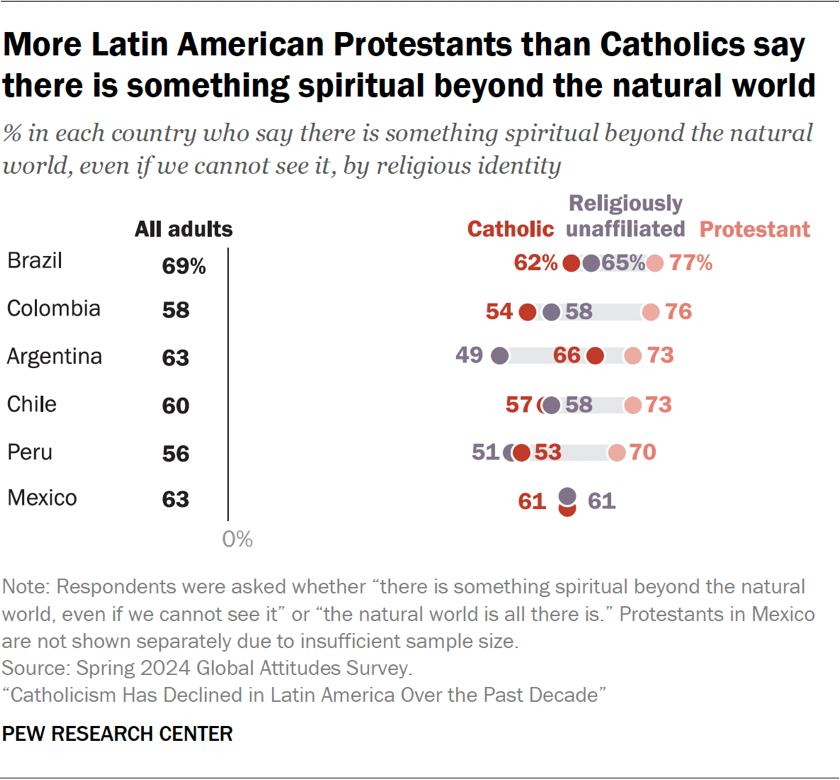
Argentina is the only Latin American country surveyed in which Catholics (66%) are more likely than “nones” (49%) to say there is something spiritual beyond the natural world.
In general, younger adults in the Latin American countries surveyed are more likely than older people to believe there is something spiritual beyond the natural world. That’s a reversal of the age pattern we find on belief in God.
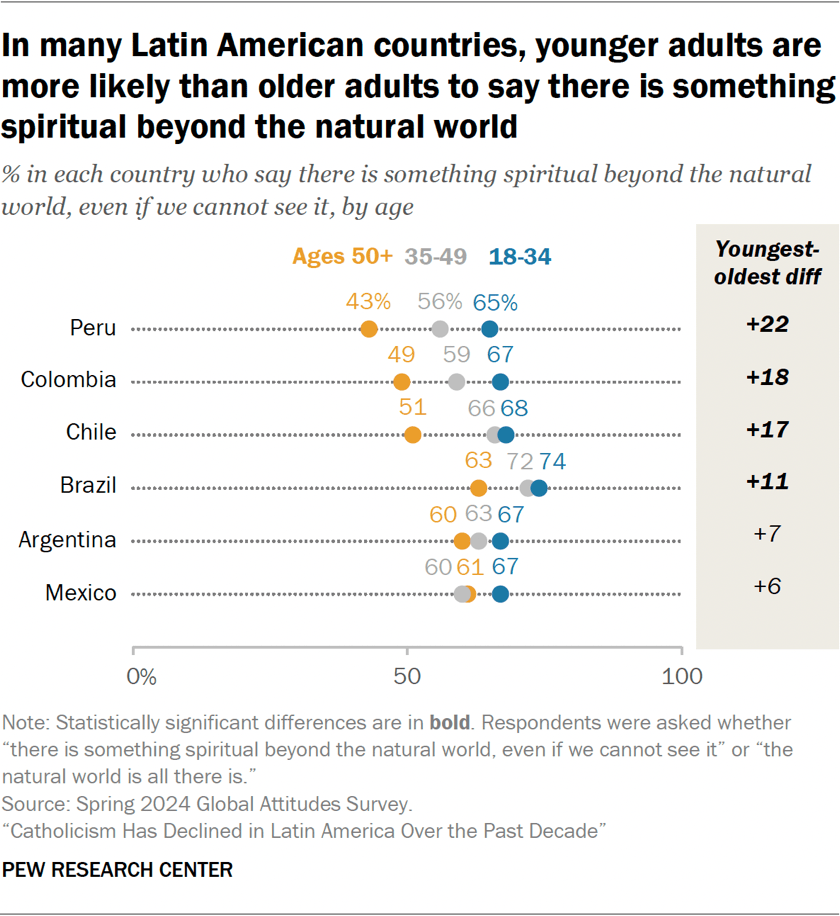
In Chile, 68% of adults ages 18 to 34 believe in something spiritual beyond the natural world, compared with 51% of adults ages 50 and older.
Across the region, adults with higher levels of education are more likely than those with lower levels of education to say there is something spiritual beyond the natural world. In Mexico, for example, 73% of adults who have completed secondary school express this belief, compared with 54% of adults who have less education.
(Refer to the detailed tables for more information about how this measure varies by frequency of prayer and across demographic groups.)
Belief in life after death
Belief in an afterlife is common in Latin America, with about two-thirds of adults in each country saying there is definitely or probably life after death.
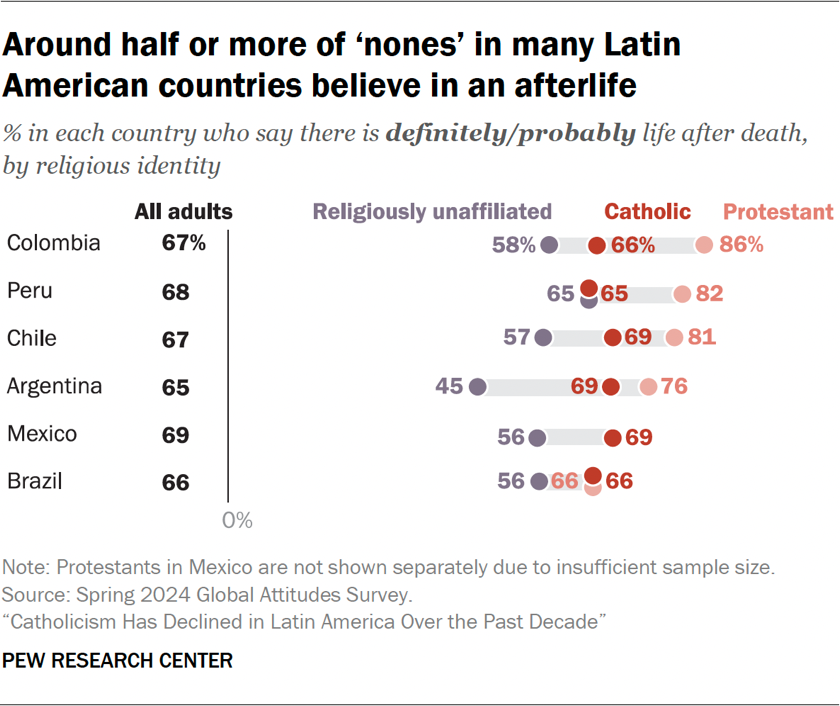
In Colombia, Chile and Peru, Protestants are more likely than Catholics and religiously unaffiliated adults to say there is definitely or probably life after death. For instance, in Colombia, 86% of Protestants believe in an afterlife, compared with 66% of Catholics and 58% of “nones.”
(Refer to the detailed tables for more information about how this measure varies by frequency of prayer and across demographic groups.)
Belief in reincarnation
Fewer than half of adults in each country believe in reincarnation, making this belief less common than belief in an afterlife. (In the survey, reincarnation was defined as people being “reborn in this world again and again.”)
In Argentina, Colombia and Peru, larger shares of adults overall say they believe in reincarnation now than a decade ago.
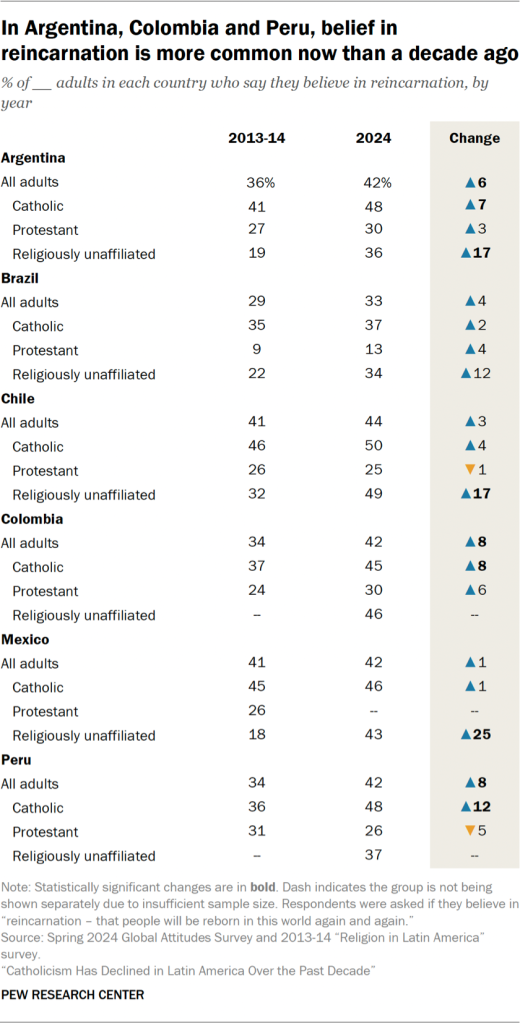
In Argentina, Chile and Mexico, religiously unaffiliated adults in particular have become more likely to believe in reincarnation; in Mexico, there’s been a 25-point increase since 2013-14. However, the sample of unaffiliated people in Mexico is relatively small (199), with a large margin of error (plus or minus 10.0 percentage points).
Across the region, Catholics continue to be more likely than Protestants to express belief in reincarnation. In Brazil and Chile, religiously unaffiliated adults also are now more likely than Protestants to say they believe in reincarnation. For instance, in Chile, twice as many “nones” as Protestants hold this belief (49% vs. 25%).
In several countries, younger adults are more likely than adults ages 50 and older to say they believe in reincarnation. For instance, 46% of adults under 35 in Colombia believe in reincarnation, compared with 35% of older adults.
(Refer to the detailed tables for more information about how this measure varies by frequency of prayer and across demographic groups.)
Belief in spells, curses and other magic
Majorities of adults in all six countries surveyed say they believe that spells, curses or other magic can influence people’s lives. This ranges from 56% of Mexicans to 72% of Colombians.
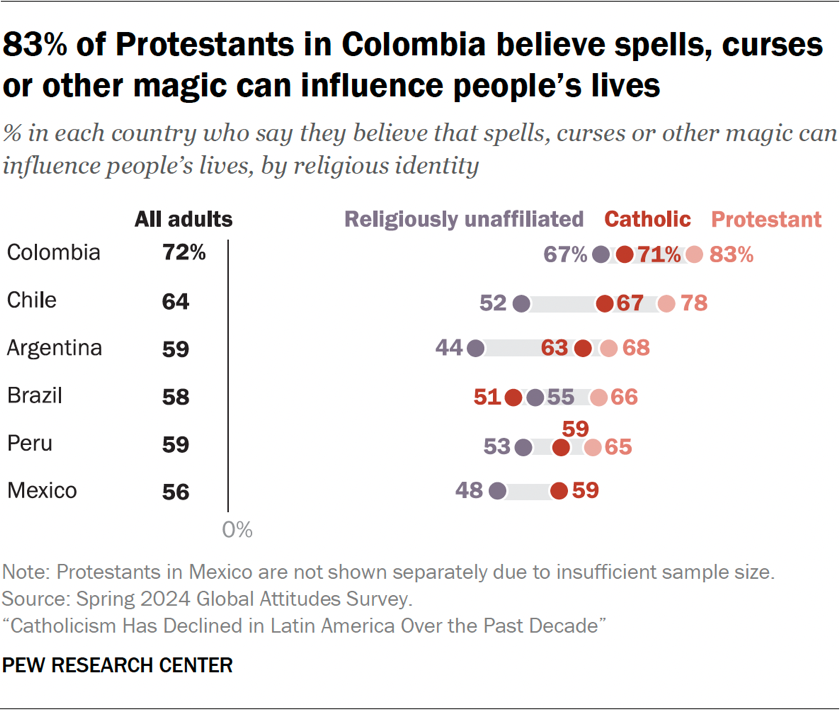
In some countries, Protestants are more likely than Catholics to believe spells have real effects. For instance, 83% of Colombian Protestants believe in this, compared with 71% of Catholics.
In Brazil, there are differences within Protestantism as well. Pentecostal Protestants (73%) are far more likely than other Protestants in Brazil (53%) to say spells, curses or other magic can influence people’s lives. (Brazil is the only surveyed country with samples large enough to compare Pentecostal Protestants with non-Pentecostal Protestants.)
In Argentina and Chile, “nones” are less likely than Catholics or Protestants to believe that spells, curses and the like really do work. In Chile, for example, about three-quarters of Protestants and two-thirds of Catholics say these kinds of magic can influence people’s lives, compared with about half of “nones” who say the same.
(Refer to the detailed tables for more information about how this measure varies by frequency of prayer and across demographic groups.)
Belief in spirits or spiritual energies
Can spirits or spiritual energies exist in parts of nature, such as mountains, rivers or trees? What about in animals? Or in certain objects such as crystals, jewels or stones?
Majorities across the six countries surveyed believe that parts of nature and animals can have spirits or spiritual energies, but far fewer believe this about objects such as crystals or jewels.
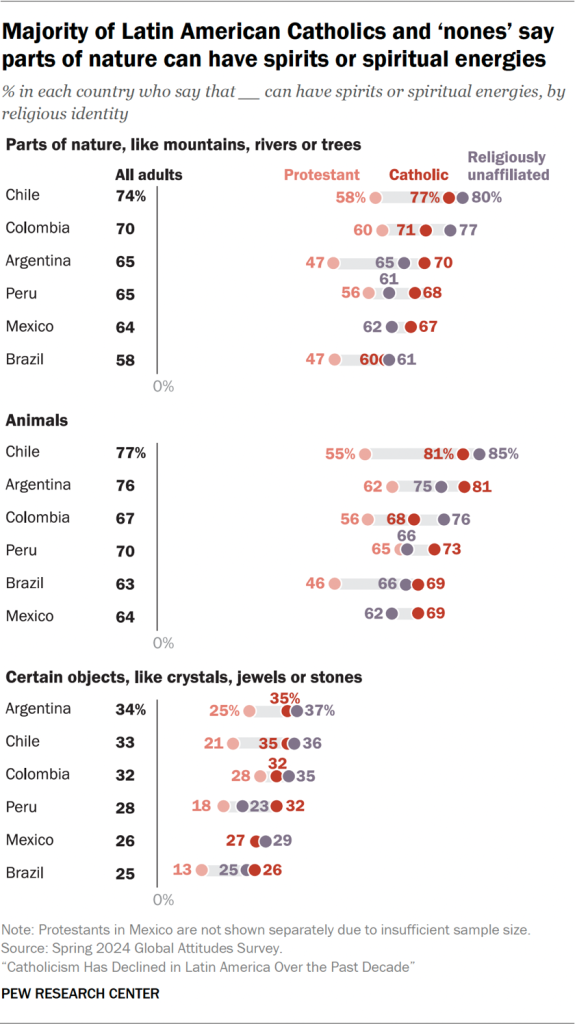
For instance, about three-quarters of Chileans say that animals or parts of nature can have spiritual energies, while a third of Chilean adults say objects can have spiritual energies.
Across the region, Catholics and religiously unaffiliated adults tend to be more likely than Protestants to believe in these types of spirits. In Colombia, for example, 68% of Catholics and 76% of “nones” believe animals can have spirits or spiritual energies, compared with 56% of Protestants.
Younger adults are more likely than older adults to say animals can have spirits or spiritual energies. For instance, 77% of Peruvians ages 18 to 34 believe animals can have spirits, while 56% of Peruvians 50 and older hold this belief. However, younger and older adults are equally likely to say parts of nature and certain objects can have spirits.
In several countries, people who pray at least daily are less likely than those who pray less often to say that animals can have spirits or spiritual energies. In Argentina, 70% of adults who pray daily believe this about animals, compared with 80% of those who pray less often.
However, there’s no clear link between how often people pray and whether they believe that parts of nature or certain objects can have spirits or spiritual energies.
(Refer to the detailed tables for more information about how this measure varies across demographic groups.)


