
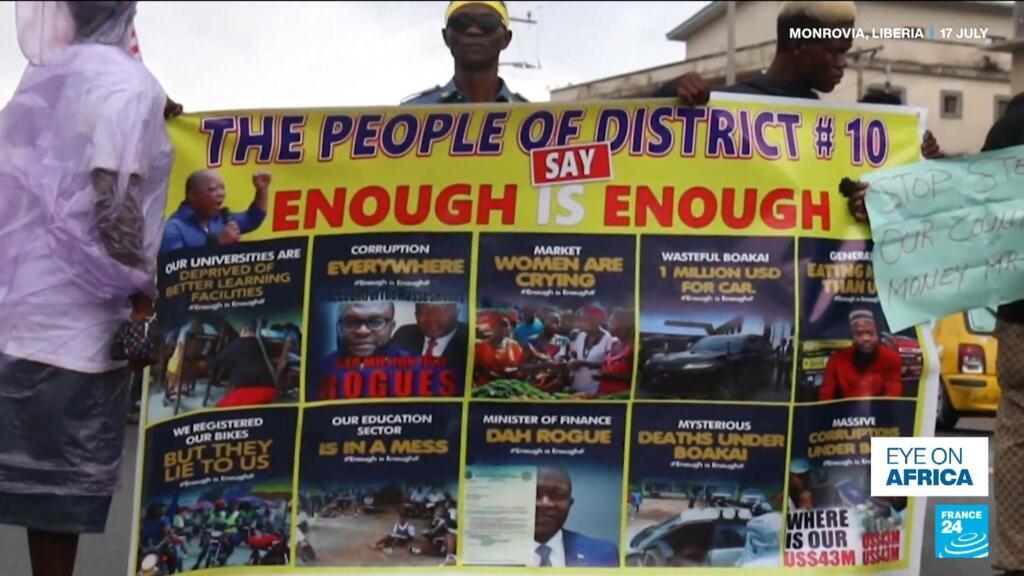
Did You Know? Liberia, founded by freed American slaves in 1822, continues to grapple with issues of governance and economic stability, impacting citizen trust and leading to public demonstrations.
Recent unrest in Liberia highlights growing public discontent with President Joseph Boakai‘s management, as hundreds of citizens voiced their concerns in street protests on Thursday, July 18, 2025. The demonstrations, occurring in the capital city, reflect a complex interplay of anxieties surrounding alleged corruption, perceived democratic erosion, and escalating economic hardships within the West African nation. These expressions of public frustration signal a critical juncture for Liberia’s fledgling democracy and demand a closer examination of the underlying issues.
Liberian Protests: A Deep Dive into the Causes and Concerns
The core of the protests centers on accusations of corruption leveled against President Boakai’s government. While specific details remain under investigation, the allegations have fueled a narrative of mismanagement and a lack of accountability. This sentiment is particularly potent given liberia’s history of corruption, which has consistently hampered its development and eroded public trust in institutions. According to Transparency International’s 2024 Corruption Perception Index, Liberia ranked 137 out of 180 countries, indicating a significant level of perceived corruption. transparency International. Beyond corruption, protesters are also voicing concerns about what they describe as a decline in democratic principles. Reports suggest increasing political pressure on opposition figures and limitations on freedom of expression,raising fears of a rollback in liberia’s democratic progress.
Economic Hardship and Rising Cost of living
Adding to the political grievances is a worsening economic situation. Citizens are struggling with a rapidly increasing cost of living, impacting their ability to afford basic necessities. The price of essential goods, including food and fuel, has surged in recent months, placing a significant strain on household budgets. The World Bank reported in June 2025 that Liberia’s inflation rate reached 13.5% in the first quarter of the year, largely driven by global commodity price increases and domestic supply chain disruptions. World Bank – Liberia. This economic pressure is disproportionately affecting vulnerable populations, exacerbating existing inequalities and fueling social unrest. the protests serve as a stark reminder of the economic challenges facing Liberia and the urgent need for sustainable economic policies.
Allegations of Police Misconduct and Political Repression
further complicating the situation are allegations of misconduct by law enforcement officials. Protesters claim instances of excessive force and arbitrary arrests during previous demonstrations, creating a climate of fear and intimidation. These accusations, if substantiated, would represent a serious violation of human rights and further erode public trust in the government. Simultaneously, opposition voices allege political pressure aimed at silencing dissent and hindering their ability to effectively participate in the political process.These claims, while difficult to verify independently, contribute to a broader perception of democratic backsliding and raise concerns about the fairness and transparency of Liberia’s political system.
Pro Tip: When analyzing political unrest, it’s crucial to consider the historical context, economic factors, and the role of key institutions. A nuanced understanding of these elements is essential for accurate assessment and informed decision-making.
The current situation in Liberia echoes similar patterns observed in other West African nations facing economic hardship and political instability. in Ghana, such as, protests erupted in 2022 over rising fuel prices and the cost of living, demonstrating the region’s vulnerability to economic shocks and the potential for social unrest. Reuters – ghana Protests. Understanding these regional dynamics is vital for comprehending the challenges facing Liberia and identifying potential solutions.
The Path Forward: Addressing the Root Causes of Discontent
Resolving the current crisis in Liberia requires a multifaceted approach that addresses the underlying causes of discontent. The government must prioritize transparency and accountability in its dealings, launching self-reliant investigations into allegations of corruption and ensuring that those found guilty are held accountable. Strengthening democratic institutions,protecting freedom of expression,and fostering a more inclusive political environment are also crucial steps. Economically,the government needs to implement policies that promote sustainable growth,create jobs,and alleviate the burden on vulnerable populations.This could involve investing in infrastructure,supporting small businesses,and diversifying the economy.


