
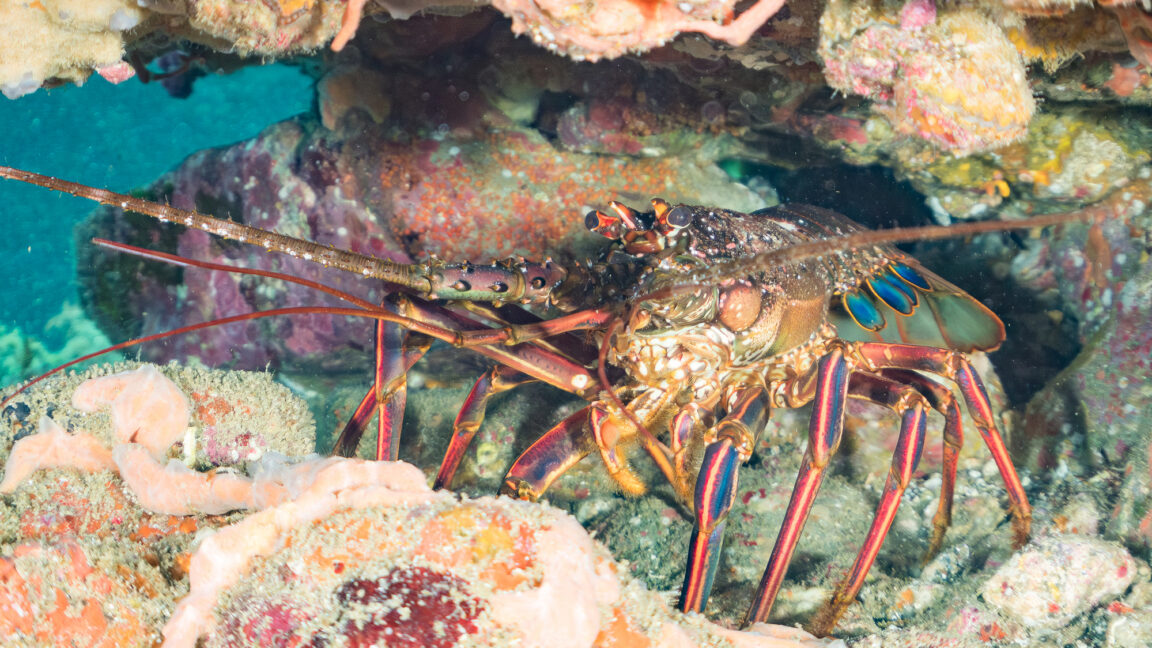
The Deadly Allure of Solution Holes: Why Lobsters Fall for a Predatory Trap
Have you ever wondered why a seemingly safe haven can actually be a death sentence? For Caribbean spiny lobsters, the answer lies in the deceptive allure of “solution holes” – underwater crevices that, surprisingly, attract them to a dangerous fate. Recent research reveals these formations aren’t the lobster condos they appear to be, but rather sophisticated lobster traps orchestrated by a cunning predator: the red grouper. This article dives deep into the science behind this ecological trap,exploring the factors that contribute to this deadly dynamic and what it means for lobster populations.
The groundbreaking study, published in late 2024 by Butler, Behringer, and Schratwieser, initially hypothesized that solution holes act as an ecological trap. the premise? Older, established lobsters seek shelter within these holes, releasing chemical signals that inadvertently attract younger, more vulnerable lobsters. this creates a congregation point,but also a buffet for any resident red grouper lurking within. What normally signals safety – the presence of other lobsters – becomes a beacon leading smaller lobsters into a “predatory death trap.” Understanding this lobster behaviour is crucial for conservation efforts.
Unveiling the Trap: How the Research Was conducted
To rigorously test this hypothesis, the researchers embarked on extensive underwater surveys across Caribbean reefs. They meticulously identified solution holes harboring red groupers and paired them with control sites offering comparable shelter but lacking both the hole and the predator. (it’s worth noting the study didn’t include a control group with a solution hole without a grouper, a potential area for future research).
The team then initiated daily lobster population surveys at each site, carefully documenting lobster size and tagging previously unrecorded individuals. This allowed them to track lobster movement and population changes over time, accounting for natural migration patterns. To directly assess predation risk, they employed a tethering method, securing both large and small lobsters to the seafloor within sheltered areas, preventing escape. they analyzed the stomach contents of captured groupers, seeking evidence of previously tagged lobsters – a direct link between predation and lobster size. This detailed methodology demonstrates a commitment to robust scientific investigation, bolstering the study’s credibility. Related terms like Caribbean lobster ecology and marine predator-prey dynamics provide further context.
The Grim Results: Size Matters in a Predatory Trap
The findings where stark. Sites with resident groupers boasted lobsters that were,on average,32% larger than those at control sites. This disparity isn’t due to preferential selection of larger lobsters; it’s a outcome of drastically higher mortality rates among smaller lobsters.A chilling 66% of small lobsters tethered to sites with groupers perished within just 48 hours. In contrast, control sites exhibited a mortality rate of approximately 40%, comparable to the 44-48% mortality observed for larger lobsters at both types of sites.
This data strongly supports the ecological trap hypothesis. Smaller lobsters, lured by the chemical signals of larger conspecifics, are effectively walking into a predator’s lair. The research highlights the vulnerability of juvenile lobsters and the important impact groupers have on their survival. This is particularly concerning given recent reports from the national Oceanic and Atmospheric Administration (NOAA) indicating a decline in lobster populations in certain Caribbean regions due to a combination of factors, including overfishing and climate change (https://www.noaa.gov/explainers/caribbean-spiny-lobster). Understanding lobster mortality rates is key to effective management.
Practical Implications & Actionable Advice:
* Fisheries Management: this research underscores the need for careful fisheries management practices that consider the impact of predator-prey relationships. Protecting grouper populations, while seemingly counterintuitive, could indirectly benefit lobster stocks by altering their hunting behavior.
* Habitat Restoration: Restoring and protecting diverse reef habitats can provide lobsters with option shelter options, reducing their reliance on solution holes.
* Further Research: Future studies should investigate the specific chemical signals lobsters use for communication and explore the potential for manipulating these signals to deter them from entering solution holes.
Addressing Common Questions:
* Are all solution holes dangerous for lobsters? No, solution holes without resident groupers don’t pose the same risk. The danger lies in the presence of the predator.
* What other predators target lobsters? Besides groupers, sharks, moray eels, and octopuses also prey on lobsters.
*




![Fix Slow Windows Updates: Restore PC Performance | [Year] Guide](https://i0.wp.com/www.ghacks.net/wp-content/uploads/2025/12/gHacks-articles-44.png?resize=330%2C220&ssl=1 "Fix Slow Windows Updates: Restore PC Performance | [Year] Guide")
![Android Charging Slow? Fix Full Speed Issues | [Year] Guide](https://i0.wp.com/static0.howtogeekimages.com/wordpress/wp-content/uploads/2025/12/shutterstock_2004742148.jpg?resize=330%2C220&ssl=1 "Android Charging Slow? Fix Full Speed Issues | [Year] Guide")


