
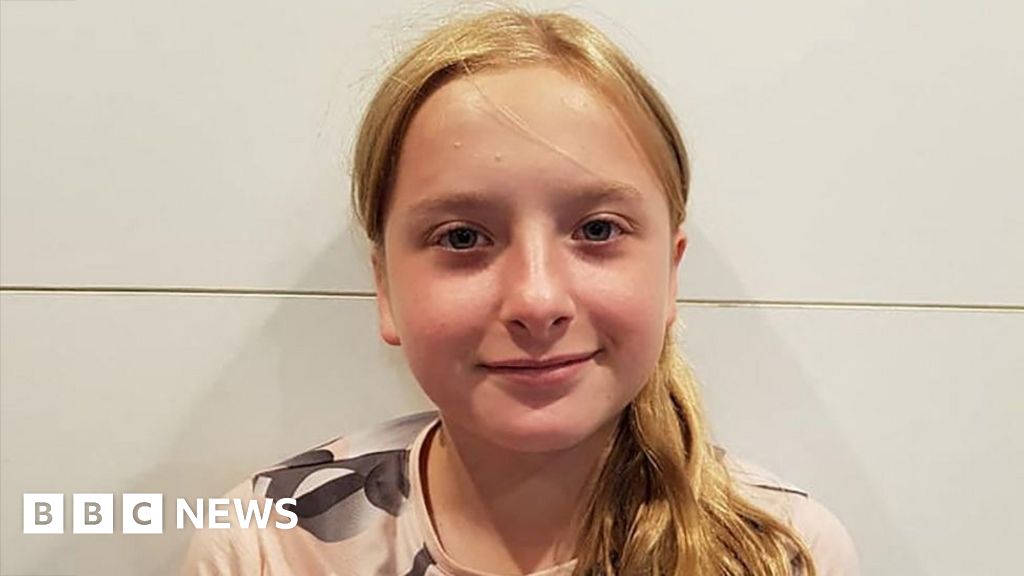
The Lola Daviet Case: France‘s First Female Life Sentence and a Nation Grappling with Grief and Justice
The 2022 murder of 12-year-old Lola Daviet in Paris sent shockwaves through France, sparking national outrage and a fierce debate about immigration, justice, and societal safety. In a landmark ruling, Dahbia Benkired, the 27-year-old woman convicted of Lola’s rape and murder, has received France’s rarest punishment: a whole-life sentence. This article delves into the details of this harrowing case, the legal implications of the sentence, the societal impact, and what it signifies for the French justice system. We’ll explore the complexities surrounding this tragedy, moving beyond headlines to understand the nuances of the inquiry, trial, and ultimate verdict.
A Brutal Crime and its Finding
On October 14th, 2022, Lola Daviet disappeared after leaving school.Her body was tragically discovered hours later,concealed within a plastic storage box in the courtyard of her apartment building in the 19th arrondissement of northeastern Paris. The discovery ignited immediate public and media attention.
the subsequent investigation quickly focused on Dahbia Benkired, an Algerian national who was subject to a deportation order.Benkired was known to police for previous offenses, adding another layer of complexity to the case.The details emerging from the investigation were deeply disturbing, revealing a horrific act of violence against a young girl.
The Trial and the Historic Sentence
The trial, held in late 2023 and early 2024, was intensely followed by the French public. Prosecutors presented compelling evidence detailing Benkired’s actions, including forensic findings and surveillance footage. Psychiatric evaluations revealed Benkired exhibited ”psychopathic” traits, but crucially, she was deemed legally sane and fully aware of her actions. This distinction was vital in the prosecution’s argument for the maximum possible penalty.
the prosecutor argued persuasively that Benkired’s personality was fundamentally flawed and untreatable. “When there is no illness, there is no treatment,” they stated, emphasizing the need for a sentence that reflected the gravity of the crime and protected society.
On October 24th, 2024, the court delivered its verdict: a whole-life sentence. This is an exceptionally rare punishment in France, reserved for the most heinous crimes.Benkired is the first woman in French history to receive such a sentence. Previously, only individuals like serial killer Michel Fourniret and Salah Abdeslam, a participant in the 2015 Paris attacks, had been subjected to this ultimate penalty. The sentence mandates at least 30 years of imprisonment before any possibility of parole.
Societal Impact and Political Fallout
The Lola Daviet case quickly became a focal point for political debate, particularly on the right-wing and far-right. The fact that Benkired was an Algerian immigrant subject to a deportation order fueled anti-immigration sentiment and calls for stricter border controls. Politicians seized on the case to advocate for tougher penalties for violent crimes and a more assertive approach to immigration enforcement.
However,it’s crucial to avoid generalizations and recognize the tragedy for what it is: a horrific act of violence committed by an individual,not an entire group. The case highlighted existing societal anxieties and vulnerabilities, but it’s vital to address these issues with nuance and avoid scapegoating.
The loss of Lola Daviet deeply impacted her family. Her mother, Delphine Daviet, and brother, thibault, were present for the verdict. Tragically, Lola’s father, Johan Daviet, passed away in 2024 at the age of 49, adding another layer of grief to an already devastating situation.
Understanding the french Penal System and “Réclusion Criminelle à Perpétuité”
France’s “réclusion criminelle à perpétuité” (perpetual criminal confinement) is a complex legal concept. Unlike some countries with true life-without-parole sentences, the French system allows for the possibility of release after a minimum period of imprisonment.
* Minimum Sentence: Typically,a minimum of 18 years is served before an inmate can even be considered for parole. In the case of Lola daviet, this minimum is 30 years.
* Parole Review: Even after the minimum sentence is served


