
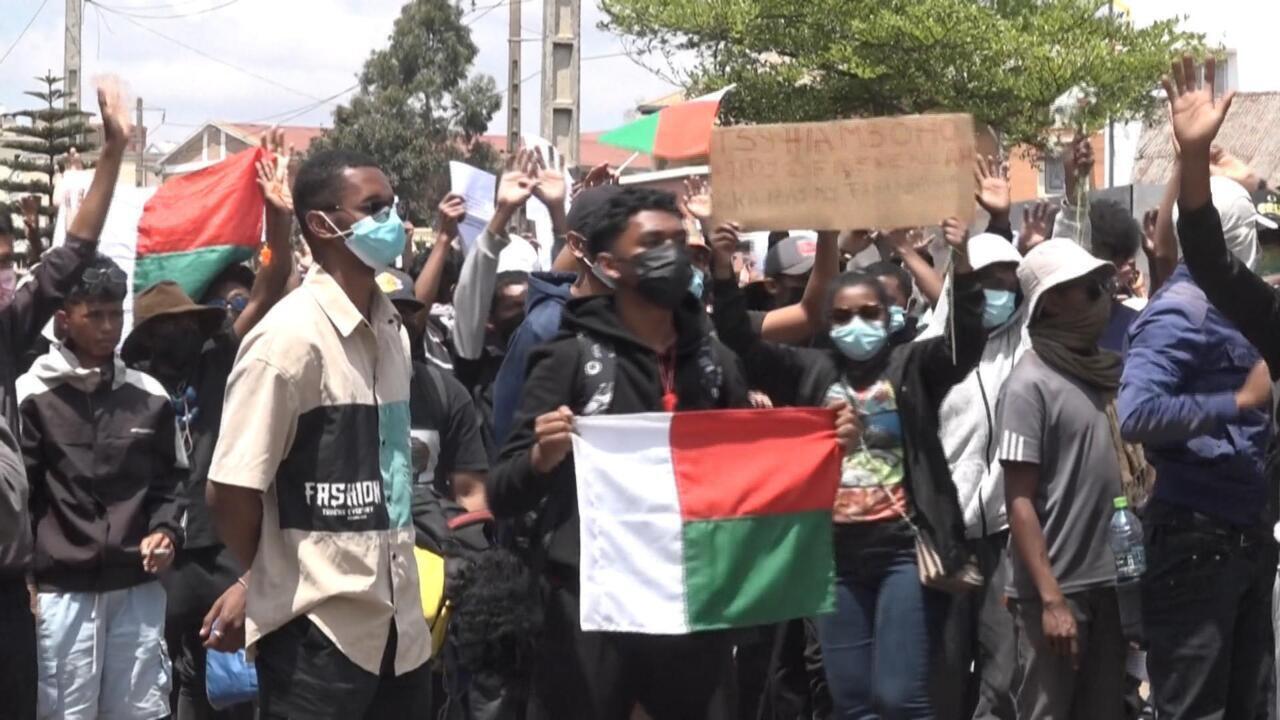
Madagascar Faces Escalating Protests Amidst Economic Hardship and Political Tensions
Madagascar is currently grappling with widespread protests fueled by economic discontent and concerns over political governance. Demonstrations are intensifying across teh nation, putting pressure on President Andry Rajoelina‘s administration and raising fears of prolonged instability. This article provides a comprehensive overview of the situation, its historical context, and potential implications.
A Nation Struggling with Poverty
At the heart of the unrest lies deep-seated poverty. Madagascar consistently ranks among the world’s least developed nations, despite its rich natural resources – including being the world’s leading producer of vanilla, alongside significant potential in farming, forestry, fishing, and minerals.Many citizens feel left behind,facing daily struggles for basic necessities. Rajoelina himself acknowledged the challenges facing a ”poverty-stricken society” in recent statements.
Historical roots of the Current Crisis
Understanding the current situation requires looking back at Madagascar’s recent political history. Rajoelina first ascended to power in 2009 through a coup d’état following popular uprisings that ousted then-President Marc Ravalomanana.
* He refrained from contesting the 2013 election due to international pressure.
* Rajoelina was later elected in 2018 and re-elected in 2023, though both elections were marred by controversy and boycotted by opposition groups.
This history of political upheaval has contributed to a climate of distrust and instability.
Growing Opposition and Calls for Change
Initially fragmented, the opposition has now united in its condemnation of the current government. A joint statement released on Wednesday, signed by prominent figures like Siteny Randrianasoloniaiko and former president Ravalomanana, signals a significant escalation in their challenge to Rajoelina’s authority.
The demands are sweeping, and largely driven by a younger generation leveraging social media:
* Dissolution of the Senate.
* Dissolution of the Constitutional Court.
* Dissolution of the electoral commission.
* A trial for businessman Mamy ravatomanga, alleged to be Rajoelina’s primary financial supporter.
* A general strike, with key sectors like JIRAMA (the national water and electricity company) and labor inspectors already committing to action.
Concerns Over Repression and Human Rights
Over 200 local NGOs have issued a joint appeal for an “immediate end to all forms of repression” and the protection of the right to protest. Reports of injuries during demonstrations, including a young boy receiving treatment at antananarivo’s main hospital, are raising concerns about the government’s response to the unrest.
Political scientist and human rights activist Ketakandriana Rafitoson of Openness International Madagascar warns that a heavy-handed approach could backfire. She believes relying on force risks:
* Prolonged political fragmentation.
* increased nationalist rhetoric.
* Economic fallout due to investor and donor withdrawal.
International Response and Calls for Dialog
The situation in Madagascar is drawing international attention. Pope Leo XIV expressed his sadness over the unfolding events and called for ”the promotion of justice and the common good.”
Several civil society organizations are urging the Catholic Church to mediate talks, hoping to prevent the nation from descending into chaos or civil war. This highlights the need for a peaceful and inclusive dialogue to address the underlying issues driving the protests.
What Does This Mean for You?
If you are following global political developments, understanding the situation in Madagascar is crucial. the country’s instability could have regional implications, notably concerning trade and security. Furthermore, the events unfolding in Madagascar serve as a stark reminder of the importance of good governance, economic opportunity, and respect for human rights in maintaining social stability.
Looking Ahead
The coming days and weeks will be critical for Madagascar. Whether President Rajoelina’s government chooses to engage in meaningful dialogue with the opposition and address the legitimate grievances of its citizens will determine the country’s future. The international community has a role to play in supporting a peaceful resolution and ensuring that Madagascar can achieve lasting development and lasting stability.
(This article is based on reporting from FRANCE 24 and Agence France-Presse.)
**Key improvements & explanations for E-E-A-T &


