
New Material Breakthrough Poised to Revolutionize Computer Memory: NiW adn the Future of Energy-Efficient Electronics
Key takeaway: Researchers at the University of Minnesota Twin Cities have developed a novel material, NiW (nickel-tungsten alloy), demonstrating considerably enhanced spin-orbit torque (SOT) – a critical mechanism for faster, more energy-efficient data storage and processing.This discovery promises to dramatically reduce power consumption in devices ranging from smartphones to massive data centers, paving the way for a more lasting technological future.
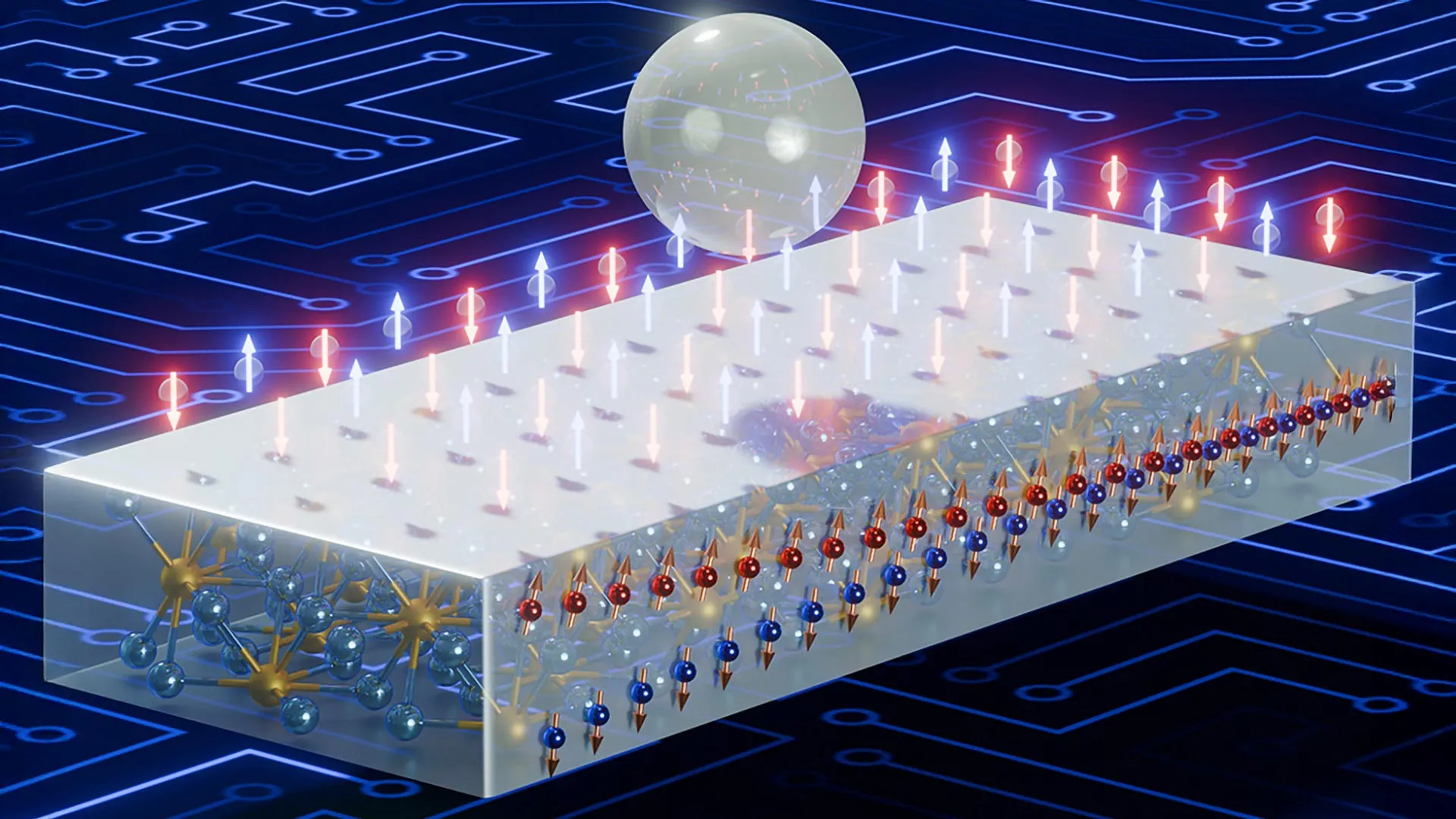
(Image Suggestion: A visually compelling graphic illustrating the spin-orbit torque effect within the NiW material. Consider a microscopic view or a simplified animation.)
The Growing Demand for Next-generation memory Technology
Our digital world is insatiable. The demand for faster processing speeds, increased data storage, and more elegant functionalities in everyday electronics is constantly escalating. This relentless growth necessitates a parallel evolution in memory technology. Traditional memory solutions are reaching their physical and energetic limits, prompting researchers to explore alternatives and complementary technologies that can deliver high performance with minimal energy consumption.
The focus is shifting towards spintronics, a field leveraging the intrinsic spin of electrons – along with their charge – to store and process information. Spintronic devices offer the potential for non-volatility (retaining data even without power), faster switching speeds, and significantly lower energy requirements compared to conventional technologies. Though, realizing this potential hinges on discovering materials capable of efficiently manipulating magnetic states within these devices.
Introducing NiW: A Game-changing Material for Spintronics
The University of Minnesota team, publishing their findings in the prestigious peer-reviewed journal Advanced Materials, has identified NiW as a particularly promising candidate. NiW, a simple alloy of nickel and tungsten, exhibits a unique low-symmetry structure that generates remarkably powerful spin-orbit torque (SOT).What is Spin-Orbit Torque (SOT)?
SOT is a phenomenon where an electric current induces a torque on the magnetic orientation of a material. This torque is crucial for switching the magnetization direction – the essential operation in writing data to memory. Higher SOT efficiency translates directly to lower power consumption and faster switching speeds.
“NiW reduces power usage for writing data, potentially cutting energy use in electronics significantly,” explains jian-Ping Wang, Distinguished McKnight Professor and Robert F. Hartmann chair in the Department of Electrical and Computer Engineering at the University of Minnesota Twin Cities, and a senior author of the study.
Why NiW Stands Out: Field-Free Switching and Multi-Directional Currents
Conventional materials often require external magnetic fields to switch magnetic states, adding complexity and energy overhead. NiW overcomes this limitation.
Yifei Yang,a Ph.D. student and co-first author, elaborates: “Unlike conventional materials, NiW can generate spin currents in multiple directions, enabling ‘field-free’ switching of magnetic states without the need for external magnetic fields. we observed high SOT efficiency with multi-direction in niw both on its own and when layered with tungsten, pointing to its strong potential for use in low-power, high-speed spintronic devices.”
This ability to generate spin currents in multiple directions is a key differentiator, offering greater control and adaptability in device design. The team’s theoretical calculations, confirmed by experimental observations, validated the material’s extraordinary properties. Seungjun Lee,a postdoctoral fellow and co-first author,notes,”we are very excited to see that our calculations confirmed the choice of the material and the SOT experimental observation.”
Practicality and Scalability: A Path to Real-World Implementation
Beyond its remarkable performance characteristics,niw boasts several advantages that accelerate its path to commercialization:
Cost-Effectiveness: NiW is composed of readily available,common metals.
Manufacturing Compatibility: The material can be fabricated using existing, standard industrial processes – eliminating the need for costly and complex new infrastructure.
* Versatility: NiW’s properties make it suitable for a wide range of spintronic applications,including magnetic random-access memory (MRAM),logic devices,and sensors.
This combination of performance and practicality makes NiW highly attractive to industry partners. Expect to see this technology potentially integrated into future generations of smartwatches, smartphones, laptops, and other electronic devices.
The Broader Impact: Towards Sustainable Electronics
The implications of this research extend far beyond individual devices. data centers,the backbone of our digital infrastructure,are notorious energy consumers. Implementing NiW-based memory and logic technologies in these facilities could lead to considerable reductions in electricity usage, contributing to a more sustainable and environmentally responsible technological landscape.
Future Directions: Miniaturization and Device Integration
The research team is now focused on scaling down the NiW material into even smaller devices, further enhancing performance





