
The Marine Corps Information Group: Is It Delivering on Its Promise?
The Marine Corps’ Information Group (IG) has been a subject of ongoing debate. Is it the most effective way to achieve information advantage in modern warfare, or are there better options? This isn’t about diminishing the value of information, but about maximizing the impact of limited resources. You, as a defense professional, need to understand the core of this discussion.
A Decade of Debate: Means,Ways,and Ends
Ten years ago,the Marine Corps established the IG as a dedicated entity. This decision, while well-intentioned, has inadvertently focused the conversation on how we organize for information warfare, rather than what we’re trying to achieve. The debate centers on “means and ways,” not the ultimate “ends” of securing information superiority.
Currently, the IG’s structure is presented as the optimal solution for employing Marines in this domain. It’s argued that this echelon, under the IG construct, is the best way to achieve desired effects and justifies its unique placement within the Corps. But is that truly the case?
The Core Question: Value for Investment
Simply existing isn’t enough. We need to rigorously evaluate whether the IG delivers a return on investment greater than its cost. Key questions need answering:
* Is the IG more than the sum of its parts? Does its institution create synergy and effectiveness beyond what could be achieved through existing structures?
* Does it improve synchronization? Does the IG offer a more efficient method for coordinating information operations than the redundant processes currently occurring at higher echelons?
These are the areas where focused discussion and data collection will yield the most valuable insights.
Avoiding Common Pitfalls in the Discussion
To move forward productively,leaders should avoid several common traps:
* Defending the inherent value of information. Everyone agrees information is critical. The debate isn’t about if we need information, but how we best obtain and utilize it.
* Overemphasizing information forces. Focusing solely on personnel and units doesn’t address the core question of effectiveness.
* championing specific programs of record. Individual programs don’t prove the overall value of the IG construct.
Focusing on Measurable Outcomes
Instead, the conversation should center on tangible results. We need to assess whether the IG:
* Enhances operational effectiveness. Does it demonstrably improve our ability to achieve mission objectives?
* Provides a competitive edge. Does it give Marine forces a meaningful advantage over potential adversaries?
* Optimizes resource allocation. Is it a cost-effective approach compared to choice organizational structures?
Ultimately, the goal is to make informed decisions about the future of the IG. This requires a clear-eyed assessment of its value,its synergy,and its ability to streamline information operations.
About the Author:
Brian Kerg is a Marine Corps operational and strategic planner, and a nonresident fellow in the Indo-Pacific Security Initiative at the Atlantic Council’s Scowcroft Center for Strategy and Security. He currently serves as the commanding officer of Marine Wing Communications squadron-38.
Disclaimer: The views expressed in this article are solely those of the author and do not reflect the official positions of the Marine Corps, the Department of Defense, or the U.S. goverment.
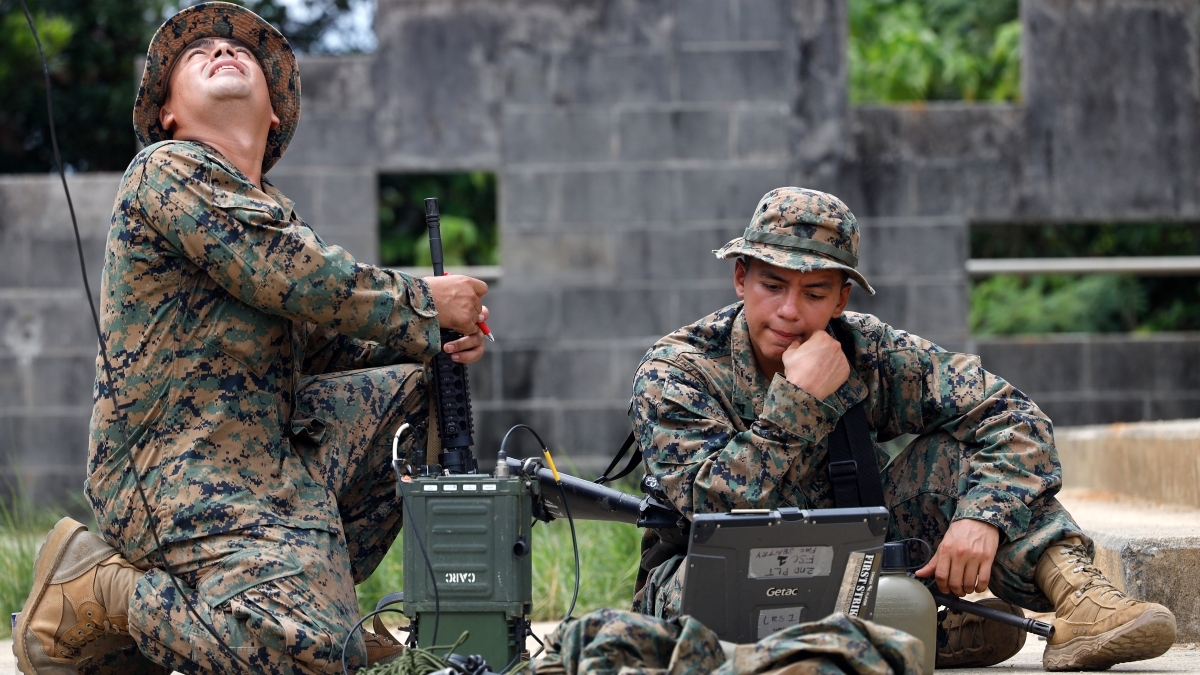
Image: Gunnery Sgt.Daniel Wetzel via DVIDS


![Master Lock Comanche: Race Time, Weather & How to Watch | [Year] Update](https://static.ffx.io/images/$zoom_0.5516%2C$multiply_0.7554%2C$ratio_1.777778%2C$width_1059%2C$x_0%2C$y_55/t_crop_custom/q_86%2Cf_jpg/t_metro_live_no_age_social_wm/53c85f551a91ff2c094f35fc9f3bff31abb136bca8acaf39f79f098dd87f56e5 "Master Lock Comanche: Race Time, Weather & How to Watch | [Year] Update")


