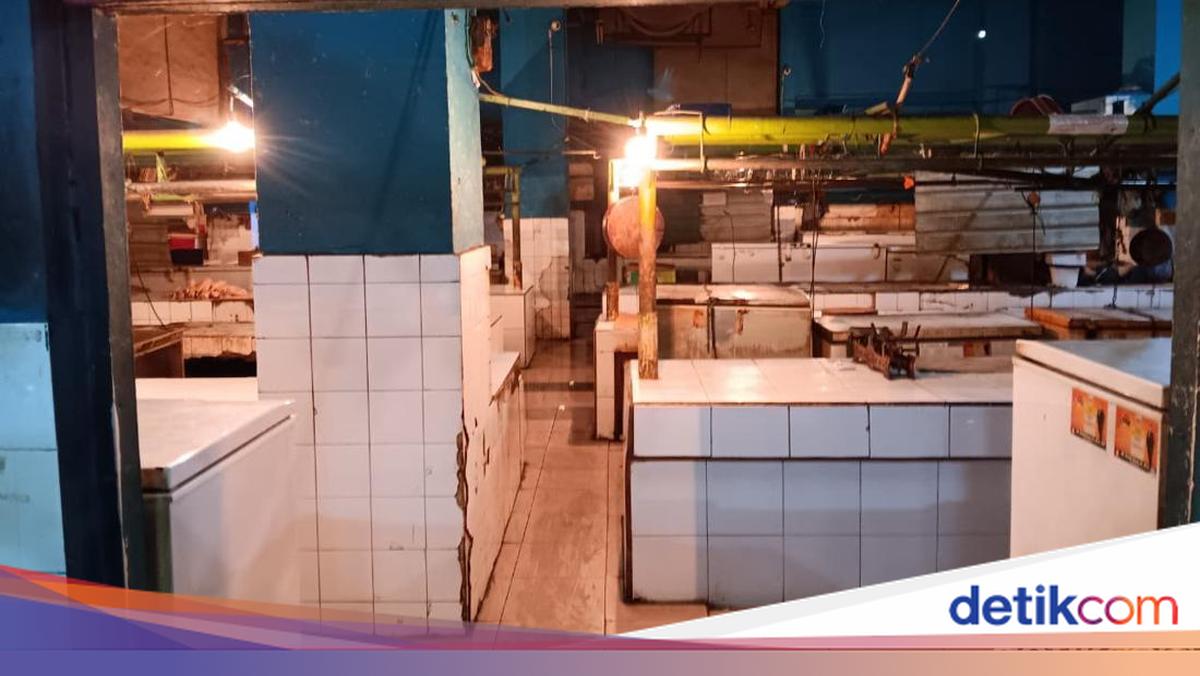
Meat Sellers in Jabodetabek Stage Protest Over declining Profits
Meat sellers in the Greater Jakarta (Jabodetabek) area recently staged a three-day protest, halting sales to demonstrate against dwindling profits amid rising costs and fluctuating prices. The action, supported by the Indonesian Cattle Traders Association, highlights the challenges faced by small-scale meat vendors in maintaining thier livelihoods.
Profit Margins Squeezed
Dudi, a meat seller at Pasar Jatinegara, explained that the price of beef remains relatively high at Rp 13,000 per kilogram, but sales volumes have significantly decreased. He noted that competitors from Padang, West Sumatra, are reducing their purchases, impacting overall demand. “If Padang struggles to sell, their reduced orders affect us. They used to buy two kilograms, now it’s just one, further decreasing our sales. we used to sell a quintal (100 kilograms) daily, now it’s only 50 kilograms,” Dudi stated.
Under normal market conditions, Dudi said a minimum profit margin of Rp 10,000 per kilogram would yield a net profit of around Rp 400,000 per stall.However, this profit must be shared with assistants. “Our profit is around Rp 400,000, but we have to pay those who help us. Dividing Rp 400,000 among three people leaves each person with only Rp 130,000.With the minimum wage approaching Rp 6,000,000, we don’t even reach Rp 4,000,000, and that’s before rent and electricity costs – it’s far below the minimum wage,” he lamented.
The recent decline in sales has further exacerbated the situation. “Now, sales have almost halved, leaving us with a net profit of only Rp 70,000. Over 30 days,without any days off,it’s still far from the minimum wage,” Dudi added.
High costs,Limited Pricing Power
Dede,another meat seller at Pasar Jatinegara,echoed these concerns,stating that he often has to sell to regular customers at cost when prices rise. “If regular customers buy, they usually resell – for example, to those making *bakso* (meatballs) or *soto* (soup). They still take the product, so it doesn’t affect us much.It’s the customers who don’t come every day who are deterred by the high prices,” dede explained.
Dede also pointed out the increasing frequency of price fluctuations.”Prices used to increase once a month, now it’s weekly, sometimes even three times a week. We often sell to our regular customers at cost becuase Rp 140,000 per kilogram is tough for them to manage. When prices rise here, they can’t necessarily increase their prices, too,” he said.
The situation is reportedly similar across markets in Jabodetabek. the traders chose to temporarily halt sales as a form of protest, hoping for price improvements. They resumed selling after three days to continue earning a living, but warned they may be forced to raise prices if conditions don’t improve.
“It’s not profitable to sell at cost for long. We don’t make anything. That’s why it’s better to stop selling altogether. Fortunately, we have the support of the Indonesian Cattle traders Association for this protest,” Dede concluded.
![Bomb Discovery Prompts Evacuation of 6,200 in [Location]](https://i0.wp.com/img.aachener-zeitung.de/public/lokales/hbcb0e-kombo-kw04-az-92916.jpg/alternates/SIXTEEN_NINE_1200/kombo_KW04_AZ_92916.jpg?resize=150%2C150&ssl=1 "Bomb Discovery Prompts Evacuation of 6,200 in [Location]")