
Mexico Rejects Potential US Military Intervention Against Drug Cartels: A Deep Dive
Recent reports suggest former President Donald Trump issued a directive authorizing the potential use of US military force against Mexican drug cartels. This has sparked immediate and firm responses from the Mexican government, underscoring a critical juncture in US-Mexico relations and raising complex questions about sovereignty, security, and the evolving approach to combating transnational criminal organizations.
The Reported Directive and Mexico’s Response
The New York Times revealed that trump secretly signed a directive possibly allowing military operations on foreign soil targeting drug cartels. While the White House has not directly addressed the directive, it affirmed Trump’s commitment to “protecting the homeland.” This move follows an earlier executive order designating eight drug cartels – six of them Mexican - as terrorist entities.
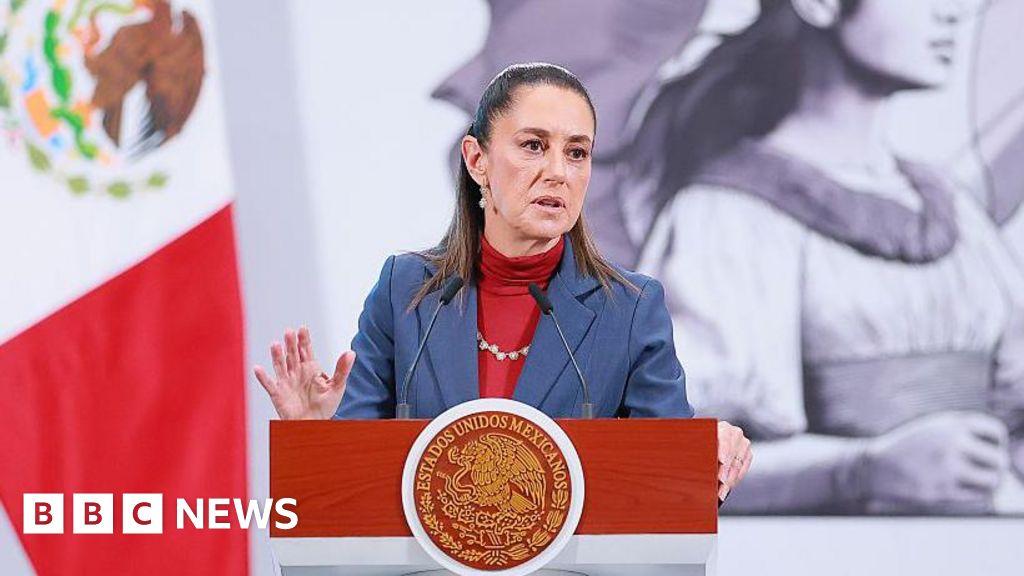
However, Mexican President Claudia Sheinbaum swiftly and unequivocally dismissed the possibility of US military intervention. “The United States is not going to come to Mexico wiht the military,” she stated. She emphasized ongoing cooperation with the US, but firmly ruled out any form of “invasion,” clarifying that the reported order, as communicated to mexico, did not involve military personnel.
Sheinbaum reiterated previous statements, asserting that the terrorist designation should not be leveraged as a pretext for violating Mexican sovereignty. This stance reflects a long-held sensitivity regarding external interference in Mexico’s internal affairs.
understanding the US Rationale
The shift in US rhetoric, spearheaded by figures like Senator Marco Rubio, frames drug cartels not merely as criminal organizations, but as “armed terrorist organizations.” This reclassification aims to unlock broader authorities and resources - including intelligence gathering and potential Department of Defense involvement – to disrupt cartel operations.
The logic centers on the escalating violence and destabilizing influence of these cartels, wich extend beyond drug trafficking to include human trafficking, extortion, and attacks on government institutions. The US argues a more aggressive approach is necessary to stem the flow of fentanyl and other illicit substances into the United States.
Current US-Mexico Cooperation & Recent Progress
Despite the potential for conflict over intervention strategies, the US and Mexico have been actively collaborating on border security. Recent data indicates positive results from this cooperation.
Record Low Border Crossings: June 2024 saw the lowest number of border crossings on record, according to US Customs and Border protection. Fentanyl Seizures Down: Fentanyl seizures at the border have decreased by over 50% in recent months.
Acknowledged Partnership: US Ambassador to Mexico, ronald Johnson, publicly praised the collaboration between president Sheinbaum and former President Trump, attributing the progress to their leadership and claiming cartels are experiencing financial hardship as an inevitable result.
These developments suggest a degree of shared interest in addressing the challenges posed by drug cartels, even amidst disagreements on tactics.
the Implications of Military Intervention
A unilateral US military intervention in Mexico would carry significant risks and potentially destabilizing consequences.
Violation of Sovereignty: Such action would be a clear breach of international law and a violation of Mexico’s sovereignty, likely triggering a severe diplomatic crisis.
Escalation of Violence: Military intervention could escalate violence, potentially leading to a protracted conflict with unpredictable outcomes.
Damage to Regional Stability: Instability in Mexico would have far-reaching consequences for the entire region, impacting trade, migration, and security.
* Erosion of Trust: Intervention would irrevocably damage the trust between the US and Mexico, hindering future cooperation on critical issues.
Evergreen Insights: The Complexities of the War on Drugs
The current situation highlights the enduring complexities of the “war on drugs” and the limitations of purely punitive approaches.Decades of focusing on supply-side strategies - such as eradication and interdiction – have largely failed to curb the demand for illicit substances or dismantle the underlying structures that fuel the drug trade.
A more holistic approach is needed, one that addresses the root causes of drug trafficking, including poverty, inequality, and lack of economic chance. This requires a shift towards harm reduction strategies, investment in social programs, and a focus on international cooperation built on mutual respect and shared responsibility. Moreover, a critical examination of US domestic drug policy and demand is essential to truly address the problem.
Frequently Asked Questions About US-Mexico Cartel Conflict
1. Will the US military enter Mexico to fight drug cartels?
Currently, Mexico has firmly rejected the possibility of US military intervention on its territory. President Sheinbaum has stated





![Costa Rica Surf Hotel Partners with Top Surfboard Shapers | [Hotel Name]
OR
World-Class Surfboards & Costa Rica: [Hotel Name]’s Unique Partnership
OR
Costa Rica Surfing: Hotel Supports Local Surfboard Craftsmanship](https://i0.wp.com/www.surfer.com/.image/c_fit%2Ch_800%2Cw_1200/MjowMDAwMDAwMDAwMTQ2NzI4/photo-2025-12-11-09-34-55.jpg?resize=150%2C100&ssl=1 "Costa Rica Surf Hotel Partners with Top Surfboard Shapers | [Hotel Name]
OR
World-Class Surfboards & Costa Rica: [Hotel Name]’s Unique Partnership
OR
Costa Rica Surfing: Hotel Supports Local Surfboard Craftsmanship")


