
The Unexpected Role of Immune Cells in Human Brain Development
For decades, scientists have sought to understand what makes the human brain uniquely complex. Recent research unveils a surprising player in this story: microglia, the brain’s resident immune cells. These cells, traditionally known for their protective functions, appear to actively drive the rapid growth of crucial brain cells during fetal development – a process that might potentially be uniquely human.
Unveiling a hidden Mechanism
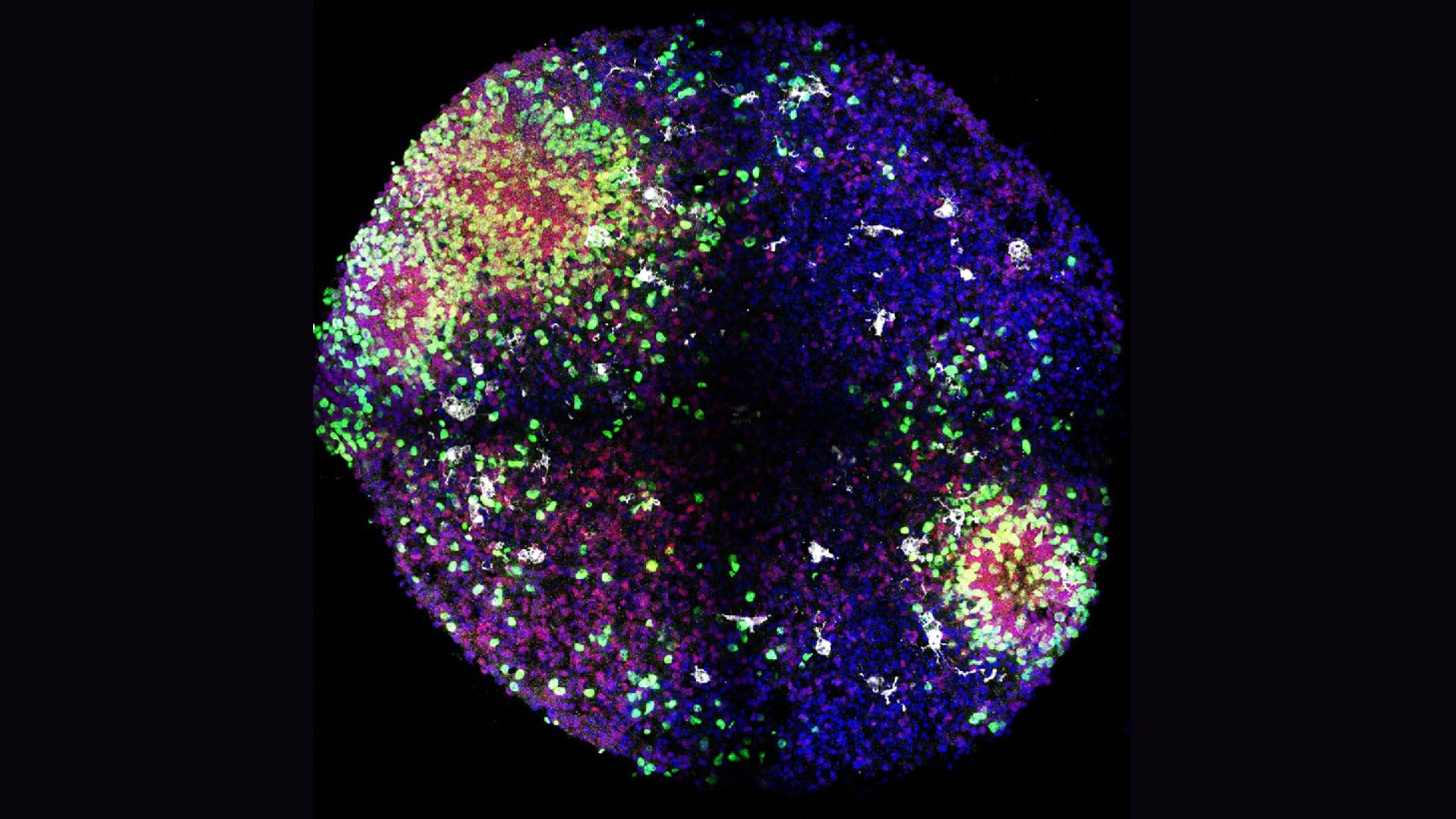
Researchers have successfully modeled key aspects of early brain development using “minibrains,” or brain organoids.These 3D structures, grown in the lab, mimic the habitat of a developing fetal brain. Previously, these models lacked a critical component: microglia.
Now, scientists have integrated microglia into these organoids, opening a new window into their function. The team discovered that microglia are a primary source of insulin-like growth factor 1 (IGF1) within these developing minibrains. This substance, in turn, fuels a dramatic increase in the production of interneurons – brain cells vital for complex thought and behavior.
Why This Matters: A Human-Specific Adaptation?
Interneurons are essential for regulating brain activity and enabling elegant cognitive functions. Their development is especially robust in humans compared to other species. This new research suggests that microglia-produced IGF1 is a key driver of this accelerated interneuron growth.
Interestingly, when researchers blocked IGF1 signaling in the organoids, interneuron production stalled. Though,when they disabled the IGF1 gene specifically in microglia within a mouse model,no such effect was observed.This suggests the microglia-IGF1 pathway is a specialized adaptation that evolved in humans.
This finding points to a potential evolutionary leap in brain development.
It highlights how our immune system may have been repurposed to support higher cognitive abilities.
ultimately, it offers a new perspective on what makes the human brain so unique.
The Limitations and future Directions
While these findings are groundbreaking, its important to remember that brain organoids are not perfect replicas of the human brain.Current models excel at replicating the early stages of development, specifically the proliferation stage. They currently struggle to accurately model later stages or capture the complex electrical activity of fully formed brain circuits.
However, this research provides a crucial foundation for future investigations. Scientists are now focused on:
Further clarifying the precise mechanisms by which microglia influence brain development.
Exploring whether disruptions in this pathway could contribute to neurodevelopmental disorders.
Developing more sophisticated brain organoid models to better represent the full complexity of the human brain.This revelation underscores the intricate interplay between the immune system and brain development. It also reinforces the idea that understanding these fundamental processes is key to unlocking the mysteries of human cognition and possibly addressing neurological challenges. You can expect further research to build on these findings, offering even deeper insights into the remarkable evolution of your brain.





