
Minimally Invasive Spine Surgery Pioneered in Chile: A New Era for Public Healthcare
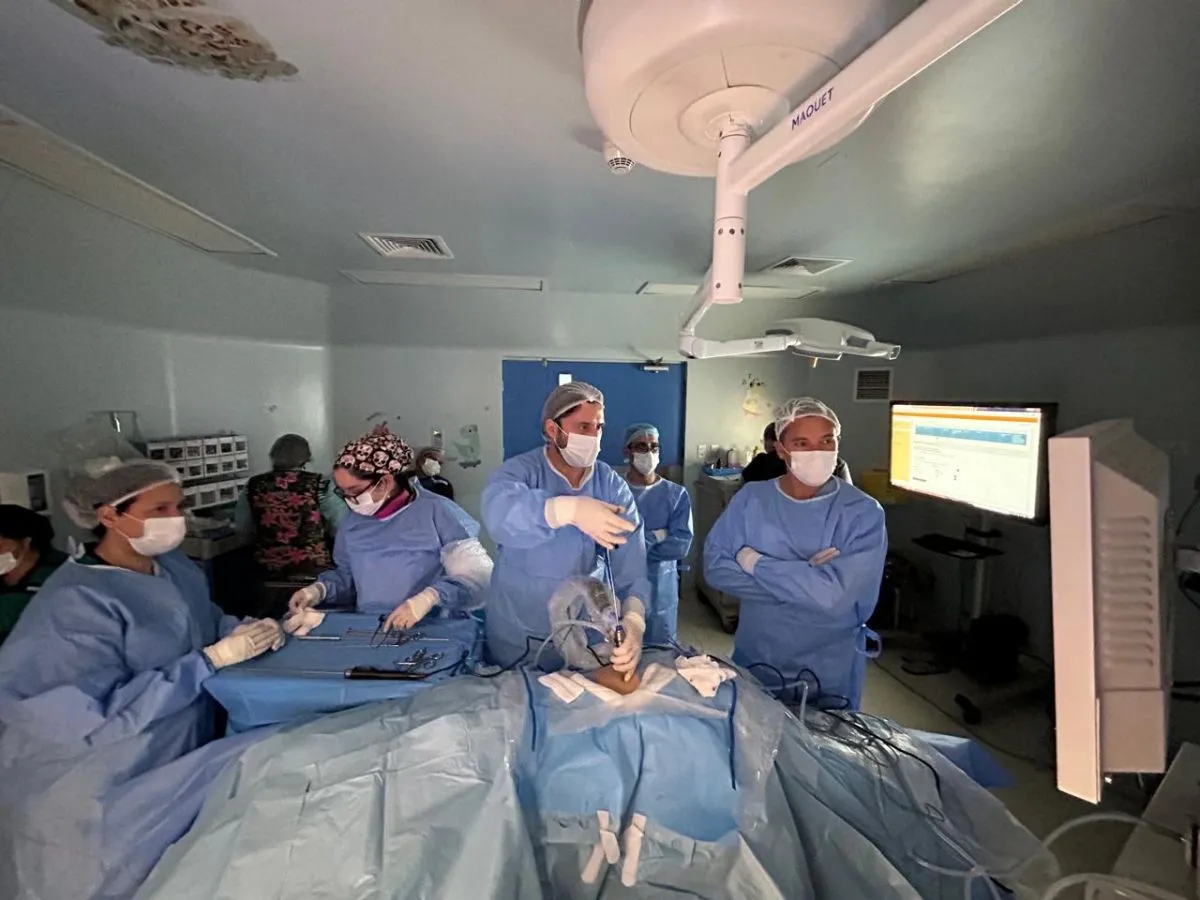
In a significant advancement for Chilean public healthcare, the Hospital San Pablo de Coquimbo has successfully performed its first endoscopic spine surgery using a minimally invasive technique. The procedure, completed on February 19, 2026, offers a less traumatic alternative for patients suffering from debilitating spinal conditions, specifically a 35-year-vintage patient diagnosed with lumbar hernia. This breakthrough positions the hospital at the forefront of adopting advanced neurosurgical practices within the country’s public health system, potentially reducing wait times and improving patient outcomes. The development is particularly noteworthy as it expands access to complex neurosurgical interventions in the regions of Atacama and Coquimbo, which the hospital serves as a referral center.
Lumbar hernias, a common cause of back pain and limited mobility in young adults, often require surgical intervention. Traditionally, these surgeries involved larger incisions and more extensive tissue disruption. However, the new endoscopic technique, spearheaded by neurosurgeons Dr. Patricio Sepúlveda and Dr. Darío Rostán, utilizes a minor incision – less than one centimeter – and a high-definition camera to visualize and address the affected area. This approach minimizes muscle damage, reduces post-operative pain, and facilitates faster recovery times, potentially allowing patients to return home on the same day as the procedure. The success of this surgery is a testament to the collaborative efforts of the clinical team, including the head of the Neurosurgery Service, Dr. Alonso Pavez, and Dr. Luis Lamus from the Hospital Regional de Talca, who provided crucial support in implementing the new technique.
The Procedure: A Detailed Look at Minimally Invasive Endoscopic Spine Surgery
The endoscopic spine surgery performed at Hospital San Pablo de Coquimbo represents a significant shift in how spinal conditions are treated. Dr. Sepúlveda explained that the technique involves inserting an endoscope through the musculature, directly accessing the spinal column and providing a clear view of the bones, ligaments, and the dural sac. “The operation is based mainly on inserting an endoscope through the musculature and reaching directly to the spinal cord, where the structures to be decompressed are visualized on screen. It gives you a view of all the bones, ligaments and the dural sac with the root,” he stated. In this particular case, a 4-centimeter hernia was successfully removed through an 8-millimeter incision. Diario Eldia reported on the successful implementation of this technique.
This method differs from traditional open spine surgery, which requires a larger incision and greater disruption of surrounding tissues. It also builds upon other minimally invasive techniques, such as tubular approaches, but represents a further refinement in precision and reduced invasiveness. The use of a high-definition camera allows surgeons to operate with enhanced visualization and control, minimizing the risk of complications. The benefits extend beyond the operating room, as the reduced tissue trauma translates to less post-operative pain, decreased bleeding, and a quicker return to normal activities for patients. This is particularly important in a public healthcare setting, where maximizing efficiency and minimizing hospital stays are crucial for managing resources and providing care to a larger patient population.
Impact on Patient Care and Hospital Efficiency
The introduction of this endoscopic spine surgery technique at Hospital San Pablo de Coquimbo is expected to have a significant impact on both patient care and hospital efficiency. Dr. Pavez highlighted that lumbar disc hernias are a frequent reason for patients seeking care at the hospital, given its role as a neurosurgical referral center for the Atacama and Coquimbo regions. The procedure is covered under the Chilean government’s GES (Guaranteed Explicit Health Benefits) program, ensuring access for eligible patients. El Observatodo details how this new technique allows for a safer, less invasive, and ambulatory approach to treatment.
By offering a less invasive option, the hospital can potentially reduce the length of hospital stays. Previously, the introduction of microscopes in similar procedures had already shortened stays to one or two nights. With this new endoscopic technique, the goal is to transition towards outpatient procedures, further freeing up hospital beds and reducing wait times for other patients requiring more complex care. This is a critical consideration in a public healthcare system striving to optimize resource allocation and provide timely access to essential medical services. The hospital’s medical team will determine the clinical criteria for prioritizing patients who are candidates for this new surgical approach, ensuring that the most appropriate individuals benefit from this advanced technique.
A Regional Milestone: Expanding Access to Advanced Neurosurgery
The successful implementation of endoscopic spine surgery at Hospital San Pablo de Coquimbo aligns with a growing trend towards more complex and precise neurosurgical interventions in public healthcare centers across Chile. The hospital is now positioned among a select group of public institutions embracing these advancements, offering patients access to cutting-edge treatments previously available only in private facilities or abroad. The technique has already been successfully utilized in countries like Germany, Korea, and Spain, demonstrating its efficacy and safety on a global scale.
This development underscores the commitment of Chilean healthcare professionals to improving patient outcomes and expanding access to quality medical care. The collaborative spirit demonstrated by the team at Hospital San Pablo de Coquimbo, along with the support from Dr. Lamus at the Hospital Regional de Talca, highlights the importance of knowledge sharing and cooperation in driving innovation within the healthcare system. The hospital’s dedication to adopting and implementing this minimally invasive technique promises to benefit countless patients in the region, offering them a faster, less painful, and more efficient path to recovery from debilitating spinal conditions.
Key Takeaways
- Minimally Invasive Approach: The endoscopic spine surgery utilizes a small incision, reducing tissue damage and post-operative pain.
- Faster Recovery: Patients may experience quicker recovery times and potentially be discharged on the same day as the procedure.
- Increased Efficiency: The technique can assist reduce hospital bed occupancy and shorten wait times for other patients.
- Regional Advancement: Hospital San Pablo de Coquimbo is now a leading center for advanced neurosurgical care in the Atacama and Coquimbo regions.
The Hospital San Pablo de Coquimbo is continuing to evaluate and refine its protocols for endoscopic spine surgery, with plans to gradually expand the program and offer this innovative treatment option to a wider range of patients. Further updates on the program’s progress and patient outcomes will be released as they become available. We encourage readers to share their thoughts and experiences with minimally invasive spine surgery in the comments below.





