
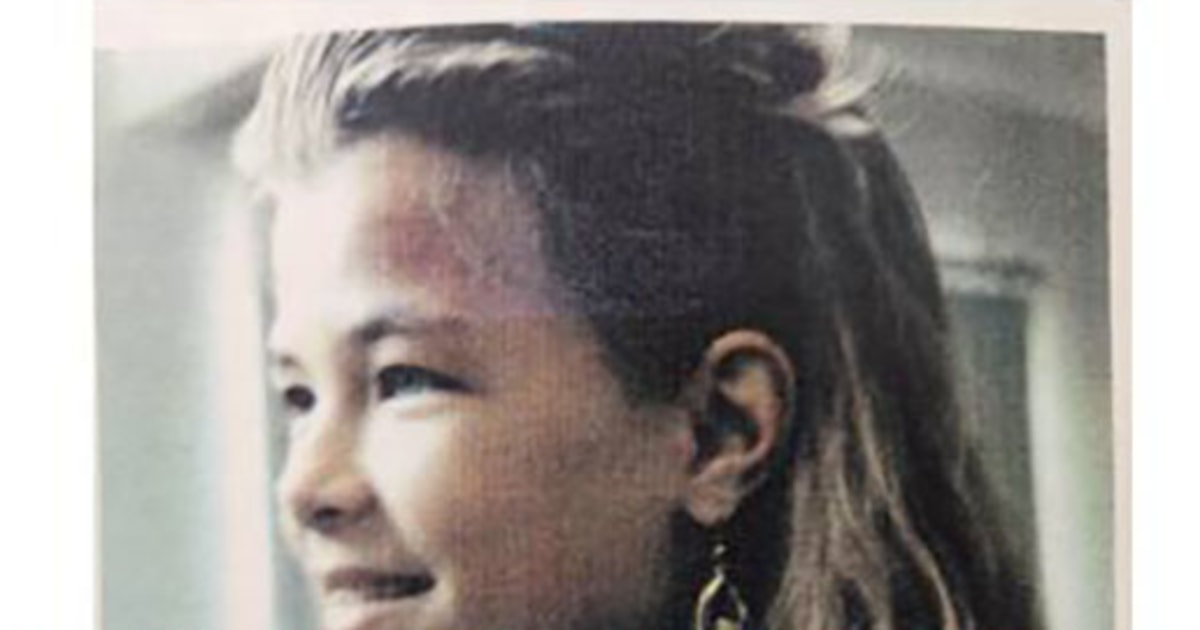
For more than three decades, the disappearance of a 13-year-old girl from a small Arizona town remained one of the region’s most haunting mysteries. The case, characterized by its suspicious beginnings and a decades-long nationwide search, has finally reached a conclusion that few investigators or family members could have anticipated. Authorities have confirmed that the Arizona girl missing since 1994 found alive was not the victim of a kidnapping, but had instead chosen to leave her life behind.
Christina “Tina” Marie Plante vanished in May 1994, sparking an immediate and intensive search based on fears that she had been abducted. For 32 years, her case remained open as a cold case, listed as “missing and endangered” by law enforcement. However, the Gila County Sheriff’s Office recently announced that Plante has been located and identified, officially resolving the investigation after more than three decades.
The resolution comes with a startling revelation: the disappearance was intentional. Now 44 years old, Plante confirmed to investigators that she ran away on purpose, secretly building a latest life and starting a family of her own while the world believed she was a victim of foul play. The breakthrough was made possible through advances in technology, which allowed cold case investigators to develop new leads that eventually led them to her.
The 1994 Disappearance: A Community in Fear
The events that led to the 32-year mystery began on May 15, 1994, in the tiny town of Star Valley, located northeast of Phoenix. According to original missing person bulletins, Christina Plante was last seen around 12:30 p.m. Leaving her home on Moonlight Drive on foot on May 15, 1994. At the time, the 13-year-old told those around her that she was heading to a nearby stable to visit her horse, but she never arrived at the destination.
Because of her age and the abrupt nature of her disappearance, the Gila County Sheriff’s Office classified the case as “missing/endangered” under suspicious circumstances. The fear of kidnapping dominated the early investigation, as authorities warned that the blonde, blue-eyed girl was in potential danger. She was last seen wearing a white T-shirt, multicolored shorts, and black tennis shoes in 1994.
For years, the case remained a point of focus for investigators who feared the worst. The “suspicious” label attached to the case meant that law enforcement operated under the assumption of a criminal offense, leading to a nationwide search that spanned several decades. The emotional toll of such a long-term mystery often leaves families and communities in a state of perpetual limbo, never knowing if they are searching for a survivor or a victim.
A Technological Breakthrough and the Truth Revealed
The resolution of the case did not come from a witness tip or a sudden confession, but through the evolution of investigative tools. The Gila County Sheriff’s Office noted that advances in technology were instrumental in developing the leads that finally brought them to Plante. Once contact was established, the narrative of the case shifted instantly from a potential crime to a story of teenage flight.
Capt. Jamie Garrett of the Gila County Sheriff’s Office, the investigator who contacted Plante to confirm her identity, described the moment of discovery as “dumbfounding.” During their conversation, the now 44-year-old woman clarified that she had not been kidnapped. Instead, she explained that she was unhappy with her living situation and the people she was living with at the time as confirmed by Capt. Jamie Garrett.
Further details revealed that Plante did not act entirely alone in her disappearance. She confirmed to authorities that she fled her home with the assistance of other family members she had been in communication with according to the Gila County Sheriff’s Office. This detail adds a layer of complexity to the case, suggesting that a support system existed to help the 13-year-old vanish and remain hidden for over 30 years.
“That Was an Old Life”: Life After Disappearing
When confronted with the fact that her disappearance had been treated as a criminal matter for decades, Plante’s reaction was one of detachment. She told investigators that the events of 1994 happened “a long time ago” and referred to her childhood in Arizona as “an old life” per Capt. Jamie Garrett.
Plante has spent the last 30 years establishing a completely separate existence. She is now a grown woman with her own family, having lived a secret life far removed from the “missing and endangered” posters that once bore her image. While the discovery provides closure to the legal case, it leaves behind complex emotional questions regarding the family members who helped her leave and the parents who spent decades fearing she had been kidnapped.
The official resolution of the case means that the Gila County Sheriff’s Office can finally close the file on Christina Marie Plante. While the outcome was not the tragedy many feared, it highlights the challenges inherent in missing persons cases where the subject is a minor and the disappearance is voluntary but concealed.
Case Summary: The Disappearance and Recovery of Christina Plante
| Detail | 1994 Status | 2026 Status |
|---|---|---|
| Legal Status | Missing/Endangered (Suspicious) | Case Officially Resolved |
| Subject Age | 13 years old | 44 years old |
| Location | Star Valley, Arizona | Located and Identified |
| Cause of Absence | Feared Kidnapping | Voluntary Flight (Ran Away) |
| Investigation Lead | Manual Search/Bulletins | Technological Breakthroughs |
The Implications of Voluntary Disappearances
The case of Christina Plante serves as a stark reminder of the difference between a kidnapping and a voluntary disappearance, particularly when the individual is a minor. In the United States, when a child vanishes under “suspicious circumstances,” law enforcement typically treats the event as a high-priority criminal case to ensure the child’s safety. In this instance, the assumption of a “criminal offense” drove the investigation for 32 years as stated by Capt. Jamie Garrett.
When a missing person is found to have left of their own volition, it often raises questions about the home environment and the motivations behind such a drastic step. Plante’s statement that she “wasn’t happy with where she was living” provides a glimpse into the reasons for her flight, though the full details of her domestic situation in 1994 remain private.
the role of the family members who assisted her highlights a rare dynamic in missing persons cases. Typically, family members are the primary drivers of the search; in this case, some were active participants in the disappearance, ensuring she remained hidden from the authorities and other relatives for three decades.
For the global community and those interested in cold case resolutions, this story underscores the critical importance of investing in forensic technology and digital tracking. Without these modern tools, it is unlikely that the Gila County Sheriff’s Office would have ever made contact with Plante, and the case would have remained an open wound for the community of Star Valley.
With the case now officially closed, We find no further scheduled police actions or court hearings announced. The Gila County Sheriff’s Office has indicated that the matter is resolved, and Plante has returned to her adult life, and family.
Do you believe technology is the most critical factor in solving decades-old cold cases, or do traditional investigative methods still hold the key? Share your thoughts in the comments below.