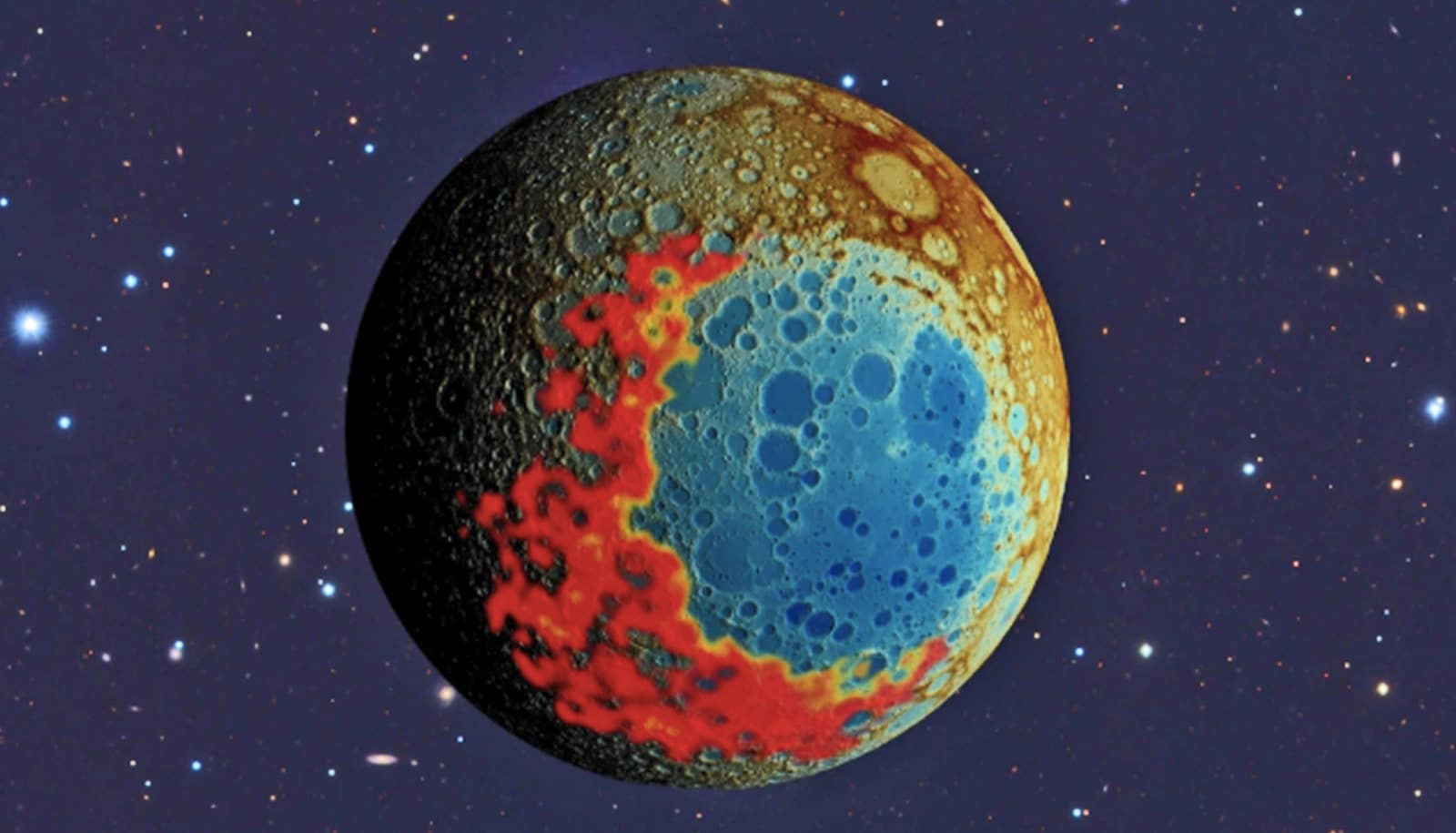
The moon’s composition has long been a source of fascination for scientists, and recent discoveries are reshaping our understanding of its early history. Specifically, a unique concentration of elements, known as KREEP, appears to hold the key to explaining the stark differences between the moon’s near and far sides. This material, rich in potassium (K), rare earth elements, and phosphorus, wasn’t distributed evenly during the moon’s formation.
Unraveling the Mystery of KREEP
I’ve found that understanding KREEP is crucial to understanding the moon. This unusual component isn’t just a random assortment of elements; it’s a relic from the moon’s molten past. As the lunar magma ocean cooled billions of years ago, certain elements resisted solidification, becoming increasingly concentrated. Think of it like leaving a can of soda in the freezer – the water freezes, but the sugary syrup remains liquid and concentrated.
As the magma ocean gradually solidified into the lunar crust and mantle, this KREEP-rich material was relegated to the last pockets of liquid. Eventually, these pockets became sandwiched between the mantle and the crust. This process led to a significant accumulation of heat-producing elements in these areas.
All of this concentrated KREEP and heat ultimately influenced the moon’s volcanic activity, particularly on the near side, creating the dark volcanic plains we recognize as the “face” of the moon. However, the reason for this uneven distribution remained a puzzle until recently.
The Asymmetry of the Lunar Crust
The moon presents a striking asymmetry: its far side boasts a much thicker crust than the near side facing Earth. This difference has perplexed researchers for decades, impacting every stage of the moon’s evolution.Here’s what works best when considering this asymmetry – it wasn’t random.
A leading theory suggests that as the far side’s crust thickened, the underlying magma ocean was squeezed outwards, much like toothpaste from a tube. This process directed most of the remaining magma, and therefore the KREEP-rich material, towards the near side.
recent analysis of the South Pole-Aitken (SPA) impact crater has provided compelling evidence supporting this theory. The crater’s western ejecta blanket is notably rich in radioactive thorium, a key component of KREEP, while the eastern flank shows significantly less. This suggests the impact exposed a boundary between the KREEP-enriched magma ocean remnants and the “regular” lunar crust.
Did You Know? The South Pole-Aitken basin is the largest, deepest, and oldest known impact crater in the Solar System.
Our current models of the moon’s evolution accurately predict this distribution of materials, solidifying the connection between the magma ocean’s final stages and the observed KREEP concentrations.
The last vestiges of the lunar magma ocean ended up on the near side, explaining the high concentrations of radioactive elements there. However,a thinner,patchy layer of magma ocean likely existed beneath parts of the far side at an earlier stage,accounting for the radioactive ejecta observed on one side of the SPA basin.
Looking Ahead with Artemis
While significant progress has been made, many mysteries surrounding the moon’s earliest history remain. The upcoming Artemis missions, aiming to return lunar samples to Earth, promise to unlock further insights. Remote sensing data, while valuable, provides only a basic understanding of the moon’s surface composition.
Analyzing physical samples with state-of-the-art facilities will allow scientists to delve deeper into the moon’s chemical makeup. Thorium, a readily detectable element in KREEP-rich material, serves as a useful marker, but a comprehensive compositional analysis requires hands-on examination.
with Artemis, we’ll have the chance to study these samples directly, gaining a more precise understanding of the moon’s early evolution than ever before. I believe our study demonstrates that these samples may reveal even more about the moon’s formative years than previously imagined.
Pro Tip: When researching lunar geology, focus on the interplay between thermal evolution, magma ocean dynamics, and the distribution of incompatible elements like those found in KREEP.
The study of the moon’s KREEP concentration is a dynamic field, with new data emerging constantly. As of November 2024, research continues to refine our understanding of the lunar magma ocean and its influence on the moon’s structure and composition. The insights gained from these investigations are not only crucial for understanding our celestial neighbor but also provide valuable context for studying the formation and evolution of other rocky planets in our solar system.
Evergreen Insights: The Significance of Lunar Research
Lunar research isn’t just about understanding the moon; it’s about understanding the early solar system and the processes that shaped Earth. The moon serves as a time capsule, preserving clues about the conditions that existed billions of years ago. By studying its composition and history, we can gain valuable insights into the formation of our own planet and the potential for habitability elsewhere in the universe.
Frequently asked Questions About KREEP
- What is KREEP and why is it crucial? KREEP is a geochemical component found in lunar samples, rich in potassium (K), rare earth elements, and phosphorus. It’s important because its distribution provides clues about the moon’s thermal evolution and the processes that shaped its near and far sides.
- How did KREEP become concentrated on the moon’s near side? The prevailing theory suggests that as the lunar crust thickened on the far side, the remaining magma ocean, rich in KREEP, was squeezed towards the near side, similar to toothpaste being squeezed from a tube.
- What role does the SPA impact crater play in understanding KREEP? The SPA crater’s ejecta blanket exhibits an asymmetry in thorium content, with the western side being richer in this KREEP component. This supports the theory of KREEP concentration on the near side.
- What are the Artemis missions hoping to discover about KREEP? The artemis missions aim to return lunar samples to Earth for detailed analysis, allowing scientists to gain a more precise understanding of KREEP’s composition and distribution.
- Is KREEP found on other celestial bodies? While KREEP is most prominently associated with the moon, similar geochemical signatures may exist on other rocky bodies in the solar system, suggesting similar processes may have occurred during their formation.
- How does studying KREEP help us understand Earth’s history? The moon’s composition provides a record of the early solar system, offering insights into the conditions that existed during Earth’s formation and early evolution.
- What is the future of KREEP research? Future research will focus on analyzing samples returned by the Artemis missions, refining models of lunar magma ocean evolution, and exploring the potential for KREEP-like materials on other planetary bodies.
Ultimately, the study of KREEP represents a significant step forward in our quest to unravel the mysteries of the moon. As we continue to explore and analyse lunar samples, we’ll undoubtedly uncover even more interesting details about our celestial companion and its place in the solar system. The distribution of this unique material is a key piece of the puzzle,and continued investigation promises to reveal a more complete picture of the moon’s dynamic history.

![Raluca Csernatoni Interview: Insights from a [Raluca’s Profession/Industry] Leader](https://i0.wp.com/www.e-ir.info/wp-content/uploads/2025/10/Image-by-Raluca-Csernatoni.jpg?resize=150%2C150&ssl=1 "Raluca Csernatoni Interview: Insights from a [Raluca’s Profession/Industry] Leader")