
Myanmar Junta’s Deadly Attack on Buddhist Festival Signals Escalating Brutality and Election Manipulation
The recent bombing of a Buddhist festival in Myanmar’s Sagaing region by the military junta represents a chilling escalation in the ongoing civil war and raises serious concerns about the regime’s tactics ahead of planned December elections.The attack, which utilized a remotely piloted paramotor to deliver explosives, resulted in the deaths of at least 24 people and left over 40 wounded, according to eyewitness accounts and reports from the National Unity Government (NUG), Myanmar’s civilian government-in-exile. This incident underscores the junta’s increasingly reckless disregard for civilian life and its desperate attempts to consolidate control amidst widespread resistance.
A brutal Pattern of Violence & A Festival Turned Protest
The bombing occurred Monday evening in Chaung U township, targeting a Thadingyut festival – a significant Buddhist celebration marking Buddha’s return from heaven, traditionally observed with candlelit processions and prayers. However, this year’s gathering also served as a peaceful demonstration against the military’s rule, forced conscription, and the upcoming elections, which are widely viewed as a sham.
Eyewitnesses report a manned paraglider, equipped with a motor (a “paramotor”), dropped a bomb directly into the center of the crowd gathered in a field after sunset. A second witness corroborated this account, confirming the use of a paraglider in the strike. The timing of the attack was particularly insidious; the loud prayers broadcast over loudspeakers masked the sound of the approaching paramotor, preventing attendees from seeking shelter - a tactic many Myanmar residents have learned to employ in response to these increasingly common aerial assaults. A subsequent attack four hours later destroyed a local school building, though thankfully without causing further casualties.
The Junta’s Reign of Terror & The Civil War’s Devastating Toll
Myanmar has been gripped by a brutal civil war since the military seized power in a February 2021 coup, ending a brief period of democratic governance. This power grab triggered widespread protests, which were met with violent repression, ultimately leading to the formation of armed resistance groups. The conflict has resulted in the deaths of tens of thousands of people and displaced millions, creating a humanitarian crisis of immense proportions.
The Sagaing region, bordering India, has become a key battleground, fiercely contested between the military and various resistance forces, collectively known as the People’s Defense Forces (PDFs). The junta’s preparations for the December elections are driving increased military activity in the area, as they attempt to secure territory and create an environment conducive to a pre-determined outcome.
Election manipulation & A Credibility Crisis
Independent observers and pro-democracy groups have condemned the planned elections as fundamentally unfair. Numerous opposition parties have been disqualified, and many are planning to boycott the polls, rendering the process a mere facade of legitimacy.
According to Amnesty International’s Myanmar researcher, Joe Freeman, the junta appears to be intensifying attacks to reclaim territory, specifically to expand the areas where voting can take place – a clear attempt to bolster the perceived credibility of the election. This strategy highlights the regime’s desperation to maintain a semblance of control and international recognition.
The Rise of Paramotor Attacks & A New Level of Brutality
The use of paramotors for aerial attacks represents a disturbing new tactic employed by the Myanmar military. A recent report by the Office of the United Nations High Commissioner for Human Rights (OHCHR) details the deployment of these motorized paragliders, capable of carrying up to three passengers and mortar rounds. These attacks have been documented in Sagaing, rakhine state, and Chin state, demonstrating a deliberate strategy of targeting civilian areas.
The OHCHR report, coupled with Amnesty International’s findings, paints a grim picture of a military increasingly willing to employ unconventional and indiscriminate methods of warfare. The vulnerability of civilians to these attacks is compounded by the difficulty in detecting the relatively quiet paramotors, especially during events like the thadingyut festival.
Who Was Affected?
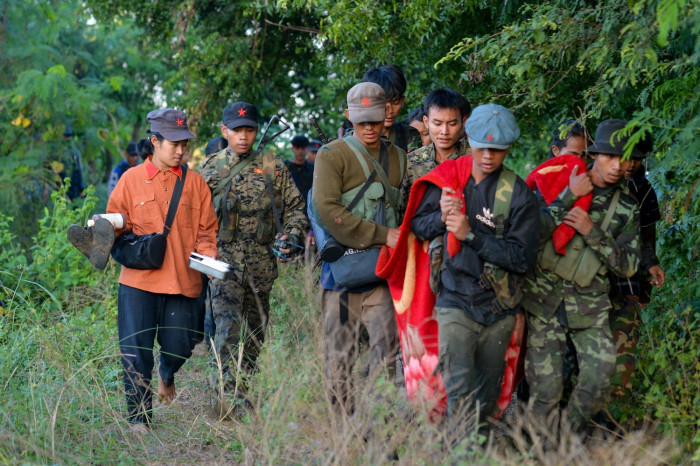
The victims of Monday’s bombing included members of the Sagaing Region Strike Forces, a resistance group fighting the military government, and also innocent civilians – including young children, teenagers, and teachers. This underscores the junta’s indiscriminate targeting and its willingness to inflict harm on all those perceived as opposing its rule.
International Response & The Path Forward
as of Wednesday evening, the Myanmar military had yet to issue an official statement regarding the attack. This silence is characteristic of the junta’s pattern of denial and obfuscation.
The international community must respond decisively to this escalating violence. Increased pressure, including targeted sanctions and arms embargoes, is crucial to hold the junta accountable for its atrocities. Furthermore, continued support for the NUG and





