
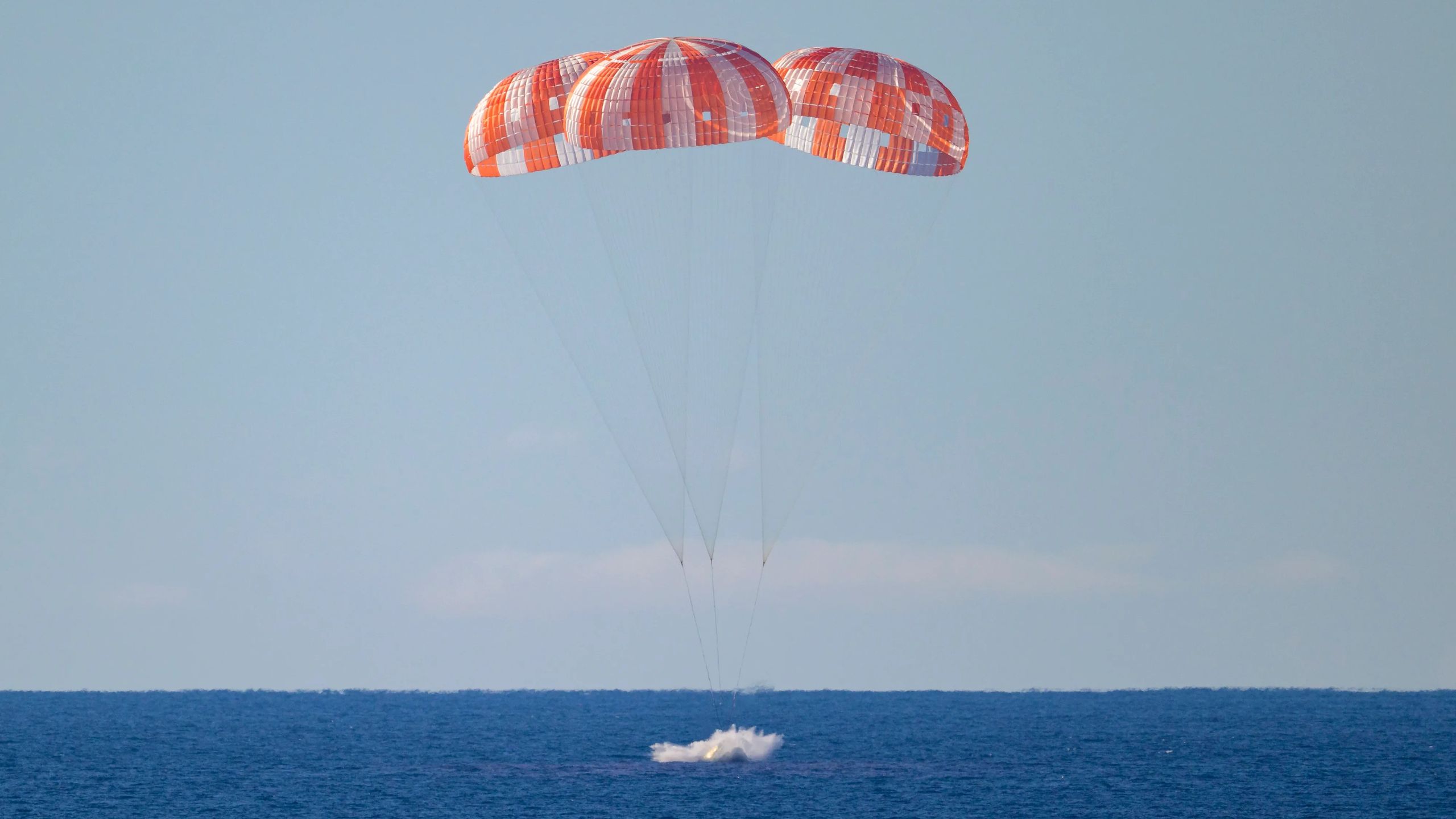
The world watched with bated breath on Friday as four astronauts returned to Earth, marking the successful conclusion of the Artemis II mission. After a historic 10-day journey around the moon, the crew made a “textbook” splashdown in the Pacific Ocean at 8:07 p.m. ET on April 10, 2026 according to ABC News.
The mission, which launched from the Kennedy Space Center in Florida on April 1, 2026, served as a critical test of NASA’s deep space capabilities. The crew ventured farther from Earth than any humans have in half a century, covering approximately 695,081 miles aboard the Orion spacecraft as reported by USA Today. This lunar flyby was designed to validate the systems necessary for sustaining humans in deep space before attempting a return to the lunar surface.
NASA officials have hailed the return as the start of a “new era” of human space exploration. The successful recovery of the crew, who were reported to be in “excellent shape” following their re-entry, paves the way for the more ambitious goals of the Artemis program, including the establishment of a long-term lunar presence and eventual crewed missions to Mars via NASA.gov.
Breaking Barriers: A Historic Crew for a New Era
The Artemis II mission was not only a technical triumph but a milestone for representation in space exploration. Under the command of NASA astronaut Reid Wiseman, the crew witnessed the moon’s far side—a perspective previously unseen by any human eyes per USA Today.

Three of the four astronauts achieved individual historic milestones during the journey:
- Christina Koch: Became the first woman to venture within the vicinity of the moon.
- Victor Glover: Became the first Black man to venture within the vicinity of the moon.
- Jeremy Hansen: A member of the Canadian Space Agency, Hansen became the first Canadian to venture within the vicinity of the moon.
These achievements underscore the international and inclusive nature of the Artemis program, expanding the pool of humanity’s explorers as NASA prepares for future lunar surface missions.
The Machinery of Exploration: Orion and SLS
The success of the Artemis II mission relied on two primary pieces of hardware: the Space Launch System (SLS) and the Orion spacecraft. The SLS is NASA’s new heavy-lift rocket, designed to provide more payload mass, volume, and departure energy than any other single rocket in existence according to NASA.
The Orion spacecraft served as the exploration vehicle, engineered to carry and sustain the crew during their journey to the moon and ensure their safe return to Earth. The mission’s final leg involved a fiery and treacherous re-entry through Earth’s atmosphere, concluding with a water landing in the Pacific Ocean near California as detailed by USA Today.
Mission Timeline and Key Statistics
| Metric | Detail |
|---|---|
| Launch Date | April 1, 2026 |
| Splashdown Date | April 10, 2026 |
| Total Duration | 9 Days, 1 Hour, 32 Minutes |
| Total Distance Traveled | 695,081 miles |
| Mission Type | Crewed Lunar Flyby |
What Comes Next: The Path to a Lunar Landing
While the return of the Artemis II crew is a cause for celebration, NASA officials emphasize that this is only a stepping stone. The Artemis program is designed as a sequence of missions that build toward a permanent human presence on the moon.
The immediate roadmap includes several key milestones:
- 2026: NASA plans to launch uncrewed lunar landers.
- 2027: The Artemis III test mission is scheduled.
- 2028: A human moon landing is planned, with the Artemis IV mission expected to put a crew on the surface via ABC News.
The long-term objective is the construction of a moon base, which will serve as a laboratory and a staging point for the next great leap: sending humans to Mars according to USA Today.
The Global Impact of the Lunar Flyby
The return of the “Moonfarers” has sparked global joy and cheers, reflecting a shared human aspiration for discovery. Following the splashdown, NASA officials held a press conference where Lori Haze, deputy associate administrator for NASA’s Exploration Systems Development Mission Directorate, celebrated the achievement, stating, “So, ya’ll, we did it” per ABC News.
From a scientific and technical perspective, the mission successfully tested deep space systems and the Orion spacecraft’s ability to sustain a crew in the harsh environment of cislunar space. The data gathered during these 10 days will be instrumental in refining the safety and efficiency of the upcoming Artemis III and IV missions.
With the crew safely extracted from the capsule and hoisted into helicopters on the evening of April 10, NASA now turns its attention to analyzing the mission data and preparing the next generation of lunar hardware. The next confirmed checkpoint in the program is the launch of uncrewed lunar landers later in 2026 via USA Today.
We invite our readers to share their thoughts on this historic achievement in the comments below. How do you feel about the prospect of a permanent moon base by the conclude of the decade?