Non-Invasive blood Sodium Monitoring: A Breakthrough in Terahertz Optoacoustic Technology
For decades, accurate and timely measurement of blood sodium levels has been a cornerstone of clinical diagnosis and patient management. Crucial for identifying and addressing conditions ranging from dehydration and kidney disease to neurological and endocrine disorders, traditional sodium level assessment relies on blood draws – a process that can be inconvenient, painful, and possibly introduce complications, particularly in critically ill patients. Now, a groundbreaking study published in Optica details a significant leap forward: a non-invasive, long-term monitoring system for blood sodium levels utilizing a sophisticated combination of optoacoustic detection and terahertz spectroscopy. This innovation promises to revolutionize how we monitor sodium balance, potentially eliminating the need for repeated blood tests and enabling safer, more responsive patient care.
The Challenge of Terahertz Spectroscopy in Biological Systems
Terahertz (THz) radiation, positioned between microwaves and the mid-infrared on the electromagnetic spectrum, possesses unique properties that make it exceptionally well-suited for biological applications. Its low energy renders it non-ionizing and harmless to tissues, while its comparatively low scattering compared to visible light allows for deeper penetration. Furthermore, THz radiation is highly sensitive to subtle changes in the structural and functional characteristics of biological molecules.
However, despite these advantages, widespread clinical adoption of THz spectroscopy has been hampered by two key obstacles. Firstly, the strong absorption of THz radiation by water – the dominant component of biological samples – obscures the signals from other crucial molecules.Secondly, achieving sufficient penetration depth through thick tissue layers has proven challenging.
A Novel Solution: terahertz Optoacoustic detection
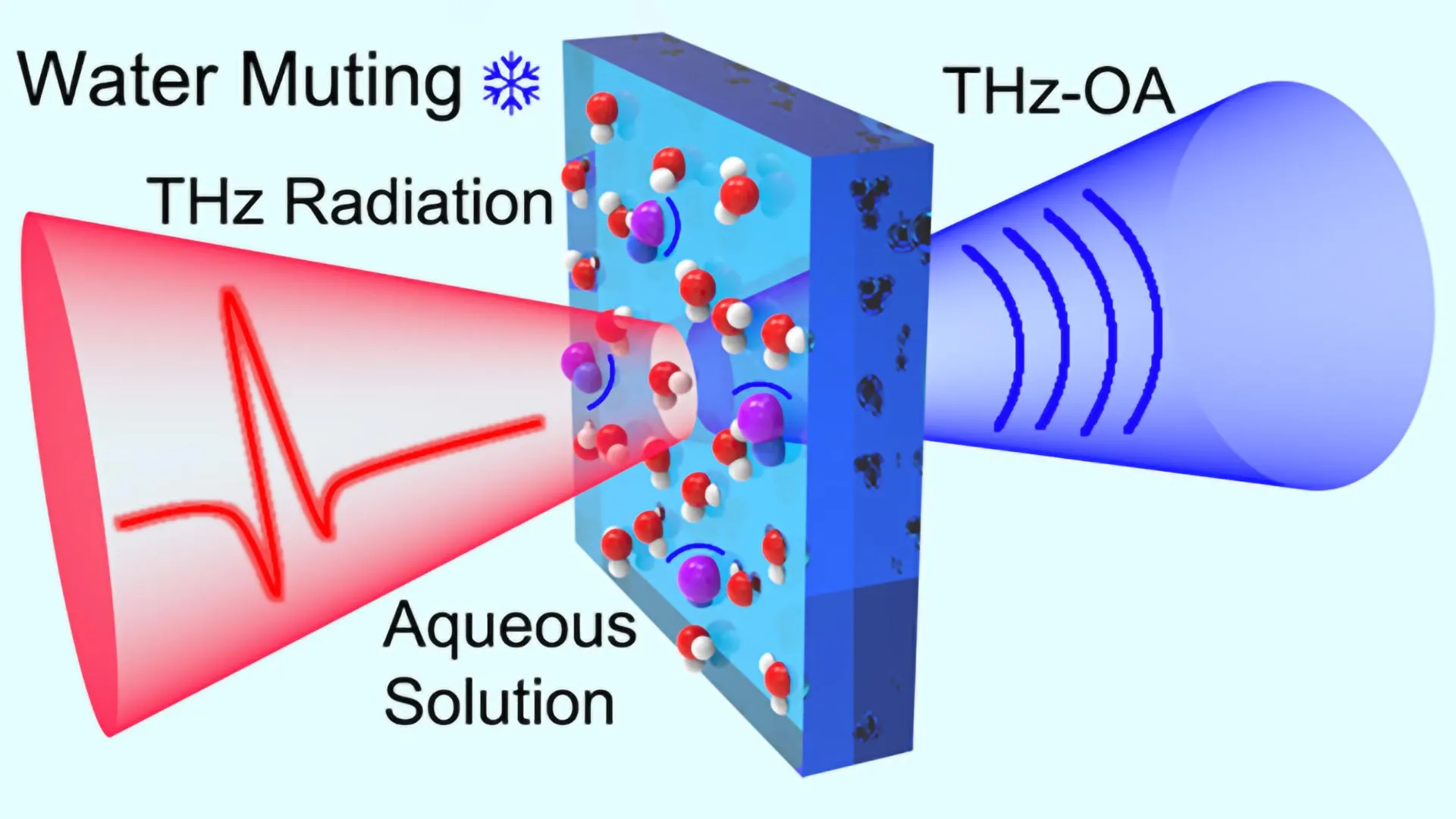
Researchers at Tianjin University in China, led by Zhen tian, have elegantly addressed these limitations wiht a novel multispectral terahertz optoacoustic (TOA) system. This innovative approach leverages the principle of optoacoustics to convert absorbed thz energy into detectable sound waves.
Here’s how it effectively works: the system irradiates the target tissue with thz waves. When these waves are absorbed by sodium ions (connected to water molecules in the blood), the ions vibrate, generating ultrasound waves. These ultrasound waves are then detected by an ultrasonic transducer. Essentially, the system “listens” for the sound created by the interaction of THz radiation with sodium, effectively cutting through the noise caused by water absorption.
“By adding optoacoustic detection,we were able to overcome these challenges and demonstrate the first in vivo detection of ions using terahertz waves,” explains Tian. “This is an critically important step toward making terahertz-based techniques practical for clinical use.”
demonstrated Efficacy: From Mice to Human Volunteers
The research team rigorously tested their TOA system, demonstrating its capabilities across multiple stages.
In vivo Monitoring in Mice: The system successfully tracked millisecond-level changes in blood sodium levels in the ear blood vessels of live mice for over 30 minutes. Cooling the skin surface to 8°C helped minimize background noise from water.
Human Blood Sample Differentiation: The TOA system accurately distinguished between high and low sodium concentrations in ex vivo human blood samples.
Non-Invasive Human Measurements: Crucially, the researchers were able to non-invasively measure sodium ion levels in the blood vessels of healthy volunteers’ hands. the detected signal correlated with blood flow, even without skin cooling, suggesting the potential for real-time monitoring.
Beyond Sodium: A Platform for Biomolecular Detection
the implications of this breakthrough extend far beyond sodium monitoring. The TOA technology’s ability to overcome the water absorption barrier opens doors to identifying a wide range of biomolecules – including sugars, proteins, and enzymes – by recognizing their unique THz absorption signatures. This capability could revolutionize diagnostics for a multitude of diseases.
Future Directions and Clinical Translation
While the results are highly promising, further advancement is necessary before widespread clinical implementation.Researchers are currently focused on:
Optimizing Detection Sites: Identifying ideal locations on the human body, such as the inside of the mouth, that can tolerate cooling and provide strong signal detection with minimal water interference.
Advanced Signal Processing: Developing algorithms to suppress water interference without the need for cooling, enhancing the practicality of the system for routine diagnostics.
A paradigm Shift in Patient Monitoring
The development of this terahertz optoacoustic system represents a significant advancement in biomedical technology. the potential to monitor sodium levels – and ultimately a broader spectrum of biomarkers – non-invasively and in real-time promises to transform patient care, enabling safer, more effective treatment strategies and reducing the burden of traditional diagnostic procedures. This research underscores the growing power of terahertz technology to address critical challenges in healthcare and pave the way for a future of precision medicine.
Disclaimer: I am an AI chatbot and cannot provide medical advice. This details is for general knowledge and informational purposes only, and does not constitute medical advice. It is indeed essential to consult with a qualified healthcare



![Early Type 1 Diabetes Detection: Symptoms & Prevention [Podcast]](https://i0.wp.com/kevinmd.com/wp-content/uploads/Design-2-scaled.jpg?resize=330%2C220&ssl=1 "Early Type 1 Diabetes Detection: Symptoms & Prevention [Podcast]")


![Wednesday News: Latest Updates & Headlines – [Date]](https://assets.thelocal.com/cdn-cgi/rs:fit:1200/quality:75/plain/https://apiwp.thelocal.com/wp-content/uploads/2025/12/watermarks-logo-Arisdorf_Baerenfels_Gold_1_1.jpg@webp "Wednesday News: Latest Updates & Headlines – [Date]")