
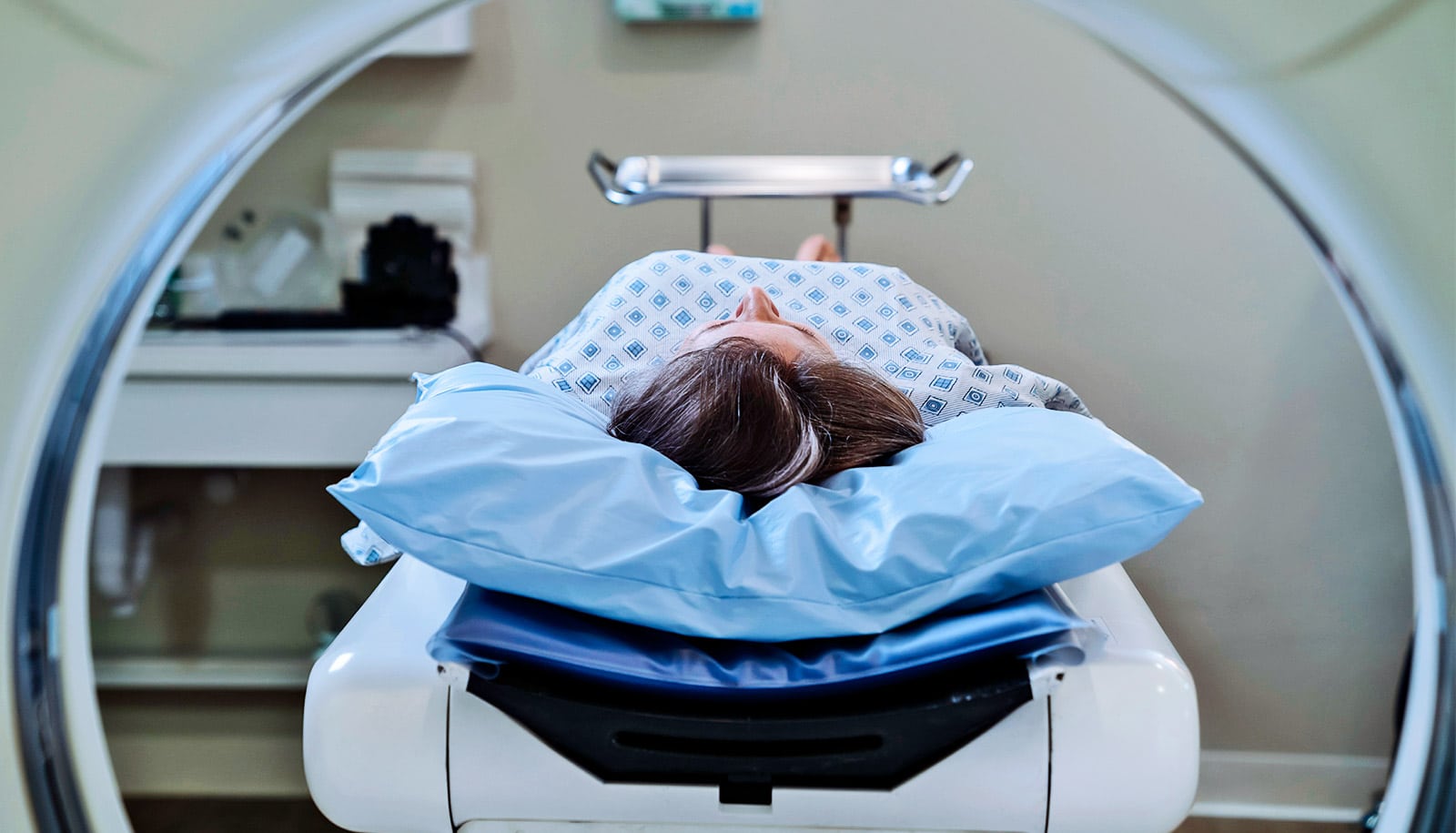
For decades, the magnetic resonance imaging (MRI) scan has been a cornerstone of modern diagnostics. Most of us are familiar with the experience: the rhythmic thumping of the machine and the sliding into a narrow tube while a scanner produces high-resolution images of the brain, heart, or joints. Still, while traditional MRIs are exceptional at capturing anatomical structures, they have a significant blind spot: they cannot spot the molecular-level changes that often signal the very beginning of a disease.
This gap in diagnostic capability means that by the time a tumor or a neurodegenerative condition is visible as a structural change in tissue, the disease has often already progressed significantly. Now, a breakthrough in MRI molecular-level imaging developed by researchers at the University of California, Santa Barbara, aims to close this gap. By creating a genetically encoded sensor, the team has found a way to visualize cellular activity in real-time, potentially allowing scientists to detect pathogenesis long before physical damage occurs.
The research, published in the journal Science Advances, introduces a modular, protein-based system that transforms how MRI machines interact with the interior of a cell. Rather than relying on the presence of a mass or a change in tissue morphology, this new technology allows the scanner to “observe” chemical processes as they happen via a genetic sensor developed by UC researchers.
The Limitation of Anatomical Imaging
To understand why this development is so significant, one must first understand how a standard MRI works. Since the 1970s, these machines have used a combination of strong magnetic fields and radio waves to align hydrogen atoms in the body, creating snapshots of internal structures without the need for ionizing radiation. While this is an invaluable tool for identifying injury or disease, It’s primarily a tool of anatomy, not chemistry.
Arnab Mukherjee, an associate professor of chemical engineering in UC Santa Barbara’s Robert Mehrabian College of Engineering, explains that the current limitation is a matter of information. “You can see the structures of your tissues — whether it’s the brain, the heart, the kidneys or the stomach — but you don’t get molecular information,” Mukherjee stated according to a UC Santa Barbara report. He noted that the only way to know something has changed with current technology is to grab a second MRI and wait for the structure and morphology of the tissue to physically alter.
For many critical conditions, including various cancers and neurodegenerative diseases, the molecular shift happens long before the structural shift. By the time a lesion or a shrinkage in brain volume is visible on a scan, the window for the earliest possible intervention may have already closed.
How the MAPPER System Works
The UC Santa Barbara team addressed this by looking toward synthetic biology. They developed a system called MAPPER, which stands for modular aquaporin-based protease-activatable probes for enhanced reporting. The goal was to create a molecular “glow” that an MRI could detect, similar to how researchers have used fluorescent proteins from jellyfish since the 1960s to tag molecules under a microscope.

The key to the MAPPER system is a protein called aquaporin. Aquaporins are proteins that form hourglass-shaped channels in the cell membrane, acting as regulators for the flow of water into and out of the cell. Because water molecules act as “tiny, tiny magnets,” controlling the rate at which they move across the cell membrane creates a specific magnetic signal that an MRI machine can pick up as reported by National Today.
By genetically engineering these sensors into cells, the MRI can report on specific biological processes based on the movement of water, rather than the presence of a physical mass. This shifts the diagnostic focus from macro-structures to the behavior of molecules within the cell in real-time.
A ‘LEGO-like’ Architecture for Versatility
One of the most promising aspects of the MAPPER system is its modularity. The researchers describe the sensor as having a “LEGO-like” architecture, meaning it is not limited to detecting a single type of chemical or process. Instead, the system is designed so that researchers can attach or substitute specific proteins to target different analytes—the specific chemicals or compounds being measured.
Asish Ninan Chacko, a former chemistry and biochemistry PhD student in Mukherjee’s lab, explained that the protein can be regulated using various chemical signals. By replacing one protease with another, the sensor can be tailored to detect a wide array of cellular processes. While previous genetic sensors in scientific literature were typically designed to detect only one unique analyte, the MAPPER setup has demonstrated the ability to detect close to ten different systems per the findings published in April 2026.
This flexibility allows the tool to be adapted for various fields of study. For instance, neuroscientists could utilize it to monitor calcium changes in the brain, while developmental biologists could use it to track the growth of a mouse from an embryo to an adult.
Transforming Disease Study and Animal Research
The implications for the study of cancer, inflammation, and neurodegeneration are profound. With the ability to see molecular changes in real-time, researchers can begin to answer fundamental questions that were previously unreachable. They can now ask exactly how tumor cells metastasize or how neurodegeneration progresses at a molecular level as an organism ages.
Beyond the clinical potential, the MAPPER system offers a significant ethical and scientific advantage in animal research. Currently, many studies requiring access to an animal’s internal organs require the animal to be sacrificed to obtain a “snapshot” of the disease at a specific moment. This method is often misleading because individual animals vary in their metabolism and response to treatment.
The MAPPER approach allows for continuous imaging of the same animal throughout the entire course of a study. This provides a far more accurate picture of biology and disease progression while simultaneously reducing the overall demand for laboratory animals as detailed in the research summary.
Key Takeaways of the MAPPER System
- Molecular Focus: Shifts MRI capability from imaging anatomical structures to visualizing molecular activity inside cells.
- Real-Time Detection: Enables the observation of chemical processes before they manifest as visible tissue damage.
- Modular Design: Uses a “LEGO-like” protein architecture that can be tailored to detect multiple different analytes.
- Aquaporin-Based: Leverages water-channel proteins to create a detectable magnetic signal based on water molecule movement.
- Research Impact: Allows for longitudinal imaging in animal studies, reducing the need to sacrifice animals for data snapshots.
The Path Toward Future Application
While the current applications are focused on laboratory settings and animal studies, the long-term vision is to bring this precision to human healthcare. The ability to track the progress of neurodegeneration in a living brain or to determine if a specific drug is successfully keeping cancer cells at bay at a molecular level could revolutionize personalized medicine.
Professor Mukherjee envisions a future where these sensors are placed in the hands of a wide range of scientists. To accelerate this, he has discussed the possibility of creating training programs to teach undergraduates how to develop these sensors using the MAPPER system, potentially reducing the time to create a new sensor to just a few months.
As this technology moves from the laboratory toward broader application, it represents a fundamental shift in the philosophy of medical imaging: moving from the observation of “what has happened” (structural damage) to “what is happening” (molecular activity).
Further updates on the implementation of the MAPPER system in broader clinical trials or expanded animal studies are expected as the research continues to evolve following the Science Advances publication.
Do you believe molecular-level imaging will redefine early cancer detection? Share your thoughts in the comments below or share this article with your network.