
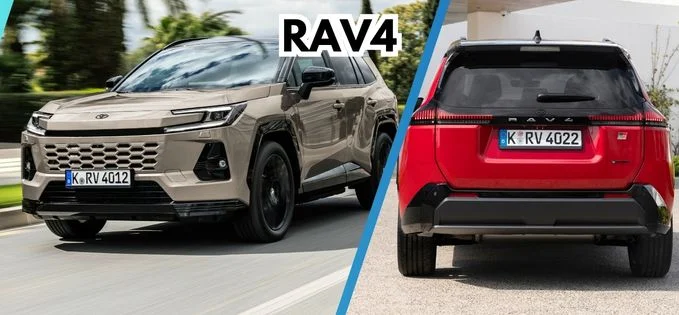
Toyota is repositioning one of its most successful global nameplates for the European market, blending advanced electrification with a pricing strategy that signals a shift toward the premium crossover segment. The 2026 Toyota RAV4 Europe launch introduces a refined aesthetic and updated technology, though it arrives with a price tag that reflects the increasing cost of automotive compliance and technological integration.
Starting at €45,200, the new RAV4 hits the European market in May, offering a lineup strictly centered on hybrid and plug-in hybrid (PHEV) architectures according to pricing and specifications revealed for the region. For business analysts and consumers alike, the model represents a critical case study in how mainstream manufacturers are navigating the transition to electrified fleets while managing the pressures of inflation and stricter regional emissions standards.
As a journalist who has spent nearly two decades analyzing global market shifts, I view the 2026 RAV4 not merely as a vehicle update, but as a strategic pivot. By eliminating gas-only versions in Europe and pushing the top-tier versions up to €62,700, Toyota is effectively moving the RAV4 away from the budget-conscious family SUV category and into a more sophisticated, tech-heavy territory where it can compete with higher-margin rivals.
Pricing, Trim Levels, and Standard Equipment
The European lineup is structured across four distinct versions: the base model, Icon, Premium, and the performance-oriented GR Sport. Despite the tiered pricing, Toyota has maintained a high floor for standard equipment, ensuring that even the entry-level trim is competitive in a market dominated by digital-first expectations.
Standard features across the range include 18-inch wheels, LED lighting, and a comprehensive digital cockpit featuring a 12.3-inch digital instrument cluster and a 12.9-inch touchscreen. Safety remains a cornerstone of the value proposition, with the Toyota Safety Sense suite included as standard across all trims as detailed in the 2026 specifications.
From a market perspective, the price ceiling of €62,700 places the RAV4 in direct competition not only with other mass-market crossovers but too with entry-level luxury SUVs. This pricing reflects the “technologically advanced territory” that mainstream crossovers are entering, where the costs of battery technology and software integration are passed on to the end user.
Powertrain Analysis: Hybrid vs. Plug-in Hybrid
The 2026 RAV4 employs a dual-track electrification strategy to cater to different urban and long-distance driving needs. The standard hybrid utilizes a 2.5-liter engine, producing 183 horsepower in the front-wheel-drive configuration and 191 horsepower for the all-wheel-drive variant. These models offer a balanced performance profile, with acceleration from 0 to 100 km/h ranging between 7.7 and 8.1 seconds per official specs.

For those seeking higher performance and shorter commutes on electricity, the plug-in hybrid (PHEV) is the flagship offering. This version delivers up to 304 horsepower and is powered by a 22.68 kWh battery, which enables an electric-only range of up to 100 kilometers. The PHEV’s performance is significantly sharper, reaching 100 km/h in 5.9 seconds with a top speed of 180 km/h according to Toyota’s European data.
The inclusion of a front-wheel-drive PHEV option delivering 264 hp is a specific addition for the European market, providing a middle ground for buyers who desire the benefits of a plug-in hybrid without the added weight and cost of an all-wheel-drive system.
The Regulatory Gap: Europe vs. North America
A point of contention for enthusiasts has been the disparity in power between the European and North American versions of the 2026 RAV4. Data reveals that the “uncorked” versions available in North America consistently outperform their European counterparts.
The power gap is most evident in the following comparisons verified by Motor1:
- Plug-in Hybrid (PHEV): North American models reach 320 horsepower, while Europeans are limited to approximately 300–304 hp.
- AWD Full Hybrid: The US version delivers 236 hp, compared to just 188 hp in Europe.
- FWD Hybrid: The US version produces 226 hp, significantly higher than the 181 hp available in the European market.
This discrepancy is not a marketing choice but a regulatory necessity. Robert Tickner, Head of Corporate & Product Communications in Europe, explained that the Euro-spec RAV4 was detuned to comply with stricter legislation. Specifically, the PHEV setup was adjusted due to “homologation and emission requirement specifics,” reflecting the divergent standards between the USA and the EU, EFTA, and UK requirements as stated by Toyota officials.
This highlights a broader trend in the global automotive industry: “regionalization” of hardware. Manufacturers are no longer building a single global car; instead, they are creating regional variants to navigate the complex web of environmental laws, with Europe often having the most stringent constraints.
Market Positioning and Competitive Landscape
The RAV4 remains a cornerstone of the family SUV segment, measuring approximately 4.6 meters in length. While its dimensions remain unchanged, its market position has shifted. It now finds itself in a fierce battle with the Volkswagen Tiguan, Hyundai Tucson, and Kia Sportage.
Toyota’s competitive advantage lies in its robust hybrid heritage and the reliability associated with the brand. However, as the RAV4 moves toward a higher price point, it faces pressure from “premium-lite” offerings. The challenge for Toyota will be convincing buyers that the enhanced power and electrification justify the diminishing affordability of the model.
For a closer look at the vehicle’s physical presence and interior updates, the following review from the Austrian premiere provides a comprehensive tour of the European model:
Key Specifications Comparison: 2026 RAV4 (Europe)
| Feature | Hybrid (FWD/AWD) | Plug-in Hybrid (PHEV) |
|---|---|---|
| Horsepower | 183 hp / 191 hp | Up to 304 hp |
| 0-100 km/h | 7.7 – 8.1 seconds | 5.9 seconds |
| Battery Capacity | Standard Hybrid | 22.68 kWh |
| Electric Range | N/A | Up to 100 km |
| Top Speed | Not specified | 180 km/h |
Economic Implications for the Consumer
From an economic standpoint, the 2026 RAV4 illustrates the “green premium” currently affecting the automotive market. The transition to PHEV technology, while reducing operational emissions and providing significant electric-only range for city driving, increases the initial capital expenditure for the buyer.
For the average consumer, the decision to opt for the RAV4 now involves a trade-off between the lower purchase price of competitors and the long-term fuel efficiency and resale value typically associated with Toyota’s hybrid systems. With the base price starting at €45,200, the RAV4 is no longer an “entry-level” family SUV, but a mid-to-high tier investment in electrification.
The disappearance of gas-only versions in Europe is a clear indicator of Toyota’s commitment to the region’s carbon-neutral goals, but it also removes the most affordable entry point for the model, potentially alienating a segment of the traditional customer base.
The next confirmed milestone for the 2026 RAV4 is its official arrival in European showrooms this May, where final local pricing and availability for the Icon, Premium, and GR Sport trims will be confirmed by national dealerships.
Do you believe the shift toward premium pricing is justified by the 100 km electric range of the new PHEV? Share your thoughts in the comments below or share this analysis with your network.