
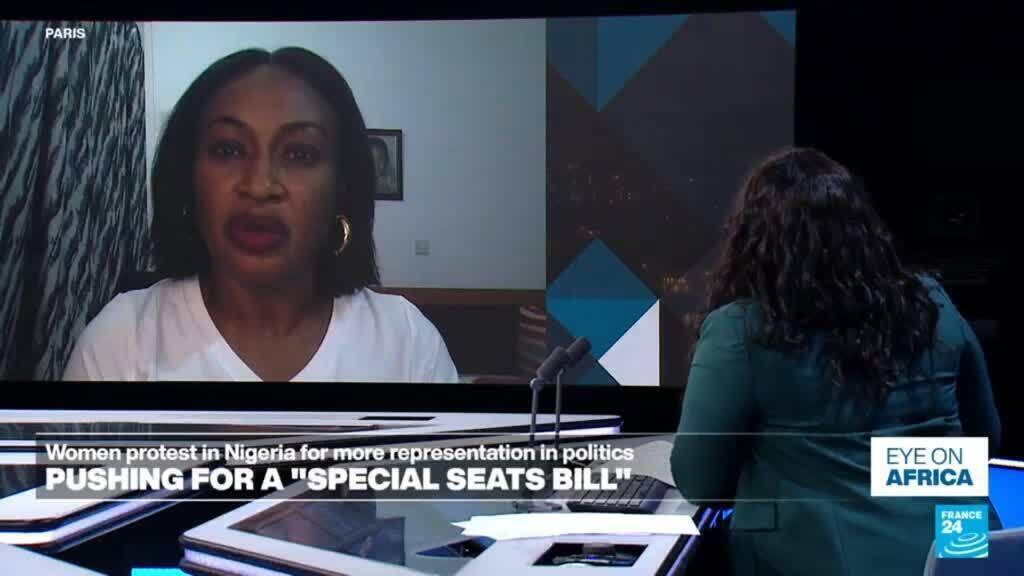
## Advancing Women’s Political Depiction in Nigeria: The Push for Legislative Quotas
Nigeria is currently experiencing a pivotal moment in its journey towards gender equality, specifically within the realm of political representation. As of september 25,2025,the nation’s legislative bodies reflect a significant disparity: women currently occupy a mere 4 out of 109 positions in the Senate and 16 out of 360 seats in the House of Representatives. This underrepresentation has spurred a concentrated effort to enact the Special Seats Bill,a legislative proposal designed to proactively increase female participation in government.The bill aims to establish one dedicated seat for a woman in both the Senate and the House for each of Nigeria’s 36 states, alongside the Federal capital Territory.
### The Current Landscape of Female Political Participation
The limited presence of women in Nigerian politics isn’t a new phenomenon. Historically, socio-cultural norms, economic barriers, and systemic biases have hindered women’s ability to enter and thrive in the political arena.These obstacles range from deeply ingrained patriarchal attitudes to a lack of financial resources needed to fund campaigns and limited access to political networks.A recent study by the Centre for democracy and Development (CDD), published in July 2025, highlighted that female candidates in Nigeria often face significantly higher campaign costs compared to thier male counterparts, even when competing for the same positions.
this disparity isn’t merely a matter of fairness; it has tangible consequences for policy outcomes. Research consistently demonstrates that greater female representation in legislatures leads to increased attention to issues affecting women, families, and communities - such as healthcare, education, and gender-based violence. For example, countries with higher proportions of women in parliament are more likely to enact legislation protecting women’s rights and promoting gender equality.
### Understanding the Special Seats Bill
The proposed Special Seats Bill
represents a strategic intervention to address the systemic barriers preventing women from achieving equitable representation. Brenda anugwon, head of the Nigerian Women’s Trust Fund, articulated the bill’s core purpose as a means to create dedicated spaces for women in the legislative process
. The bill doesn’t seek to displace existing representatives; rather, it proposes an expansion of the legislative body to accommodate these additional seats.
| Legislative Body | Current Female Representation (Sept 25, 2025) | Proposed increase with Special Seats Bill |
|---|---|---|
| Senate | 4/109 | 36 + 1 (FCT) = 37 additional seats |
| House of Representatives | 16/360 | 36 + 1 (FCT) = 37 additional seats |
This approach is similar to affirmative action policies implemented in other nations, such as Rwanda, which has achieved one of the highest levels of female parliamentary representation globally (over 61% as of November 2024) thru a quota system. However, it’s crucial to acknowledge that quotas are not a panacea. Their effectiveness hinges on complementary measures, including capacity-building programs for female politicians, financial support for their campaigns, and efforts to challenge harmful gender stereotypes.
### Challenges and Controversies Surrounding the Bill
Despite the compelling arguments in its favour, the Special Seats Bill has faced considerable opposition. Critics argue that it is undemocratic and violates the principle of equal representation, suggesting that seats should be earned through open competition rather than reserved for a specific gender. Concerns have also been raised about the potential cost of expanding the legislature and the logistical challenges of implementing the bill.
Moreover, some opponents contend that quotas can lead to the selection of less qualified candidates simply based on their gender. Though,proponents counter that the existing system already
![Emergency Medicine & Human Rights: Why It Matters | [Year]](https://i0.wp.com/kevinmd.com/wp-content/uploads/image-2-2.jpg?resize=150%2C150&ssl=1 "Emergency Medicine & Human Rights: Why It Matters | [Year]")


